Handstand

handstand melie and patrick

What is Handstand?

English Name: Handstand
Sanskrit Name: Adho Mukha Vrksasana (pronounced AH-doh MOO-kah vrik-SHAHS-uh-nuh)
Category: Inversion, Strength, Balance, Intermediate to Advanced
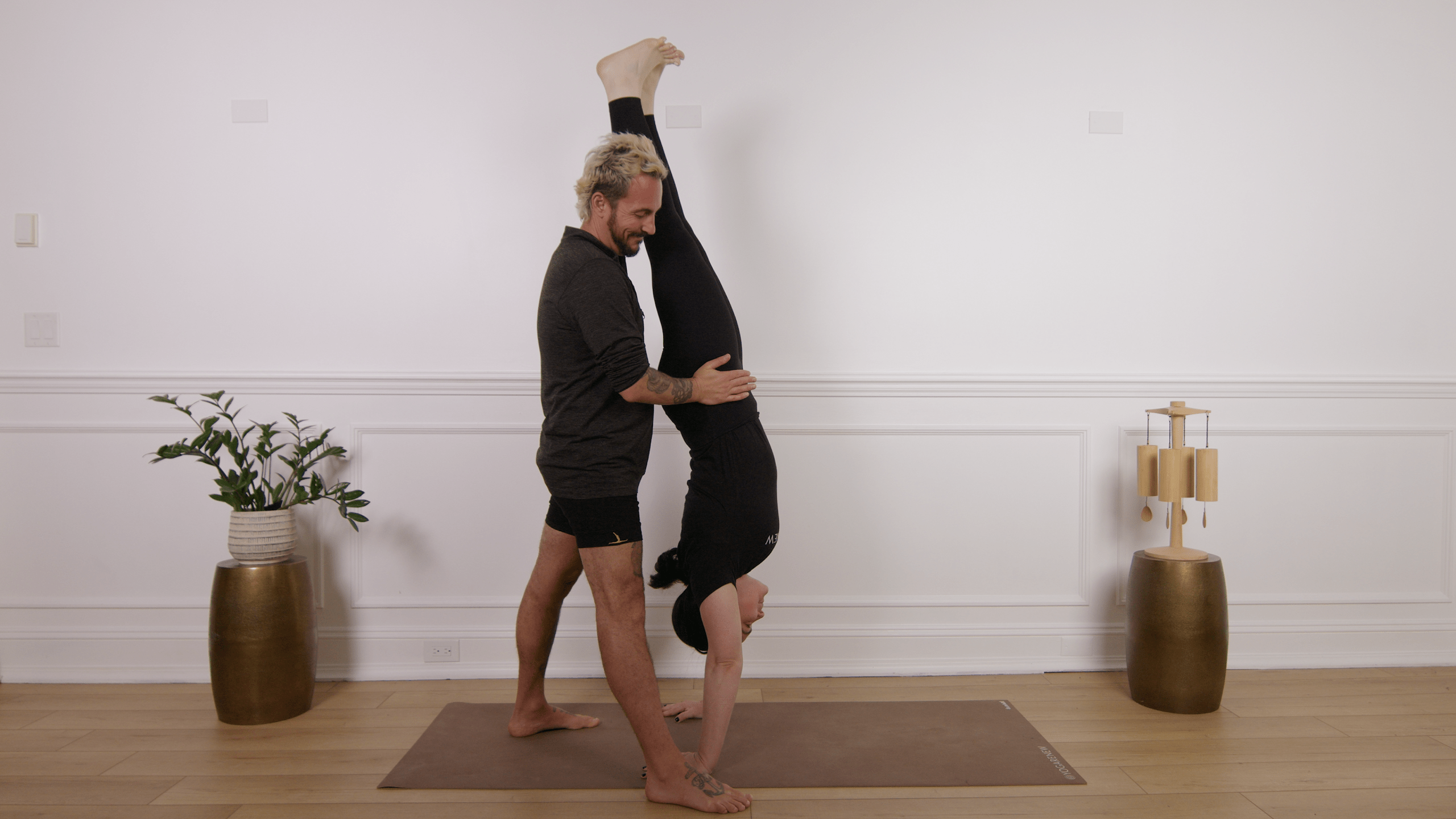
Adho Mukha Vrksasana, or Handstand, is a powerful and exhilarating inversion that challenges both body and mind. More than simply balancing on your hands, Handstand is a full-body experience that builds upper-body and core strength while cultivating focus, confidence, and steady breath awareness.

While it can look intimidating, Handstand becomes more accessible through mindful progression, proper alignment, and consistent practice. With patience and support, this empowering posture invites you to build strength, overcome fear, and discover a greater sense of balance—both on and off the mat.
Benefits of Handstand


  • Builds Upper Body and Core Strength: Engages shoulders, arms, and abdominals
  • Enhances Focus and Mental Clarity: Inversions increase concentration and calm the mind
  • Improves Circulation: Reverses blood flow and stimulates the lymphatic system
  • Develops Balance and Control: Teaches body awareness and subtle adjustments

How to Practice Handstand

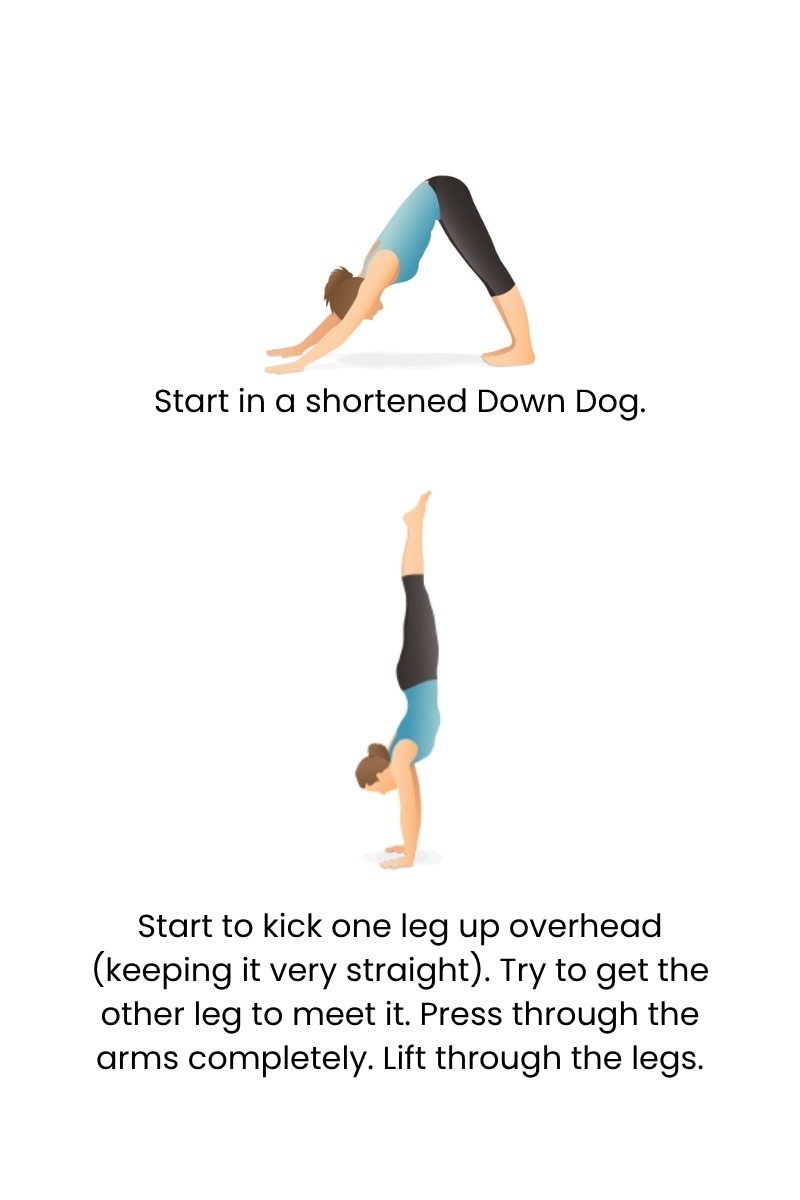
  1. Start in Downward-Facing Dog: Begin with your hands shoulder-width apart, fingers spread wide, and shoulders stacked over your wrists.
  2. Move your shoulders slightly past your wrists and press firmly through your palms and fingertips. Keep your arms strong and engaged.
  3. Extend one leg toward the ceiling while keeping your hips square. Shift your weight forward and engage your core.
  4. Bend the standing knee and take small, controlled hops, using your lifted leg to help bring your hips over your shoulders. Keep your gaze slightly forward between your hands.
  5. Once your hips stack over your shoulders, draw your legs together and reach strongly through your heels. Keep pressing the floor away, engage your core, and breathe steadily.
Handstand how to graphic

Alignment Tips & Cues for Headstand

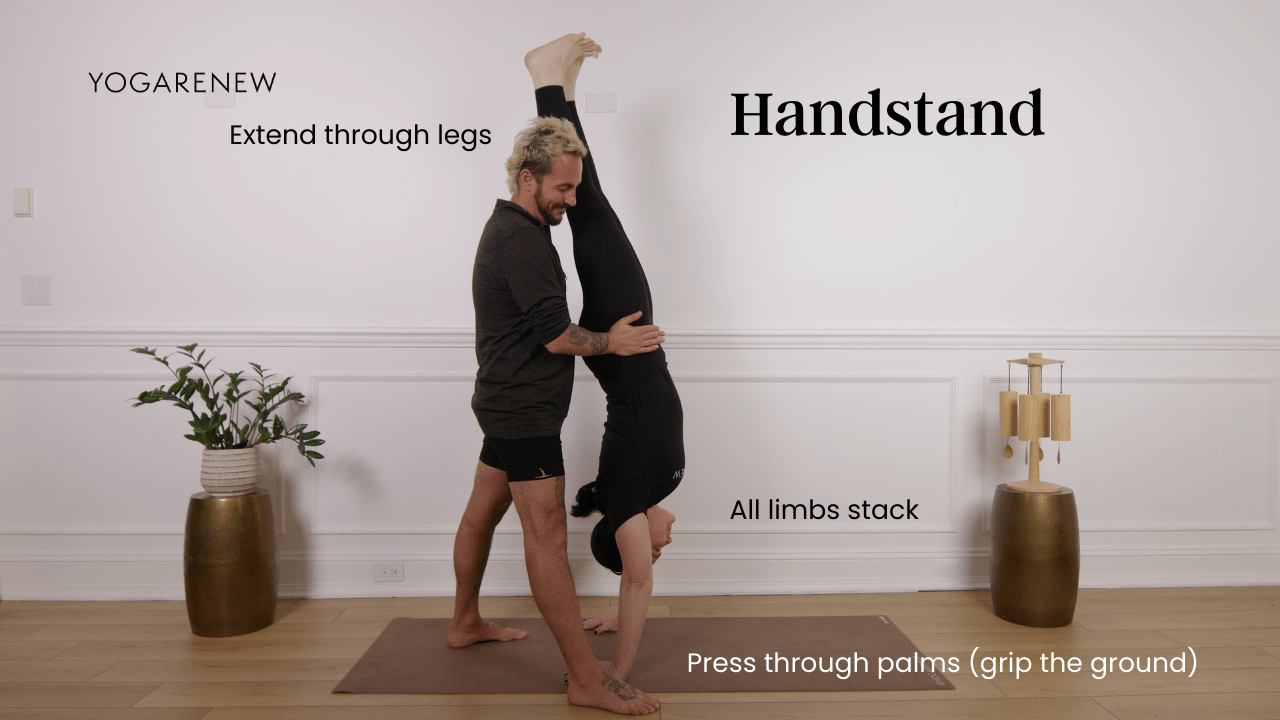
handstand graphic with alignment points

Alignment Tips:

  • Hands shoulder-width apart with fingers spread wide and actively gripping the mat
  • Shoulders stacked directly over the wrists, with arms straight and strong
  • Press firmly through the palms and fingertips to create a stable foundation
  • Engage the shoulders and push the floor away to create space around the ears
  • Keep your core firm and ribs gently drawn in to avoid overarching the lower back
  • Legs and feet active — reach strongly through the heels and toes for stability

Cueing Suggestions:

  • “Press firmly through your palms and fingertips to create a strong foundation.”
  • “Push the floor away and lift through your shoulders.”
  • “Stack your hips over your shoulders and your shoulders over your wrists.”
  • “Reach actively through your legs and feet as you breathe slow, steady, and smooth.”

Contraindications


  1. Neck or Cervical Spine Injuries: Avoid putting pressure on the head and neck

  2. Glaucoma or Eye Conditions: Increased pressure may be harmful

  3. High or Low Blood Pressure: May exacerbate symptoms—consult your doctor

  4. Heart Conditions: Inversions may be contraindicated

  5. Pregnancy: Only practice under guidance and if previously established in your practice

Modifications & Variations of Handstand

Modifications:

  • Wall Support: Practice with your back toward a wall for security and confidence
  • L-Shaped Handstand: Place your feet on a wall or elevated surface to build shoulder strength and learn proper stacking
  • Tuck Handstand: Draw the knees toward the chest to develop balance and control before extending the legs
  • Spotter or Teacher Assistance: Use guidance to practice safely, especially when learning how to enter and exit the pose

Variations:

  • Straddle Handstand: Open the legs wide to create more space and explore balance
  • Pike Handstand: Keep the legs together and fold at the hips for a challenging variation
  • One-Legged Handstand: Extend one leg toward the ceiling while keeping the other leg lower
  • Press Handstand: Slowly lift the legs from the floor into Handstand using strength and control rather than momentum
  • Scorpion Handstand: Bend the knees and draw the feet toward the head for an advanced backbend variation

Common Mistakes in Handstand

  1. Hands too wide or too narrow: Keep your hands about shoulder-width apart to create a stable foundation.
  2. Kicking up aggressively: Use controlled, gradual movement rather than relying on momentum to find your balance.
  3. Collapsing through the shoulders: Press firmly through your palms and actively push the floor away to maintain strong, elevated shoulders.
  4. Overarching the lower back: Engage your core and gently draw your ribs in to maintain a more neutral body line.
  5. Holding the breath: Breathe calmly and consciously throughout the pose to help maintain focus and control.

When to Avoid or Modify Handstand

  • Wrist Pain or Injury: Avoid loading the wrists if you have pain or an acute injury; choose a wrist-friendly variation instead.
  • Shoulder or Elbow Injury: Modify or avoid Handstand if weight-bearing through the arms causes pain or discomfort.
  • Fear or Panic Response: Practice with a wall, spotter, or qualified teacher until you feel more confident and controlled.
  • Lack of Upper-Body Strength: Build foundational strength with Plank, Downward-Facing Dog, Dolphin, and other weight-bearing poses before attempting Handstand.
  • Balance or Spatial-Awareness Challenges: Practice near a wall and work on controlled entries and exits before attempting Handstand in open space.
  • Pregnancy or Other Health Considerations: Consult with a qualified healthcare professional or experienced prenatal yoga teacher before practicing inversions.

Why Practice Handstand?

Practicing Handstand (Adho Mukha Vrksasana) develops full-body strength, balance, coordination, body awareness, and mental focus. As an inversion, Handstand challenges the shoulders, arms, wrists, and core while encouraging concentration and controlled breathing. Regular, mindful practice can also build confidence, resilience, and a greater sense of body control. For yoga practitioners, Handstand offers an opportunity to explore balance, overcome fear, and develop strength through progressive, intentional practice. With proper alignment, preparation, and modifications, Handstand can be a rewarding addition to a well-rounded yoga practice.

Frequently Asked Questions

Do I need to be advanced to do Handstand?

Not necessarily—but proper preparation and guidance are essential.

Is it bad for the wrists?

Only if done without preparation or stretching of the wrists. Use extending through your legs for more support.

Can I practice Handstand daily?

Given there are no medical issues from your doctor or other healthcare provider, absolutely. The more you practice, the more confidence and stability you gain, making it easier to float up into the pose.
Related Poses:

Free Classes, Tutorials & More
Download the YogaRenew App

Explore classes & pose tutorials for any style, format, duration or experience level with a free account in the YogaRenew app. Or subscribe and gain access to workshops, live classes and more.