Some time ago there was an amazing documentary series called “The Americas” and it showed many different species of animals across the American continents. The variety of creatures was astounding, but even more than that was what each of these living things could do: Build homes, travel many miles, find food where there appeared to be none, care for their young, defend themselves from predators. For some of these animals, every day was a struggle just to find food, and to keep safe. There were no YouTube videos to tell them how to do this, no ChatGPT – this knowledge was innate. The turtles that, right after breaking out of their shells begin to crawl as quickly as they can into the sea and started dodging things wanting to eat them, were moving by the power of instinct. This is downright impressive, I cannot lie. This internal knowing, that seems to come from somewhere deep within, is a good way to look at the part of the mind called The Manos.
The Three Parts of the Mind
The Mind (Citta), in yogic thought is not one big thing. It has three distinct parts: The Buddhi (often called the intelligence), which is the home of discernment and where yogic practices lead us to, so that we may discover we are not a body, nor a mind, but a soul, The Ahankara (often called the false ego), which is the seat of our identity, the part of us that builds our personality, and tends to our likes and dislikes, and then there is the Manos (often called the lower mind, or caveman mind), which is likened, in a way, to the instinctual mind of animals. This is the part of the Mind that, (like our animal friends), sees the basic needs for survival. That rumbling in the stomach means eat. The dryness in the throat means thirst. The sensation of fire is hot.
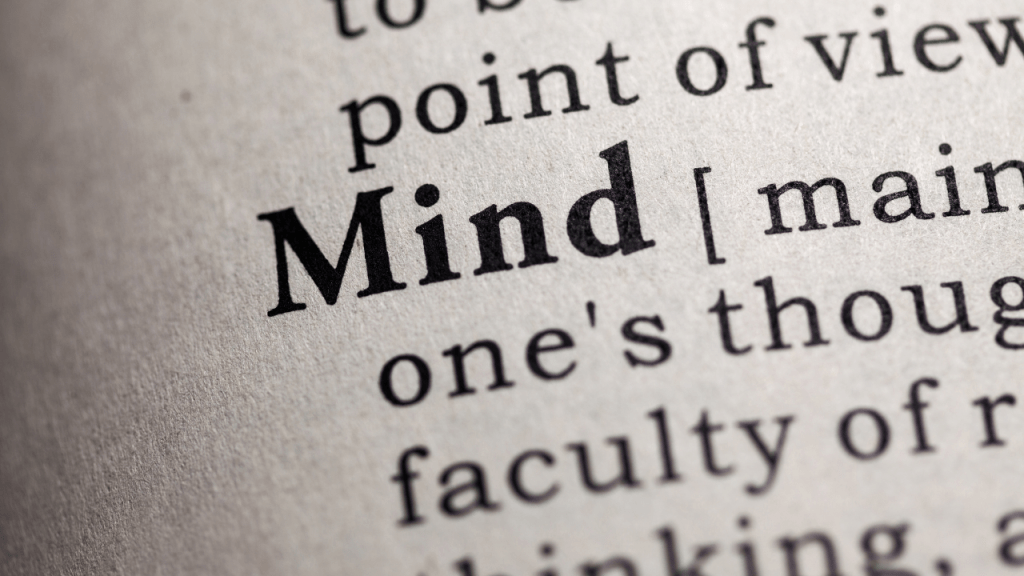
Mind [noun]; the element of a person that enables them to be aware of the world and their experiences, to think, and to feel; the faculty of consciousness and thought.
What’s the problem with being in the Manos?
Clearly, the Manos is necessary and useful. It helps us identify and serve our most basic needs. We need to eat, drink, and keep ourselves safe. So, would not one just be content to keep their focus there? Why even peek into the doorway of the other parts of the mind at all? In thinking of this we can think of our phones. Yes, your phone is a device on which you can make telephone calls, but what else is it? A computer, a camera, a recording device, a storage house for documents, an entertainment center, an alarm clock – the list goes on and on. It’s function as an actual phone is literally the least of it’s capabilities. The Manos is like that. Yes, it has it’s use, but we, as humans are capable of far more.
Being reminded of the journey of turtles, I wonder, why bother swimming all that way to this one particular place, leave eggs, and then risk your life to swim all the way back? It’s so dangerous… why not stay put? But, that question is not one that the turtles are capable of asking. All they know is that they must go to this one very particular place, and they must lay their eggs there, and they must return the same way they came. There is no choice and there is no thought behind it. There is no ability to change, grow, and evolve. A great white shark cannot one day decide to become a vegan! But, humans can…
The gift of a human birth & the Manos
There is a meditation I once heard that has stuck with me, and it goes like this, “I am grateful, I am grateful, I am grateful, for my precious human birth, because I can change!” As human beings, we are not bound to live just in the Manos, we have the ability to rise above our lower natures, and learn from our experiences. We can evolve.
A.C. Bhaktivendanta Srila Prabhupada, who brought many of the teachings of Bhakti Yoga to the West has said that there are 8, 400,000 species of life on earth and only one of them, the human life, can really make notable change. We are not bound by instinct, although sometimes we may feel like we are.
Yoga teaches us that we can live a life that is more creative, and less reactive, when we realize that we can function on a higher level than that of the Manos. In the Bhagavad Gita 13.8-12 – there is a list of qualities that are consider to be knowledge, and rounding out the list is “accepting the importance of self-realization; and philosophical search for the Absolute Truth.” The teachings of the Gita and The Yoga Sutras (and really any text of yogic thought) answers the question, “Why am I here?” quickly, and definitively – we are here to discover who we are.
In our journey as eternal souls through some of those 8,400,000 life forms, we may have been able to fly, to be the fastest living mammal on the planet, to be a creature so small it can live comfortably in a pin sized hole in a tree, but we have never been able to reason, and to think and discover our truest identity. The Yoga Sutras, begins with the word “Atha” – an imperative expression of the exact present moment. It translates to NOW. The sage and scribe of the Sutras, Patanjali, is urging us to remember this long journey we have made and the brevity of a human experience. NOW (Atha) the text says, begin this process of yoga to discover who you truly are. And that journey can begin the moment we realize there is something more to us than just the basic needs and desires that live in the Manos. It is a good start, but as humans, we are capable of so many things and yoga (including yoga philosophy) can be a great stepping stone for figuring out just how much we are capable of.

Yoga philosophy can open our hearts and minds up to what’s possible.