If you teach yoga, practice regularly, or run a studio, chances are you have strong feelings about hands-on assists. Some students love them. Some teachers miss them. And for many people, the conversation has become impossible to separate from the very real history of inappropriate touch, boundary violations, and abuse in yoga spaces.
So do hands-on assists still have a place in an asana class in 2026? In this post, we’ll look at the difference between unsafe touch and skillful teaching, why many studios have become more conservative, and how to approach assists in a way that respects both student consent and the original benefits of hands-on guidance.
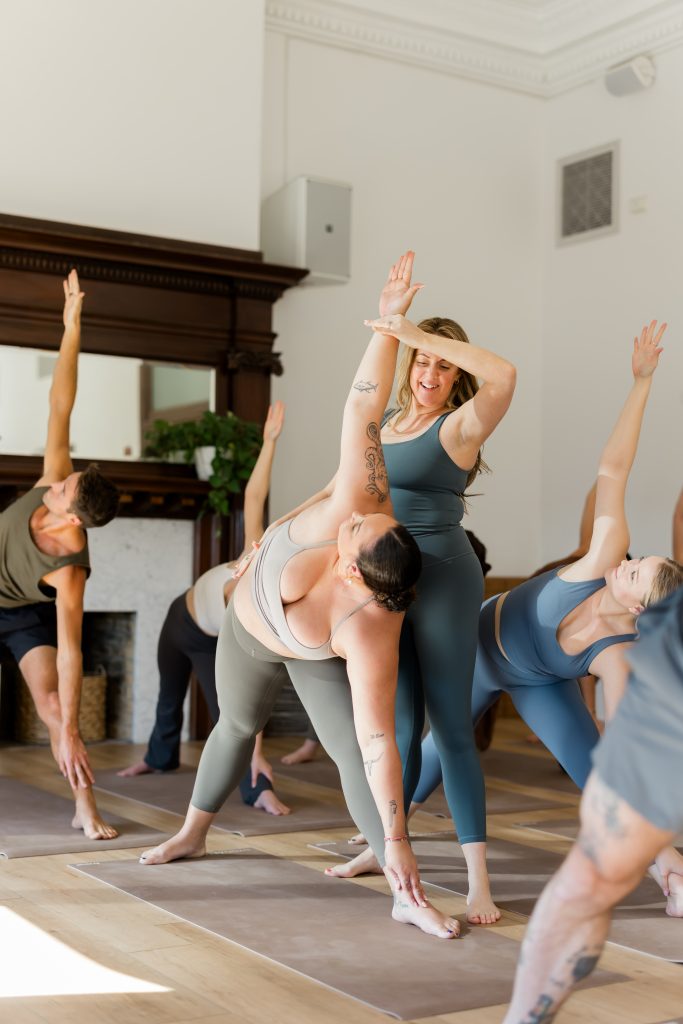
Kate Lombardo, Yoga Director of YogaRenew, giving a student a hands-on assist to help them learn!
Why Hands-On Assists Became Such a Big Topic
Hands-on assists were once considered a normal part of yoga class. If you walked into a studio, especially in places like New York City, the expectation was often that the teacher would touch you. You might get a physical adjustment in triangle pose, support in a balance, or even a head massage in savasana. It was just part of the experience.
That tradition did not come out of nowhere. In many yoga lineages, hands-on guidance has long been part of helping students understand alignment, deepen posture, and progress in practice. For years, many students genuinely welcomed it. Some even came to class expecting it and associated it with feeling cared for, relaxed, or more connected to the room.
But the story also has a darker side. The rise of the internet in the late 1990s and early 2000s gave students a place to speak publicly about harmful experiences, and many of those stories involved inappropriate touch, harassment, and full-on sexual assault. That history changed the conversation forever.
The important thing now is not pretending that history did not happen. It did. And because it did, modern teachers have to approach touch with far more awareness than before.
What Kind of Assist Are We Talking About?
One reason the debate around hands-on assists gets messy is that people use the phrase to mean very different things. Not all assists are created equal, and not all of them carry the same risk or purpose.
A helpful way to think about it is to separate assists into three categories:
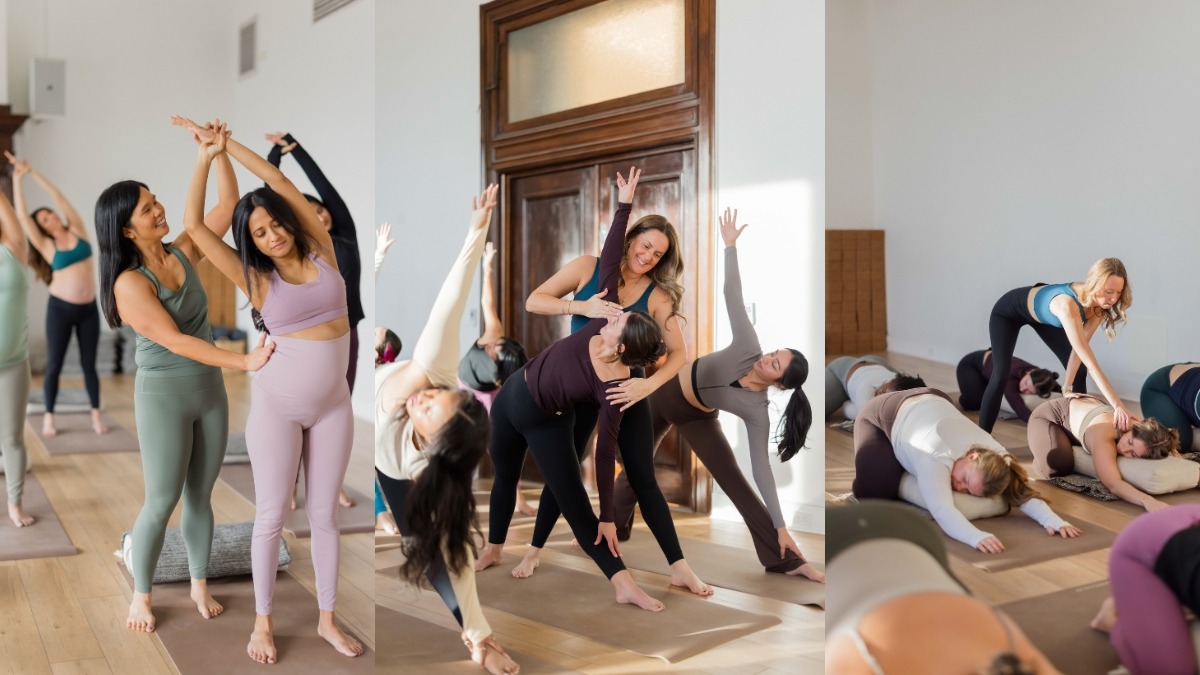
- Directional or safety-based assists: These are the assists that help with safety or alignment. For example, helping someone straighten an arm in triangle pose, or preventing a student from falling out of a headstand. These are often the most defensible assists because they support clarity and safety.
- Experience-deepening assists: These are adjustments that help a student feel more grounded, open, or organized in a pose. A child’s pose assist that lengthens the spine or helps the hips settle is a good example. The pose may already be “correct,” but the assist makes the experience more useful or more spacious.
- Feel-good assists: These are the massages, shoulder rubs, and savasana touches that are meant to be pleasurable or soothing. Students may love them, but they are also the most subjective. What feels supportive to one person may feel intrusive to another.
That distinction matters because the more an assist moves from safety into subjective comfort, the more consent and relationship matter.
From left to right: A safety-based assist, experience-deepening assist, and a feel-good assist.
A teacher may reasonably assume that some safety-based correction is part of the teaching role. But no one should assume that every student wants to be touched just because they showed up to class.
Consent Changed the Standard — And It Should Have
One of the biggest shifts in recent years is that teachers can no longer rely on the old “you entered the room, so touch is implied” mindset. That assumption used to be common. It was treated almost like a social contract: if you came to class, physical assists were fair game.
That standard is outdated.
Today, the more responsible approach is to treat touch as something that must be earned through communication, trust, and context. Students are not a default “yes.” They are people with different bodies, histories, injuries, preferences, and boundaries.
This is especially important because the reasons someone does not want to be touched are not always visible. A student may have trauma in their past. They may be injured. They may simply not like physical contact. Or they may not want to be singled out in front of a group.
That last point is easy to miss. Even consent systems that are designed to help — like colored tokens, bracelets, or cards — can create discomfort for some students if they make refusal feel public. What seems clear and organized to one person may feel exposing to another.
The takeaway is simple: consent should reduce pressure, not increase it. If your system makes students feel watched, judged, or separate, it may need to be rethought.
What a Thoughtful Assist Policy Looks Like in 2026
The strongest modern approach is not “always assist” or “never assist.” It is intentionality.
A thoughtful teacher or studio tends to ask a few core questions:
- Is this assist helping with safety or understanding?
- Does this student already know me and trust me?
- Have I asked permission in a way that feels easy to decline?
- Is this a class setting where touch makes sense?
- Have I considered whether the assist is for the student’s benefit or my own habit?
For many teachers, the answer starts with a simple verbal check-in: “Can I help you?” or “Do you mind if I assist you here?” That language matters because it gives the student an immediate out without making them explain themselves.
For brand-new students, a conservative approach is often best. Introduce yourself. Ask if they have any injuries or anything you should know about. Build some rapport before touching them. Once a student has come to class several times and you know they are comfortable, you may have more room to offer a deeper assist.
The studio side can be more complicated. Some studios choose a no-touch policy. Others leave it to each teacher. Both approaches can work if they are communicated clearly and matched to the culture of the space.
What matters most is consistency. If students do not know what to expect, they cannot make an informed choice.
Why Many Teachers Are More Conservative Now
A lot of experienced teachers have moved toward less touching, and not only because of boundary concerns. There are at least three other reasons this shift has happened.
First, teachers are better at cueing now. Many have spent years refining language, sequencing, and demonstration, and they can often help students discover the shape on their own without stepping in.
Second, assists take energy. Teachers who once gave a lot of hands-on support often realize that physically moving through the room is exhausting, especially in a full schedule of classes. The student may enjoy a head massage in savasana, but the teacher may be drained by the sheer output of doing that repeatedly.
Third, the pandemic changed the baseline. During COVID, many teachers had to stop touching entirely. That pause gave a lot of people a chance to reconsider what touch was doing in their classes, why they were using it, and whether some of it had become automatic rather than useful.
That reset was revealing. Many teachers noticed they could still deliver a strong class without touch, and many students adapted. At the same time, some teachers also realized that certain moments of touch — especially safety interventions — still had real value.
In other words, the pandemic did not eliminate the need for assists. It clarified the difference between necessary touch and habitual touch.
When Hands-On Assists Still Make Sense
Even in a more cautious yoga culture, there are still situations where hands-on assists can be valuable.
The strongest case is safety. If a student is about to fall out of an inversion, collapse into a vulnerable shoulder position, or overextend in a way that could cause strain, an assist may be not only appropriate but necessary. In those moments, the teacher is supporting the student’s wellbeing.
Alignment-based assists can also be useful when verbal cues are not enough. Sometimes a student hears “straighten your arm” or “lengthen your spine,” but their body does not translate the instruction correctly. A brief physical cue can bridge that gap.
Experience-deepening assists can work too, especially when the teacher already knows the student. A well-timed child’s pose adjustment, for example, may help someone find more space and grounding than words alone can provide.
But here is the key: even when the assist is good, it still should not be automatic. The best touch is responsive, not entitled. It should feel like an invitation, not a takeover.
The Question Every Teacher Should Ask
If you are a teacher, the most useful shift may be asking yourself this before you touch anyone:
Am I doing this because it truly helps the student, or because I think it is just what a good yoga class is supposed to look like?
Some assists are genuinely useful. Some are outdated. Some are more about creating a vibe than serving the student. And some, even when well-intentioned, are not worth the risk if they require too many assumptions. The good news is that you do not have to choose between being warm and being respectful. You can create a class environment where students feel seen, supported, and safe — with or without touch.
That might mean:
- asking permission before any assist
- avoiding touch with new students
- reserving deeper assists for students you know well
- being more conservative in group classes
- letting students decline without explanation
- trusting your cueing more than your hands
Frequently Asked Questions
Are hands-on assists still allowed in yoga classes?
Yes, but “allowed” is not the same as “appropriate.” Whether hands-on assists make sense depends on the studio culture, the teacher’s training, the student’s consent, and the reason for the touch.
What is the safest way to ask before giving an assist?
Keep it simple: “Can I help you?” or “Do you mind if I assist you?” That language gives the student a clear chance to say no without needing to explain.
Should yoga studios have a hands-on assist policy?
They can, but there is no one-size-fits-all answer. Some studios choose a no-touch policy, while others leave it to the teacher’s judgment. The best policy is the one that is clear, communicated, and respectful.
Are feel-good assists like savasana massages still appropriate?
Sometimes, but they require even more care than alignment assists because they are more subjective. If a student is not someone you know well, it is usually better to avoid that kind of touch unless they have clearly welcomed it.
Why do some students not like hands-on assists?
The reasons vary. Some students have trauma histories, some have injuries, and some simply do not like being touched. Others may not want to feel singled out in front of a group.
Watch or Listen to the Full Episode:
Watch the full conversation about hands-on assists, consent, safety, and the evolving role of touch in yoga classes.
Hands-on assists are not gone, but they have changed. The old assumption that every student wants touch no longer holds, and that is a good thing. What remains is the useful part: consent-based, thoughtful, and truly supportive touch when it serves the student.
If you teach, the next step is not to decide whether you are “for” or “against” assists. It is to decide how you want to use them responsibly, intentionally, and sparingly. If you practice, notice how touch feels in your body and give yourself permission to say yes or no.