




”The conquered mind can be your best friend. The uncontrolled mind can be your greatest foe.
-Bhagavad Gita
Overcome Challenges to Meditation
Meditation is one of the most widely cited and utilized resources for improving mental, emotional and physical well being. It’s often considered a simple and accessible practice, yet it can feel incredibly challenging for beginners and experienced practitioners alike.
This course is designed to help you break down the barriers to meditation so you can build a practice that feels approachable, meaningful, and sustainable.
You’ll explore the foundational principles of meditation, where it comes from, how to work with the mind + its obstacles and how to overcome challenges in meditation. You’ll also learn various techniques to discover a practice that works best for you.
Whether you’re brand new to meditation, want to deepen your existing practice or hope to guide others – this course will give you the tools and knowledge to move forward with confidence.
Explore 30 Enlightening Lessons
Meditation is more than a wellness trend or a tool for relaxation. It is a practice rooted in deep philosophical traditions with a wide range of techniques, goals and applications. Through experiential lectures and guided practices, this course moves beyond the surface of meditation to explore the ‘how’ and ‘why’ of the practice. You’ll learn:
- The foundational principles and goals of meditation
- Common myths and misconceptions about meditation
- The benefits of meditation
- How to overcome common obstacles in meditation
- Yogic philosophy and the deeper purpose of meditative practice
- Meaningful concepts like dhyana, the vrittis and nirodhah
- The three layers of the mind
- How to create a supportive space and practice
- How to position the body
- How to set an intention and choose an object for practice
- The structure, background and purpose of different meditation techniques
- How to set yourself up with a consistent, sustainable and effective meditation practice
- Clear & detailed guidance on 8 different meditation techniques
Discover 8 Meditation Techniques
Anapana (Breath Awareness)
Learn how to use the natural rhythm of the breath as an anchor for attention
Metta (Loving-Kindness)
Cultivate compassion, warmth and patience towards yourself + others
Trāṭaka (Gazing)
Practice steady gazing to develop concentration, focus and mental clarity
Body Scan
Develop bodily awareness and learn to move attention through the body in a structured, mindful way
Pranayama (Breath Control)
Influence the body, mind and nervous system through active breathing
Japa (Mantra Repetition)
Steady the mind with the power of mantra and support a more inward-focused practice
Atma Vicara (Self-Inquiry)
Gain deeper self-understanding and awareness
Visualization
Work with mental imagery to connect with the emotions and nervous system.
Meet Your Guide:
Ben Kalra (E-RYT 500, YACEP) has gained a global and dedicated following for his insightful and relatable training which he leads internationally along with workshops and retreats. His nondogmatic approach to meditation is rooted in classical yoga techniques with influence from his extensive experience.
He is a Katonah Yoga® teacher and has also completed advanced trainings through Shivakali Yoga and with Jonah Kest, which further developed his skills in Vinyasa, pranayama, and meditation.
His teaching style is both serious and lighthearted. Ben views yoga and meditation as a slow-burning practice of liberation and as a tool for living well in a body and in the world. He believes good teaching should be clear, human, and occasionally humorous.

Also Included
Tap into limitless potential with your membership to YogaRenew’s app. In addition to this course, you’ll also gain access to dozens of other courses, live & on-demand classes, series, live events + more.
Discover and pursue new passions across a wide range of topics in our extensive library of courses, including:
Access Anywhere
Access this course from our website on any browser. After enrolling, download our mobile app from the AppStore or Play Store and cast it to your TV.


10,000
5 Star Ratings
30
Courses
1,000
Classes
Frequently asked questions
Do I need prior experience to take this course?
Not at all. This course is designed to accommodate those who have never practiced meditation and are looking to get started. You’ll find valuable insight on different techniques as well as guidance on how to overcome challenges.
Is this only available on the computer, or can I watch it on other devices?
You can take this course anywhere! Your membership to the YogaRenew app gives you full access from any browser and its also accessible from our mobile apps on the AppStore and Play Store. The mobile apps can also be casted to any screen.
Does this count towards my yoga teacher training?
Our yoga teacher training courses are standalone programs, and while this does not count towards the hours you’d complete in a 200, 300 or 500 HR YTT this course does count towards continuing education credits for Yoga Alliance.
What styles of techniques of meditation will I learn in this course?
In this meditation course, you’ll learn 8 techniques including Anapana (breath awareness), pranayama (breath control), Metta (loving-kindness), Japa (mantra repetition), Trataka (gazing), Atma vicara (self-inquiry), body scan and visualization.
What will I learn beyond technique in this course?
In addition to learning the practice and technique of meditation, this course will also delve into the ‘how’ and ‘why’ behind the practice. You’ll learn how meditation works, what the goals are, and how to overcome common challenges. This course also delves into philosophical concepts behind meditation rooted in yogic philosophy.
You’ll learn about the three layers of the mind and concepts like dhyana, the vrittis and nirodhah.
How many hours is this course?
This is a 5 hour course with nearly 3 hours of video content, additional written lectures and resources across 30 lessons.
Can I register continuing education credit for Yoga Alliance with this course?
Yes! Graduates of this course are eligible to register 5 hours of continuing education credit with Yoga Alliance. Instructions are provided towards the end of the course on how to register your hours.
A Look Inside the Course:
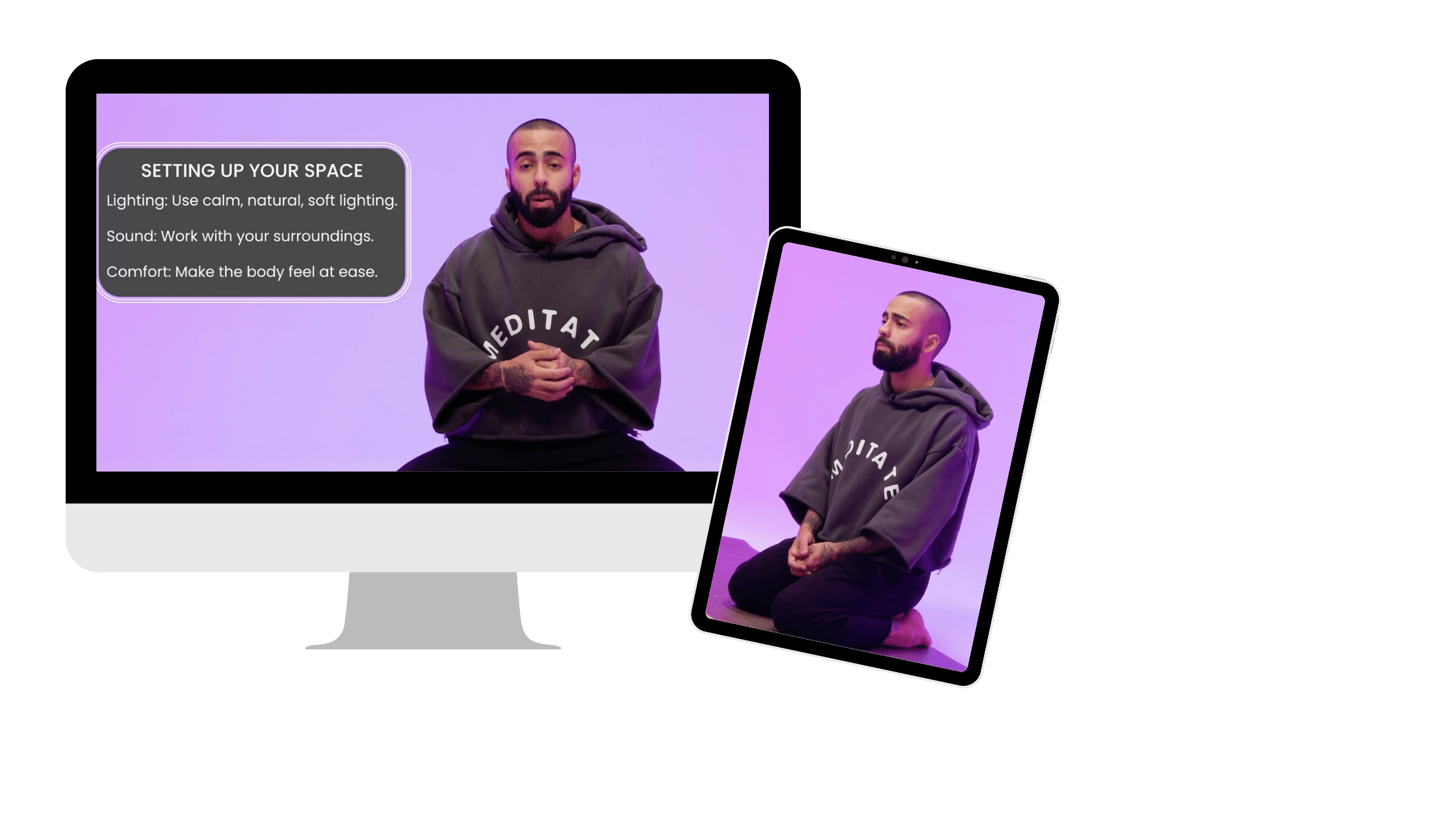
Guided by Ben Kalra, you’ll move through 5 Modules explaining how to establish a steady & meaningful meditation practice. Inside the modules there will be course materials such as: Guided meditations, insightful questions and common myths & misconceptions about meditation.
Does meditation actually work?
If you’re considering enrolling in this course, you may be wondering – does meditation actually work? The short answer is yes. Research has consistently shown that meditation can help reduce stress, improve focus, support emotional well-being, and promote a greater sense of calm. While meditation is not a quick fix for life’s challenges, developing a regular practice can create lasting positive changes in both the mind and body.
Many people want to learn how to meditate because:
- They are looking for practical tools to manage anxiety
- They want to improve their sleep
- They want to cultivate mindfulness in their daily lives
- They’re looking for inner peace
Like any skill, the benefits of meditation often become more noticeable with consistent practice over time.
There are multiple benefits of meditating regularly
A steady meditation practice can reduce stress and feelings of overwhelm, improve mental clarity, help with concentration, support better sleep and enhance the overall sense of being. Meditation also helps people learn to live in the present moment, which has been proven by countless spiritual practices to reduce anxiety and help live a more balanced life.
Whether you’re new to meditation or looking to deepen your practice, a structured meditation course like this can provide guidance, accountability, and techniques that help you experience these benefits firsthand.
What is meditation?
Meditation is a practice that involves training your attention and awareness to cultivate a state of presence, clarity, and inner calm. Contrary to popular belief, meditation is not about stopping your thoughts completely. Instead, it’s about learning to observe your thoughts without becoming attached to them.
There are many different styles of meditation, making it accessible to people of all backgrounds and experience levels. A comprehensive meditation course often introduces students to a variety of techniques, helping them discover which approach works best for their unique needs and goals.
Common Types of Meditation
- Mindfulness Meditation: Focusing on the present moment without judgment
- Breath Awareness Meditation: Using the breath as an anchor for attention
- Guided Meditation: Following verbal instructions from a teacher or recording
- Mantra Meditation: Repeating a word or phrase to focus the mind
A meditation course can help beginners understand these techniques while providing the tools needed to establish a sustainable and rewarding practice.
How do beginners start meditating?
Starting a meditation practice doesn’t have to be complicated. One of the most common misconceptions is that you need to sit perfectly still for long periods of time or achieve a completely quiet mind. In reality, meditation begins with simply paying attention.
For beginners, consistency is often more important than duration. Even a few minutes of meditation each day can help build a strong foundation and make the practice feel more approachable. Many students find that taking a meditation course helps remove the guesswork and provides clear guidance for getting started.
⭐️ Beginner Meditation Tips ⭐️
- Start with just 5–10 minutes per day
- Find a quiet, comfortable place to sit
- Focus on your natural breathing pattern
- Notice when your mind wanders and gently return your attention
- Use guided meditations for additional support
- Practice at the same time each day to build consistency
- Approach meditation with curiosity rather than perfection
How do I know if I'm meditating correctly?
One of the most frequently asked questions in any meditation course is, “How do I know if I’m meditating correctly?” The good news is that meditation is less about achieving a specific outcome and more about engaging in the process of awareness.
Many beginners assume they’re doing it wrong because thoughts continue to arise during meditation. However, noticing those thoughts and gently returning your attention to your breath, body, or chosen focus is actually the practice itself. Meditation is not about eliminating thoughts—it’s about changing your relationship with them.
Signs You’re Meditating Effectively
- You notice when your mind wanders
- You repeatedly bring your attention back to your focus point
- You feel more present during daily activities
- You become more aware of your thoughts and emotions
- You develop greater patience with yourself
- You feel calmer or more grounded after practice
- You remain committed to showing up consistently
Remember that every meditation experience is different. Some sessions may feel peaceful, while others may feel busy or distracting. A quality meditation course teaches students that both experiences are normal and valuable parts of the journey. Over time, consistent practice can help cultivate greater mindfulness, self-awareness, and inner balance both on and off the meditation cushion.