Whether you’ve been teaching for a while or you’ve recently graduated from a 200 hour yoga teacher training, you may be thinking about ways to broaden your teaching opportunities. One way to expand your yoga knowledge and business is to become a kids yoga teacher. In this article, we’ll explore some of the benefits of teaching kids yoga and what to be mindful of when starting to teach kids yoga.
Teaching kids can broaden your overall teaching skills
As a yoga teacher, you’ve built a vocabulary that allows you to teach specifically to a mature set of students. Your teaching style may include anatomy and Sanskrit to suit your adult student base, which can be pretty complex. Learning to distill those teachings down into a simplistic and fun format can help you approach your teachings from a different perspective. This might actually help you sharpen cues and begin to learn more about why you say the things you say when you’re teaching.
As a certified children’s yoga teacher, you’ll learn new ways to teach catering to a much younger audience through your tone, vocabulary, and approach. Zooming out, you’ll gain insight into how language centered around yoga can be explained in easier ways — this might help you focus more on being present.
Learning how kids think, act, and solve problems is a great way to broaden what you teach and how you teach it, making your teaching more accessible and fun. Learning to communicate with children in this way will also enhance your relationships with all of the kids in your life.
You’d be shaping kids’ live positively
Whether you’re teaching pre-school toddlers, or high school teenagers, the concept of yoga can be adapted to suit any age group. In general, yoga for kids will help build their self-esteem, increase self-awareness, improve their mental and physical health, and manage their emotions better. You’ll not only have a positive impact on their lives, but possibly even their parents, too! Teachings from inside the classroom often translate outside the classroom. Yoga is a tool they can bring with them, even when they’re at home.
It’s empowering to have the opportunity to create a better future by offering young people an opportunity to be more creative and empowered and supported. As their teacher, you can help children find their authentic voice, develop positive stress management skills, and build healthy relationships, all through the magic of yoga.
A kids yoga teacher training can enhance your yoga business
The demand for kids yoga continues to go up and classes are being offered as part of day care and school programs. If you’re looking to expand your yoga business, acquiring a children’s yoga teacher certification is an ideal way. Having the experience will allow you to teach kid’s classes in addition to adult classes, which doubles the amount of available classes for you.
Finding the right program is crucial. Since our kids yoga teacher training is completely online and self-paced, it’s a great addition to any previous or current trainings you want to start or are already enrolled in. Before committing to a kids yoga teacher training, it’s important to examine why you want to teach. The benefits of shaping the youth of the future positively is perhaps the only convincing you need!
Tips for teaching kids yoga
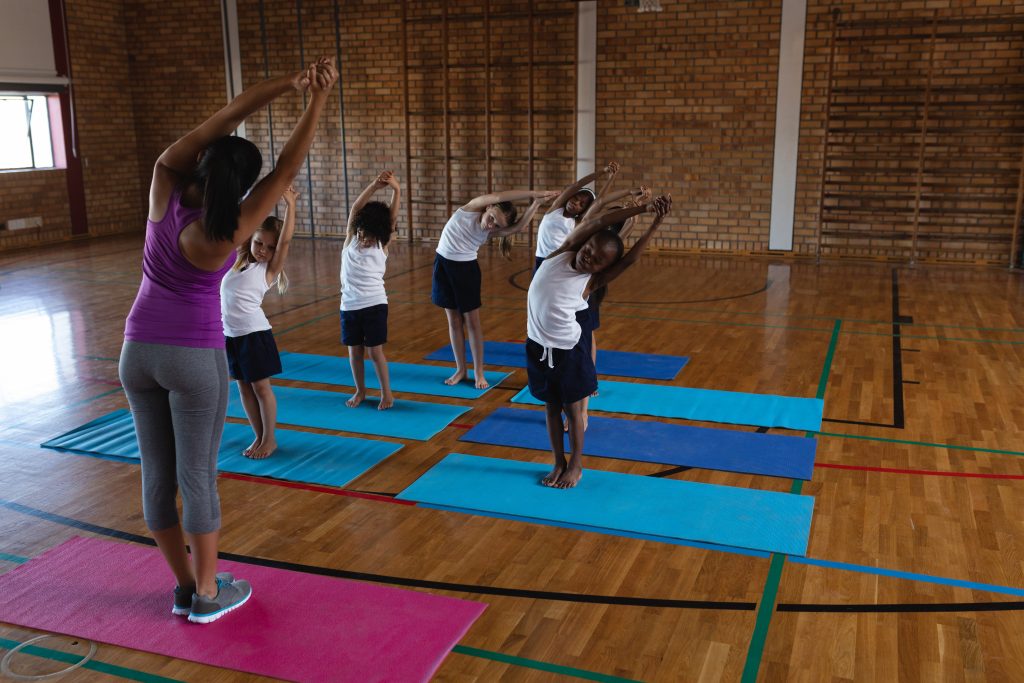
Teaching yoga to a group of kids in a school
Whether you already have your children’s teaching certificate or are currently working on it, we put together our top tips for teaching kids. Yoga for kids is more accessible than ever before since schools and day cares are adding the practice to their curriculums. With the increase in demand comes a strong need for new teachers.
- Enjoy their company — Being able to connect with your students is a key requirement for a good yoga teacher. It applies just as much when you teach young children, and you can only build a true connection if you like being around them. Teaching children requires a different mindset and level of patience than teaching adults, and it’s usually easier for people who love spending time with children.
- Awaken your inner child — When teaching young kids, it’s important not to take yourself too seriously. Kids learn through play, and you can’t teach them to play without practicing what you preach. This will quickly enable them to relate to you and to trust you.
- Tell a story — While it is true that children are open-minded and receptive, they often have a short attention span. In order to keep them engaged, you need to give them something to look forward to. A story does just that – it encourages children to participate actively and enthusiastically, and also awakens their imagination. When you’re planning a kids’ yoga session, try to focus on an asana sequence that tells a story. Some poses naturally lend themselves to storytelling (like Tree Pose, “Imagine reaching for the sun, your roots growing deep into the ground,” or Lion Pose, “Hear the mighty roar with each breath out”) and for others, you might just need to get creative. Remember, for the purpose of telling a story, you can even give asanas new names to the poses that the kids can relate to.
- Always have a “plan B” — When you’re teaching adults, you might prepare your class centering around a particular theme. Session planning is a great tool that will help you advance as a teacher. This is also true for planning children’s yoga classes, but it requires a slightly different approach. When kids are involved, things are subject to change. And sometimes, they change very quickly, forcing you to improvise. That’s not to say you have to completely abandon your session plan, but it might mean you have to take a detour. In short, be prepared to wing it!
- Honor the principles of yoga — Making a children’s yoga session into a fun game is a fantastic strategy. However, it’s also important to educate your little students about the core principles of this practice. Take time to talk to the kids about the history of yoga, the reasons we practice, and the things we try to achieve through yoga. And by talk we mean exactly that. Instead of simply giving them information, have a discussion and encourage the children to ask questions (be ready for some weird ones, too!). Depending on the age group, you may be able to go into more detail, or dedicate more of your lesson to this discussion. You don’t necessarily have to do this every session. As long as you do it regularly, your students should have a solid idea of what yoga is about.
- Teach them to slow down — As a children’s yoga teacher, you are not only teaching them to move, you’re also teaching them to embrace stillness. At the start of each lesson, take a few minutes to focus on breathing. You might frame it as a discussion or even as a game. Let the kids imagine that their belly is a balloon as it expands, or draw their attention to the sound of their breath. Beginning and ending each class with defined elements like breath work and relaxation will help to create a sustainable routine, provide the kids with a sense of familiarity, and teach them to slow down. No matter what, don’t ever skip the final relaxation, even if the kids are a little restless. Before you know it, Savasana will become their favorite part of the class.
- Be patient — Just like adult students, every child will have a unique experience with yoga. From a purely physical standpoint, some kids will be more flexible, some kids will have a better sense of balance, and some will be able to progress faster than their peers. Same applies to the mindfulness practice. Some children will be able to easily engage with it, while others might find it difficult to stay still, or to maintain focus.That’s perfectly fine! Remember, kids are just miniature visions of us, and just like us, they have complex emotions, and they come from a variety of backgrounds. Take that into account and be patient. It pays off for you and for them, we promise.
4 benefits of teaching yoga for kids
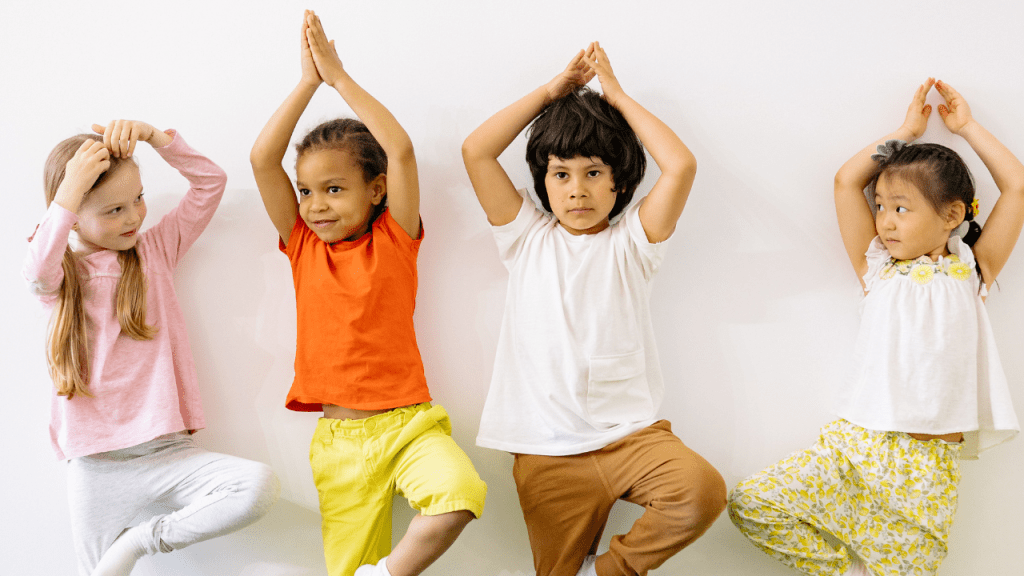
Kids in Tree Pose
Yoga’s an excellent practice for children, because it helps build the foundation for a happy and healthy life. As a matter of fact, 1.7 million children in the US are practicing yoga today. Whether you’re a current yoga teacher looking to expand your skill set, or are a student going through your 200-hour training, there are so many reasons to consider teaching children’s yoga. Not only does yoga benefit the practitioner, but you’ll also benefit from teaching kids yoga in ways you wouldn’t expect. Here are a few we found to be the most rewarding…
1. It inspires creativity and play
Teaching kids yoga gives you an opportunity to think outside of the box and acts as a reminder of how important the concept of play is in our lives. Holding a creative space for children to move and breathe awakens your youthful spirit that’ll translate into teaching adults and even into your own practice. When you can find even the most minor ways to inspire a child to do a pose, tune in to themselves, or even practice breath work, it can give you a whole new outlook on what yoga means and why it matters to you.
2. You get to watch children begin to connect to themselves and their breath
It’s also an incredible way for children to cultivate body awareness. Through this practice, children can learn so much about themselves. Once they begin to discover what they’re capable of, it’s both exciting and empowering for both of you. This occurs during the magic when they discover how “cool” it is to watch their bellies rise and fall with their breath. The more kids learn about themselves through yoga, the more it boosts their self-esteem and helps them connect more deeply to others and their natural world.
3. You’ll help children manage their emotions and behaviors
Children experience stress and anxiety, just as we do. The most common mental health disorders children face are ADHD, anxiety and behavioral disorders. By practicing yoga, children are able to recognize and cope with their feelings through exercises and other playful yoga techniques.
Along with their mental health, yoga also helps children to focus and helps to reduce their impulsivity. The effort and concentration that children put into holding a pose or maintaining balance carry over into other areas of their lives, such as at home and school.
4. Teaching kids yoga will help you grow as an instructor
If you’ve worked with children in any other setting before, you may be aware of just how much children can help you grow. The same goes for teaching yoga, where you’re likely to learn more from your students than you could ever expect to.
Children’s yoga is one of the most fun and exciting challenges you could ever encounter throughout your teaching journey. Yoga’s becoming more accessible to children in schools, studios, and gyms, providing abundant opportunities for you to grow your audience while positively impacting a future generation of leaders and teachers like you.
Considering teaching kids yoga?
It’s likely you’ll want to enroll in a full-on yoga teacher training to gain the full understanding of a kids yoga certification. In that case, do your research— you can either find a local studio to enroll in or find an online kids yoga course that can mold to your schedule! Either way, any certification will equip you with tips & tricks necessary to engage with a classroom of kids of any age. Teaching yoga for kids is an exciting way to enhance your overall yoga teaching and impact your life in a positive way (and theirs, too!)