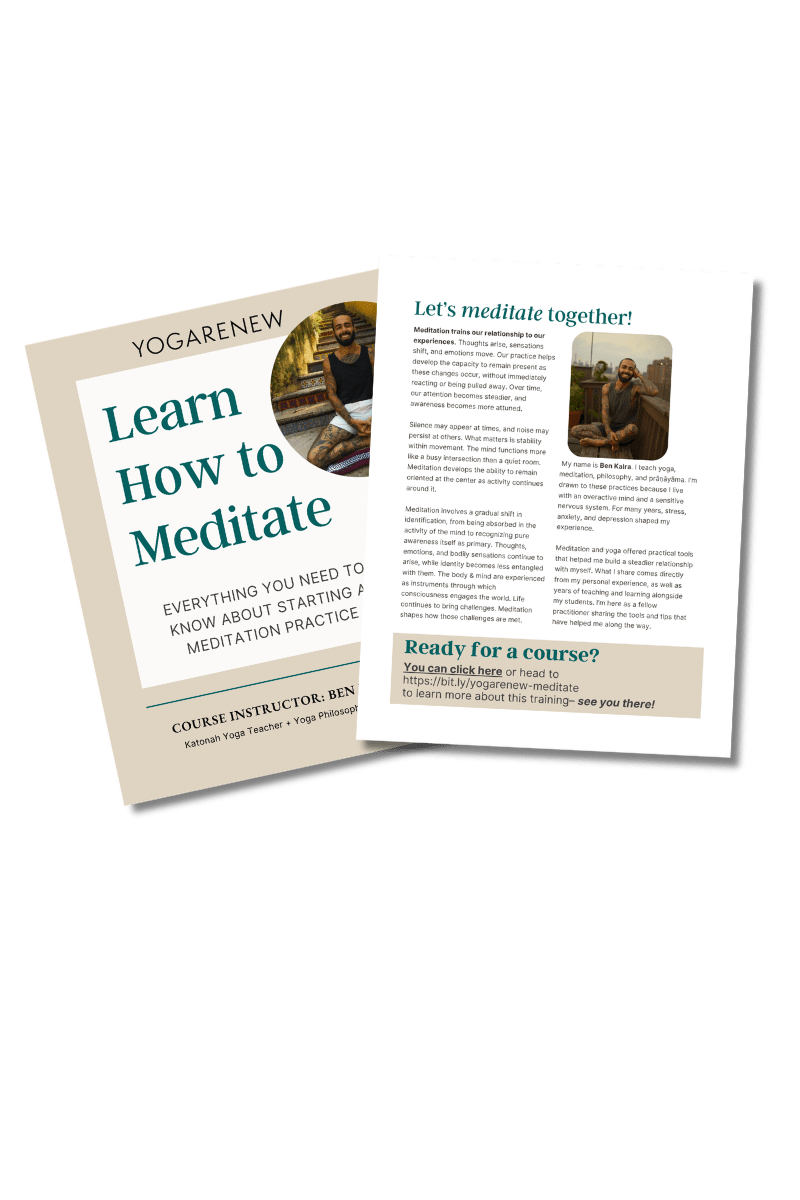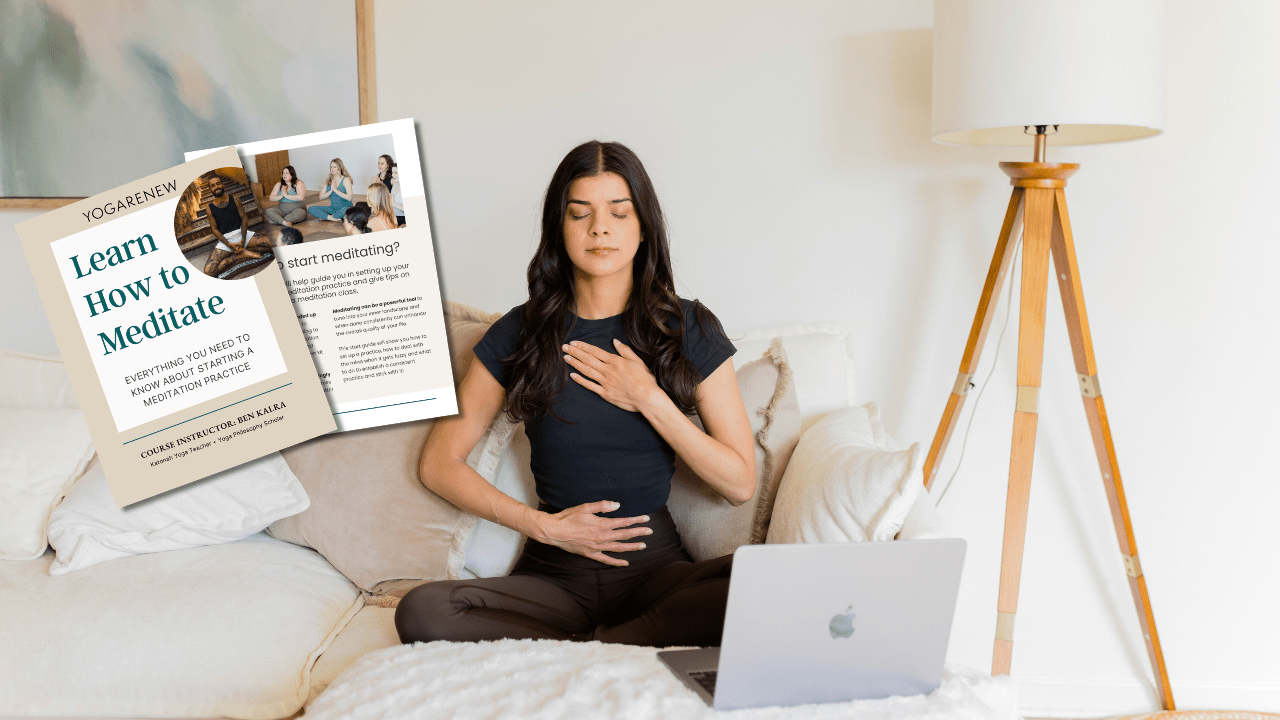
Everything you need to know about starting and maintaining a meditation practice complete with free PDF guide!
Meditation isn’t about stopping your thoughts—it’s about learning how to relate to them with clarity, patience, and calm. This guide will walk you through everything you need to start meditating, even if you think you “can’t.”
“People come to meditation for many reasons: focus, emotional balance, creativity, stress relief, spiritual inquiry. Meditation meets people where they are. It doesn’t require adherence to a belief system or spiritual identity. Sitting with experience and observing the mind is a human capacity, available to anyone willing to give it time and effort.” – Ben Kalra, Meditation Course Instructor
Quick Answers:
How long do I meditate for?
Start with a short amount of time, like a 2 or 5 minute timer. Gradually begin to increase the length of time until you are at a desired time.
What is the best way to sit for meditation?
Sit however is comfortable to you. If you are in a chair, try to have your feet make contact with the ground. Sit up tall so the spine is long & use support as needed.
What if my mind won’t stop?
That's normal! Let the thoughts come & go and remember to bring your focus back to the present moment. This is the practice of meditation.
How do I stay consistent?
Keep returning to your practice. Even if it's only 2 or 5 minutes a day. You can meditate anywhere as long as your mind is in the present moment.
What is meditation?
Meditation is the practice of training your attention and focusing to be in the present moment. Rather than trying to control your thoughts or escape your life, meditation helps you become more aware of what’s happening moment to moment.
Through a regular, consistent practice, you develop the ability to respond with greater clarity and less reactivity. Over time, this creates more ease, balance, and presence in everyday life.
Why meditate?
Research shows that a consistent meditation practice may help to:
The science of meditation
Psychology Today writes, “The romantic notion of quitting everything and joining Tibetan monks on a mountaintop is not the only way to meditate. You don’t need to quit your job, give up your possessions and spend 30 years chanting. Recent research indicates that meditating brings about dramatic effects in as little as a 10-minute session. Several studies have demonstrated that subjects who meditated for a short time showed increased alpha waves (the relaxed brain waves) and decreased anxiety and depression.” (Full article: The Science of Meditation)
Meditation can aid in cognitive function, enhanced brain function and stimulates the parasympathetic nervous system (PNS). Countless studies have proven that people who engage in meditation and commit to a steady practice often see an increase in their overall quality of life almost immediately. Carving out time each day to meditate not only physically signals to your body and brain that you are calm and relaxed, but it allows your mind to commit to a routine and learn consistency.
Why meditation works
“Meditation trains our relationship to our experiences. Our attention becomes steadier, and awareness becomes more attuned. Thoughts will come. Sensations will shift. With practice, you learn to remain present through it all. That’s where freedom lives.” – Ben Kalra
What are all the different types of meditation?
Download a FREE Meditation Guide for Beginners!