If you’re about to teach your first yoga class and your stomach is in knots, you’re not alone. Almost every new teacher wonders some version of the same thing: Am I ready? What if I mess up? What if people don’t like my class? In this post, we’ll break down why imposter syndrome shows up, what’s actually normal about it, and how to build real confidence without pretending to be someone you’re not.
Why Imposter Syndrome Is So Common for New Yoga Teachers
Imposter syndrome can feel deeply personal, but for new yoga teachers, it usually has a very simple explanation: you’re new. If you’ve never taught a class before, then you are, by definition, still learning how to do it. That doesn’t mean you’re unqualified. It means you’re in the beginner stage of something meaningful.
That distinction matters because a lot of teachers blame themselves for nervousness. They think it means they’re not cut out for teaching. But nerves are often just a sign that you care and that you’re doing something unfamiliar. Public speaking is one of the most common fears people have, and yoga teaching asks you to do that while also sequencing movement, holding space, and staying present. Of course it feels intense at first.
The good news is that this stage does not last forever. You do not need to wait until you feel completely ready. You need to understand that readiness and nervousness can exist at the same time.

The biggest shift is recognizing that feeling like an imposter is not always a problem to fix. Sometimes it is simply proof that you’re stepping into something new. That’s normal. And once you stop fighting that fact, you can focus on what actually helps: preparation, simplicity, and repetition.
Check out this guide on how to become a yoga teacher: How To Become a Yoga Instructor
Nervousness vs. imposter syndrome
It also helps to separate different kinds of nerves. Sometimes you’re nervous because you don’t yet trust your teaching skills. Other times, you’re nervous because you’re worried about being judged. Those are not the same thing.
If the concern is, “I don’t know how to teach this yet,” that’s a skill gap. If the concern is, “Will people like me?” that’s a confidence or ego issue. Both are real, but they need different responses. The first calls for practice and study. The second calls for perspective.
Do the Work First: Preparation Reduces Panic
One of the best ways to calm imposter syndrome is to actually prepare. Not in a perfectionist, overcomplicated way – just enough so that you know what you’re teaching and why. A prepared teacher is usually a calmer teacher.
This is especially important for new yoga teachers because the temptation is often to create something impressive. You might feel pressure to be original, inventive, or endlessly creative. But early on, that pressure can backfire. When you try to teach beyond your experience, you usually feel less grounded, not more.
Instead, keep your focus narrow. Teach what you know. Build around sequences, poses, and themes you understand well enough to explain clearly and safely. If you know how to teach a strong warrior sequence, teach that. If you’re comfortable with gentle flow, teach that. Confidence grows when your content matches your current level of experience.
Listen to the full episode:
Kate & Patrick explain how new teachers often get into trouble when they try to do too much too soon. That might mean attempting advanced poses they don’t practice, teaching philosophy they haven’t integrated, or borrowing a style that doesn’t fit their voice. Simplicity is not a weakness. It is often the most professional thing you can do.
A practical prep checklist for your first few classes
Before teaching, make sure you have:
- A sequence you can explain without reading every line
- Poses you can demonstrate or cue clearly
- A theme that feels authentic to you
- A backup plan if the room has different energy than expected
- A few key cues you can return to if you lose your place. You do not need a flawless script. You need enough structure to stay steady when your nerves show up.
Confidence Comes From Teaching What You Actually Know
A recurring theme in the conversation is authenticity. New teachers often assume confidence comes from sounding polished or teaching something complicated. In reality, confidence comes from teaching from your own experience.
That means you don’t need to copy the teacher who inspired you, and you don’t need to include every modality that’s popular right now. If you love anatomy, teach through anatomy. If you love gentle, grounding classes, lean into that. If you’re drawn to philosophy, bring that into your cues and themes. You are not supposed to be everything to everyone.
This matters because yoga training can make you feel like you have to prove yourself. You learn anatomy, alignment, philosophy, subtle body concepts, and more – all while being expected to teach back what you’ve just learned. That’s a lot. But you do not have to turn every piece of information into your teaching voice.
The stronger approach is to let your learning inform your practice without forcing it into every class. For example, if you’ve become interested in somatic work, sound, or astrology, you can explore those subjects as a student without immediately making them part of your teaching. There’s no rule that says you have to teach everything you love.
Why authenticity builds trust
Students can usually tell when a teacher is trying too hard to be impressive. They can also tell when a teacher is grounded in what they know. That groundedness is what creates trust.
People come back not because you perform, but because they feel something real in the room. When you teach from your own experience, you give students something they can actually connect with. That’s much more powerful than trying to be a version of another teacher.
Let Your Teaching Evolve With You
Another major takeaway is that your teaching does not have to stay the same forever. In fact, it shouldn’t. At the start of your career, you may only feel ready to teach accessible poses, gentle flows, or beginner-friendly classes. That’s not a limitation. It’s a starting point. As your personal practice deepens, your teaching naturally expands with it. Over time, you may become more confident with advanced poses, stronger sequencing, or more nuanced themes.
That growth is part of the job. You are not failing if your classes change. You are developing.
Early on, a teacher may be best suited to a beginner audience because that’s where their own practice is. Years later, the same teacher might be ready to guide more advanced students – and also more aware of how to keep things simple and accessible. Growth can move in both directions at once. You can become more skilled and more streamlined.
This also means you don’t have to wait for the “perfect” moment to begin. If you are drawn to teaching beginner classes right now, then teach beginner classes. If you are drawn to a specific style, start there. Students will find you through the version of teaching that’s honest and sustainable for you.
You’re not behind if your path looks simple
Some new teachers think they need to be more advanced, more creative, or more specialized to be legitimate. But that mindset can push you away from the kind of teaching you’re actually good at. The truth is that some of the best teachers start simple and stay simple for a long time. Simple does not mean shallow. It means clear, focused, and teachable. And those qualities matter far more than trying to sound sophisticated.
What to Do When the Nerves Hit Before Class
Even experienced teachers still get nervous. The difference is that they have tools to work with the nerves instead of assuming they should disappear. That’s the mindset worth building early.
One of the best tools is breath. Another is slowing down. When anxiety kicks in, many teachers speed up – they talk faster, cue more, and try to outrun the feeling. But that usually makes the nervousness worse. A more effective response is to pause, take a few breaths, and let your body settle.
Pro tip: If you notice yourself getting too fast or too loud, stop and guide the class into a resting shape like child’s pose or downward dog. Take three breaths together. That small reset can ground both you and your students.
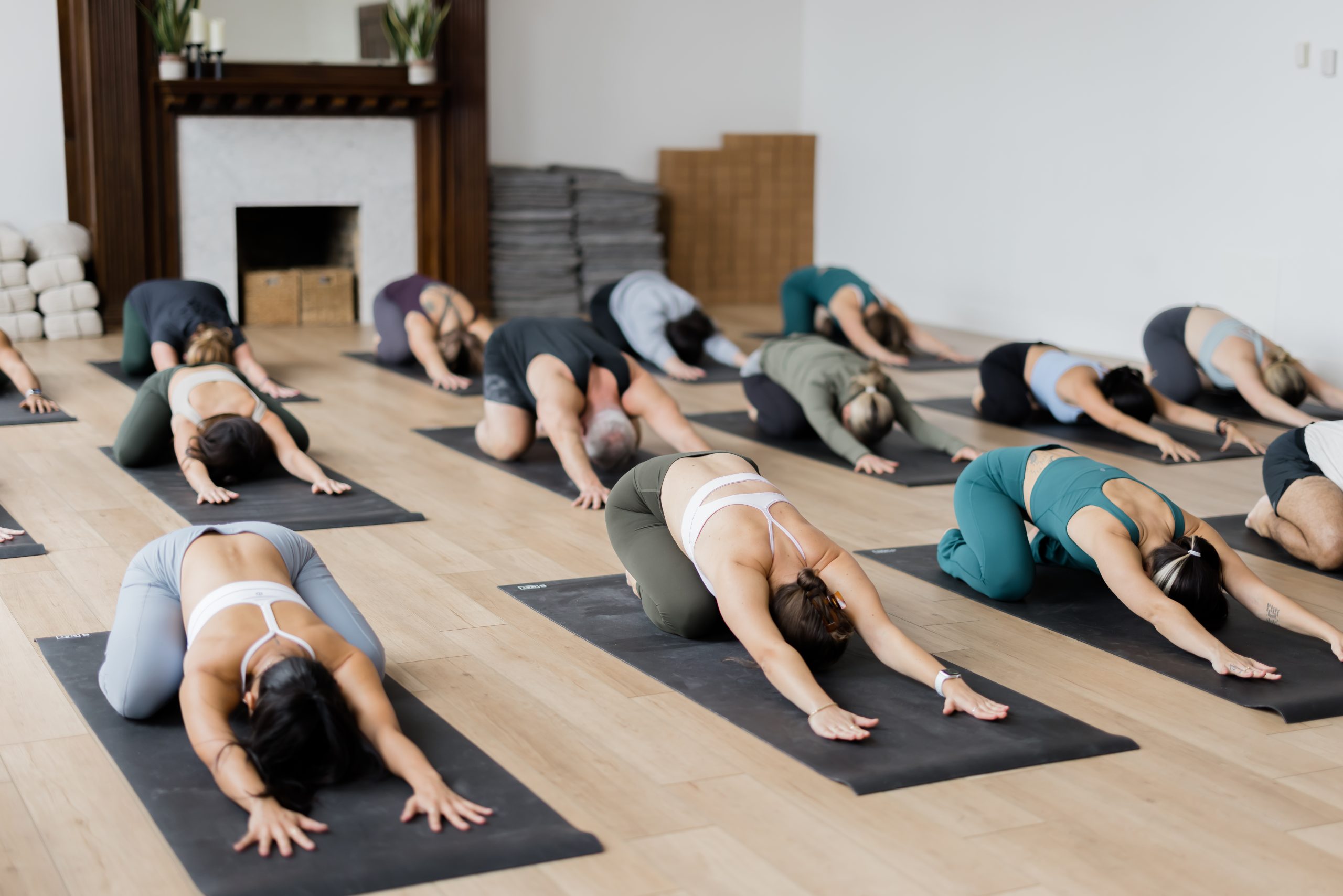
You can guide your students into child’s pose whenever you need a second to regroup and remember your sequence
Frequently Asked Questions
Is imposter syndrome normal for new yoga teachers?
Yes. It’s extremely common, especially if you’re teaching your first few classes or transitioning from student to teacher. A lot of what feels like imposter syndrome is simply beginner discomfort.
How do I become more confident teaching yoga?
Confidence grows from repetition, preparation, and teaching what you actually know. The more you practice sequencing, cueing, and leading class, the less intimidating it becomes.
Should I teach advanced poses if I can’t do them perfectly?
Not necessarily. It’s better to teach poses you understand well enough to explain clearly and safely. You can always expand your teaching as your practice develops.
What if I’m nervous every time I teach?
That’s still normal for many teachers, even experienced ones. The goal isn’t to become fearless – it’s to learn how to stay steady, breathe, and keep going when nerves show up.
How do I find my teaching style?
Start by paying attention to what you naturally love teaching and what feels sustainable. Your teaching style should reflect your experience, interests, and voice – not someone else’s version of success.
The main message is simple: nerves are normal, and you do not need to wait for perfect confidence before you teach. When you prepare well, teach what you know, and stay authentic, students can feel that steadiness. That’s what makes a class land. If you’re just starting out, focus on clarity over creativity and consistency over performance. And when the nervousness shows up, breathe, slow down, and keep going. Watch or listen to the full episode wherever you stream your podcasts!