Peak Pose: Bhujapidasana (Shoulder-Pressing Pose)
Bhujapidasana is an arm balance that combines hip mobility, core strength, upper-body stability, and body awareness. While the pose can look intimidating at first, a thoughtful sequence can help students build the strength and mobility needed to approach it with greater confidence.
This week’s class works progressively toward Bhujapidasana, preparing the wrists, shoulders, hips, hamstrings, and core while giving students opportunities to explore the physical actions behind the pose.
The sequence begins with foundational movements and gradually builds toward deeper hip opening and arm-balancing work before transitioning into a grounding cool-down.
The Focus: Bhujapidasana
The Sanskrit name Bhujapidasana can be translated as “shoulder-pressing pose.” Bhuja refers to the arm or shoulder, while pida means pressure or pressure applied and as we know, asana translates to posture or pose.
In Bhujapidasana, the thighs wrap around the upper arms while the hands press firmly into the mat and the feet lift away from the floor. The pose requires more than arm strength alone. Students need to create enough space in the hips to position the legs around the arms while simultaneously engaging the core and maintaining stability through the shoulders.
Key actions to emphasize:
- Press firmly through the hands and fingertips.
- Keep the shoulders stable rather than collapsing into the wrists.
- Engage the core to help lift the feet.
- Draw the thighs toward the upper arms.
- Create space through the hips and inner thighs.
- Keep the gaze steady and slightly forward.
- Focus on lifting from the core rather than simply jumping into the pose.
Puttering (Warm Up)
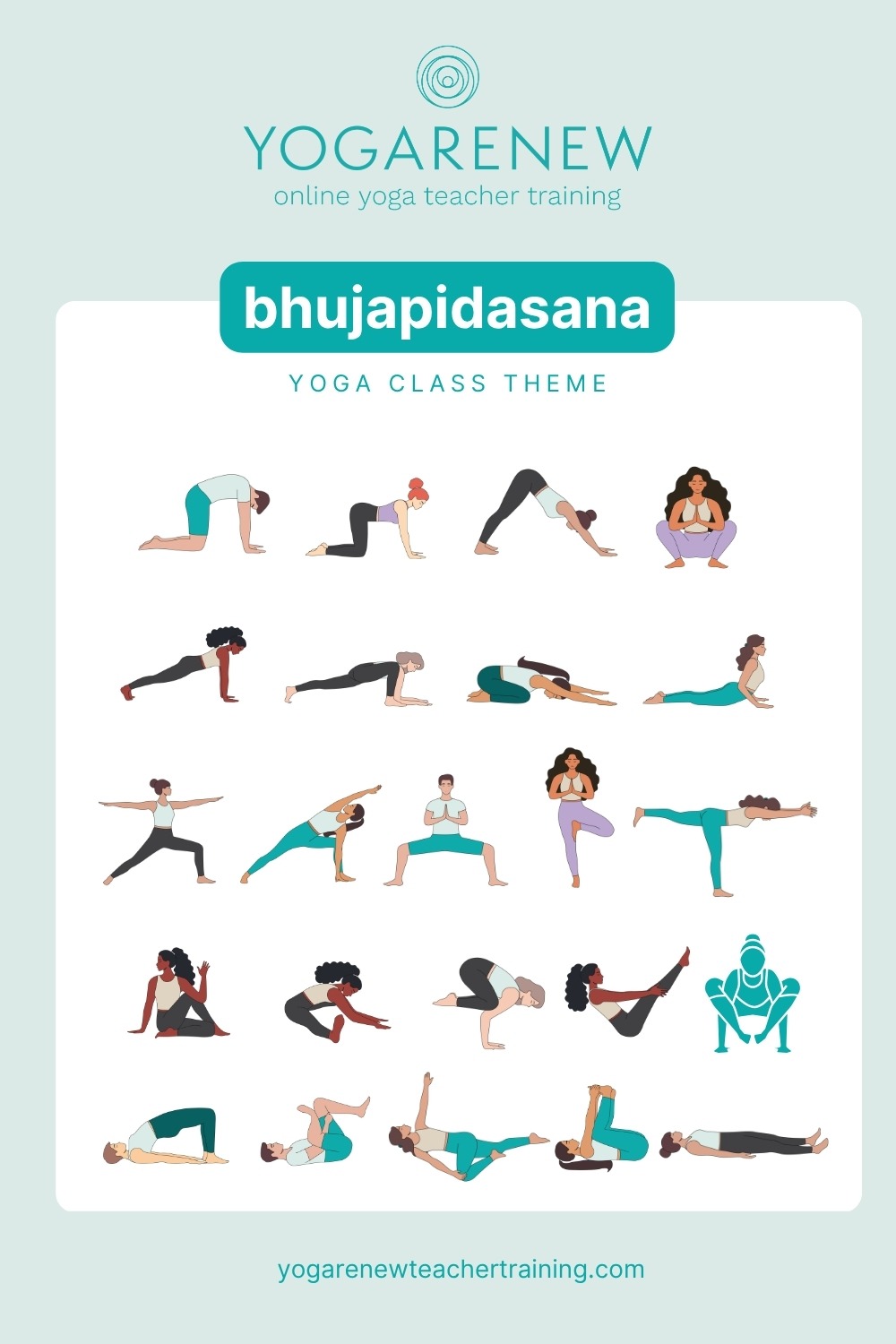
1. Cat-Cow: Move through several rounds of Cat-Cow, coordinating movement with the breath. Use this transition to warm up the spine and begin connecting breath with movement.
2. Downward-Facing Dog: Move into Downward-Facing Dog and begin to warm the backs of the legs. Pedal through the feet and gradually work toward creating more length through the hamstrings and calves.
4. Malasana: Bring the feet wide and lower into Malasana, or Yogi Squat. This is an important preparation for Bhujapidasana because it introduces the deep hip flexion and external rotation that students will need for the peak pose. Encourage students to keep the chest lifted and explore the movement of the hips rather than forcing the knees outward.
5. Plank: Return to Plank to begin building upper-body and core strength. Focus on pressing the floor away and maintaining a strong, integrated line through the body.
6. Chaturanga Dandasana: Practice Chaturanga with control. This is an opportunity to reinforce the shoulder and arm strength needed for Bhujapidasana. Encourage students to prioritize stability and alignment rather than lowering as far as possible.
7. Child’s Pose: Take Child’s Pose as a brief reset. Allow the breath to slow before continuing into deeper hip and shoulder work.
8. Bhujangasana (Cobra Pose): Move into Bhujangasana, or Cobra Pose, to open the front body and continue warming the spine. Keep the movement intentional and avoid relying solely on the arms to lift the chest.
Standing Sequence
1. Virabhadrasana II: Move into Warrior II to build strength through the legs and establish steady breath. Although Bhujapidasana is an arm balance, strong and mobile legs are essential to the overall sequence.
2. Utthita Parsvakonasana: Transition into Extended Side Angle. This pose begins to combine hip opening, lateral movement, and strength while encouraging students to maintain length through the torso.
3. Goddess Pose: Move into Goddess Pose for deeper work through the hips, inner thighs, and legs. This is another useful preparation for the deep hip flexion required to bring the legs around the upper arms in Bhujapidasana.
Balance & Twists
1. Vrksasana: Start your balancing round in Tree Pose to introduce balance and concentration. Use this moment to remind students that arm balances require the same qualities as standing balances: steadiness, focus, and a willingness to make small adjustments.
2. Virabhadrasana III: Move into Warrior III. This builds single-leg stability and core engagement while challenging students to maintain balance and control.
3. Ardha Matsyendrasana: Come down to the mat for a seated twist. Use the twist to create mobility through the spine while continuing to work with the hips.
4. Janu Sirsasana: Get a deeper stretch in the inner thigh with Janu Sirsasana. This is one of the deeper mobility poses in the sequence and provides valuable preparation for the hip and hamstring flexibility needed to position the legs in Bhujapidasana. Remind students that flexibility isn’t the goal. Encourage them to work within a range where they can maintain steady breathing and control.
5. Bakasana (Pre-Peak Prep Pose [Optional]): Introduce Crow Pose as the an arm-balance preparation pose. Tell students they can absolutely skip the option for crow. This gives students an opportunity to experience the relationship between hands, shoulders, core, and balance before attempting Bhujapidasana. Encourage students to shift forward gradually and use their fingertips as an important point of control.
6. Navasana (Boat Pose): This is a great exercise to further drive core strength. Just like Crow Pose, allow for the option to skip it completely or have them practice half boat if full Navasana is too much.
Peak Pose: Bhujapidasana or Shoulder-Pressing Pose
Bhujapidasana: Now bring the class to the peak pose.
- From a standing position, place the hands on the mat and begin to lower the hips. Bring the legs around the upper arms, positioning the thighs as high as comfortably possible.
- Press firmly through the hands, engage the core, and begin to lift the feet. For students working toward the full expression, the heels can eventually cross behind the body.
*Bonus Teaching cue:
“Rather than trying to jump your feet off the floor, press the hands down and lift the center of your body up.”
This helps students understand that Bhujapidasana is an active engagement of the entire body—not simply an arm-strength exercise.
Wind Down
After the peak pose, transition slowly toward the floor.
1. Setu Bandha Sarvangasana: Bridge Pose helps open the front body and provides a counterpose after the compression and forward folding involved in the peak sequence.
2. Happy Baby: Move into Happy Baby to release the hips and inner thighs. Encourage students to let the lower back soften toward the mat.
3. Supine Twist: Take a gentle reclining twist on both sides. Allow the body to gradually settle after the stronger portions of class.
4. Savasana: Finish in Savasana. Give students enough time to absorb the practice and notice the effects of the sequence. Remind them that Savasana is where the work integrates.
Why This Sequence Works
Bhujapidasana asks students to combine several physical actions at once: deep hip flexion, hip mobility, upper-body strength, wrist stability, core engagement, and balance. This sequence approaches those requirements progressively.
The early portion of class warms the body and establishes strength through the hands, shoulders, and core. The standing sequence develops lower-body strength and balance. Core and arm strength exercises like Crow and Boat Pose then gives students a more direct introduction to arm balancing and total engagement before moving into Bhujapidasana.
The cool-down shifts the focus toward releasing the hips, spine, and front body before finishing with Savasana.
Teaching Tips for Bhujapidasana
1. Don’t make the arm balance the only goal: For many students, the preparation is the most valuable part of the practice. Encourage them to explore the actions of the pose even if their feet never lift.
2. Prioritize wrist and shoulder stability: Students should actively press through the hands rather than allowing the shoulders to collapse.
3. Use blocks when appropriate: Blocks can be helpful under the feet during preparation, giving students additional height and making it easier to experiment with the positioning of the legs.
4. Encourage patience with the hips: Bhujapidasana requires significant hip mobility. Avoid forcing the legs into position and encourage students to work progressively.
5. Keep the breath steady: Arm balances often create tension or apprehension. Remind students to breathe throughout the transition and peak pose.
Optional Class Theme (Dharma Talk)
The theme for this class is creating stability within challenge: Bhujapidasana asks students to do several things at once: stay grounded through the hands, create space through the hips, engage the core, and find balance in an unfamiliar position.
Rather than focusing only on whether the feet lift, invite students to notice what happens when they press down, engage, breathe, and trust the process. Remind your students that consistency and effort in practice is more important than getting into the full expression of the final shape.
The whole purpose of our Weekly Class Themes are to encourage yoga teachers to teach their students how to develop the strength, mobility, and awareness that allows them to explore their own version safely and intentionally.
Peak Pose: Bhujapidasana
Focus Areas: Hips, hamstrings, shoulders, wrists, core
Key Preparations: Malasana, Extended Side Angle, Goddess Pose, Compass Pose, Crow Pose
Counterposes: Bridge, Happy Baby, Supine Twist, Plow, Savasana