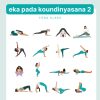
Eka Pada Koundinyasana II is a posture that asks us to balance two opposing energies: grounding and expansion. One leg reaches powerfully forward while the other extends strongly back, requiring both stability and trust. This pose reminds us that true strength is not rigid—it is steady, adaptable, and supported by deep inner awareness.
Throughout this practice, we’ll build the strength, mobility, balance, and focus needed for this dynamic arm balance through standing postures, twisting shapes, lateral core work, and heart-opening backbends. As you move through today’s sequence, notice where effort begins to turn into tension and where softness can create more support. Growth often asks us to lean forward into uncertainty while staying deeply rooted in ourselves.
Puttering
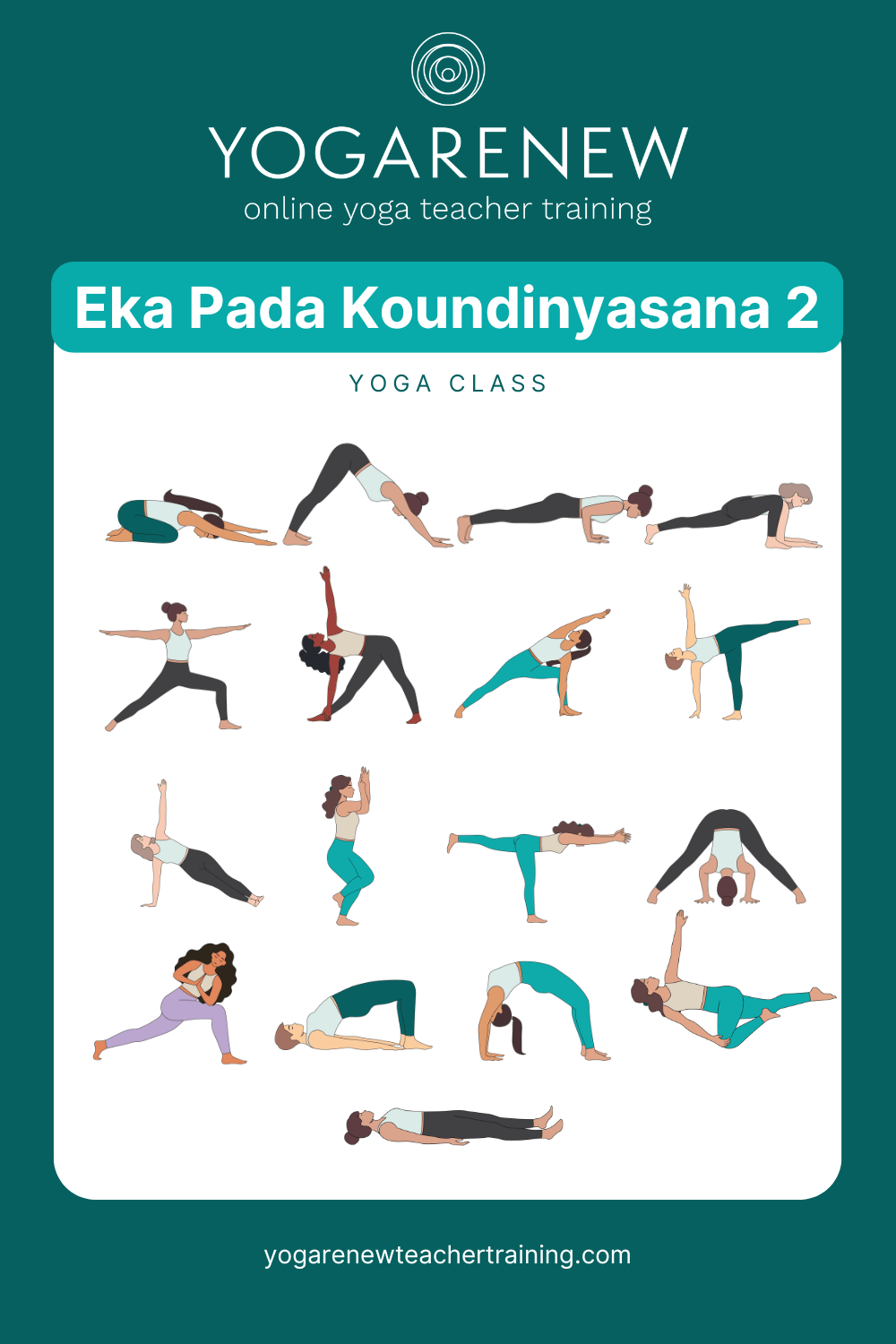
- Begin in Child’s Pose (Balasana). Allow the body to settle and the breath to deepen.
- Transition into Downward Facing Dog and gently pedal through the feet to awaken the hamstrings, calves, and shoulders.
- Plank Pose
- Chaturanga Dandasana
- Upward Facing Dog or Cobra Pose
- Downward Facing Dog
- Lizard Lunge
Sun Salutations
Move through several rounds of Surya Namaskar variations to build heat and connect breath to movement. We usually always practice Surya Namaskar A!
Standing Poses
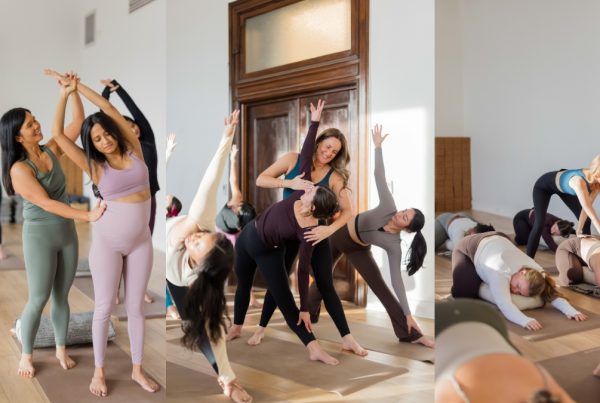
- Warrior II: Ground firmly through both feet and activate the legs and core.
- Triangle Pose: Create spaciousness through the side body and hamstrings while building stability.
- Extended Side Angle: Strengthen the legs and obliques while lengthening through the entire body.
- Half Moon Pose: Challenge balance and cultivate steady focus while extending energy in all directions.
- Side Plank: Build shoulder stability and lateral core strength essential for arm balancing.
Repeat on the second side.
Balance & Twisting Section
- Eagle Pose: Draw inward to connect to your centerline and sharpen concentration.
- Warrior III: Build full-body integration, balance, and directional energy.
- Prasarita Padottanasana: Release tension through the spine and hamstrings while reconnecting to the breath.
- Revolved Side Angle Pose: Explore spinal rotation, core engagement, and the twisting action that closely mirrors the peak pose.
Repeat on the second side.
Peak Pose: Eka Pada Koundinyasana II
From Revolved Side Angle:
- Plant the palms shoulder-width distance apart.
- Shift your weight forward into the hands.
- Hug the front thigh onto the upper arm.
- Extend the back leg strongly behind you.
- Engage the core and direct your gaze slightly forward.
Offer steps along the way:
- Keep the back toes grounded for support.
- Lift the back leg while keeping the front leg bent.
- Begin extending the front leg forward.
- Explore the full expression of Eka Pada Koundinyasana II.
Encourage students to approach the pose with curiosity rather than expectation. Arm balances are not just about physical strength—they are about trust, focus, and willingness to explore beyond perceived limitations.
Backbends & Wind Down
- Bridge Pose: Reopen the front body and release the hip flexors after strong core engagement.
- Wheel Pose (optional): Invite expansion, energy, and spaciousness throughout the body.
- Reclined knees-to-chest to neutralize the spine.
- Supine Twist: Release residual tension and rinse the spine.
Savasana
Rest fully in Savasana. Eka Pada Koundinyasana II reminds us that it doesn’t matter if you can pop into every pose all the time with grace, but that the effort and journey along the way are a more important piece of the practice. Eventually, postures like this complex pose become challenging in a way that is tailored to your practice!