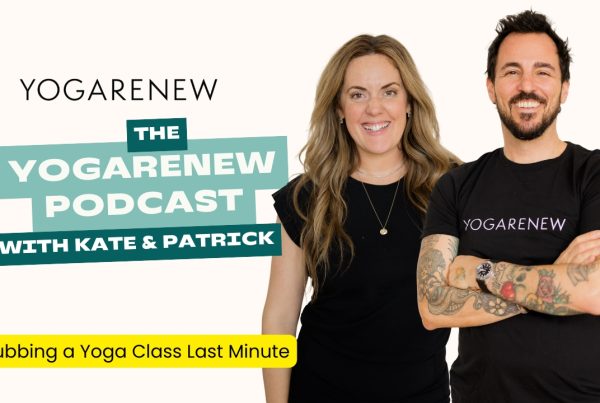
If you’re trying to balance teaching yoga with a full-time job, this is the episode for you! A lot of yoga teachers do not teach full time, and that doesn’t make them any less of a teacher. In fact, for many people, part-time teaching is the most sustainable way to stay connected to the practice while keeping the stability of a regular career.
In this post, we’ve woven together Kate & Patrick’s discussion from The YogaRenew Podcast into an easily digestible blog format so you can snag the major takeaways!

Yoga teacher giving a hands-on assist while teaching a class
Why Part-Time Yoga Teaching is a Valid Career Path
One of the biggest ideas from this conversation is simple: you do not have to teach yoga full time to be a real yoga teacher. That pressure often comes from social media, where the “ideal” yoga career can look like endless free time, beach sequences, and a fully flexible schedule. But that version of teaching is not the only version that counts.
For many teachers, the reality is different. You may love your job, value the paycheck, and still want to teach yoga because it fulfills you. That is not a compromise. It is a choice. And for a lot of people, it is the wiser choice.
There is also a financial reality that is easy to ignore when you first fall in love with teaching. Yoga can become a meaningful and rewarding career, but it is rarely the most stable or lucrative path at the beginning. If you have a full-time job with benefits, a predictable paycheck, and a career you actually enjoy, you are not “less committed” because you keep it. You may simply be building a more balanced life by also teaching yoga.
The key shift is to stop asking whether part-time teaching is enough. Instead, ask whether it works for your life, your energy, and your goals.
Protect Your Own Practice First
If you’re teaching while working full time, the first thing to protect is your own practice. This was one of the strongest takeaways from the transcript: the more you teach, the easier it is to forget that you also need to be a student. That matters more than people think. If you spend all your time planning classes, showing up for students, and managing work responsibilities, you can burn out fast. Teaching yoga without regularly practicing yoga for yourself can start to feel draining instead of nourishing.
A good rule of thumb is to set aside at least one time each week that is just for you as a student. That might mean taking a class, practicing at home, or attending a workshop where you are not in teacher mode. The point is not perfection – it’s maintaining a relationship with the practice that is separate from your role as an instructor.
A realistic teaching load
If you have a full-time job, two regular classes per week often ends up being a sweet spot. That gives you enough room to prepare thoughtfully, teach well, and still keep space for your own life.
Once you start stacking three, four, or five classes a week on top of a full-time job, the balance shifts quickly. You lose time for your own practice, recovery, and even basic rest. And if one of those classes falls on a weekend, you may suddenly feel like you’re working six days a week. That does not mean you can never take on more. It means you should be honest about what you can sustain for the long term.
Choose Commitments You Can Actually Honor
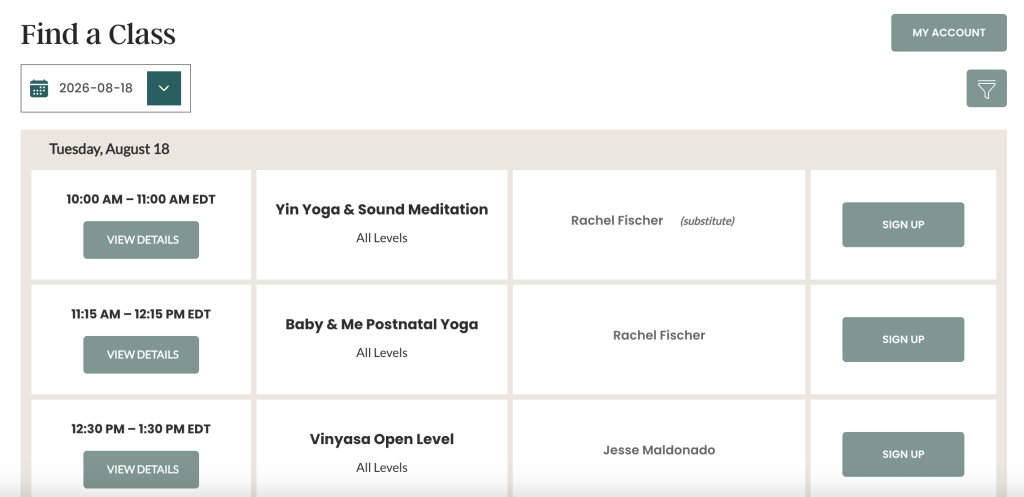
Part-time teaching can feel flexible, but it still requires real commitment. Once you say yes to a class, your students and the studio are counting on you. That is true whether you teach once a week or every day. This is especially important with weekend classes. Weekend time is often the most valuable teaching time – classes are busier, and they can help you build a following. In some studios, weekends are also more lucrative. But that convenience comes with a tradeoff.
If you take a Saturday morning class, you are not just committing to one class. You are also committing to protecting your Friday night, getting enough sleep, and being available consistently. If your schedule already includes a demanding weekday job, you need to think carefully about whether you can really honor that commitment.
Here is a simple way to decide whether a class fits your life:
- Look at the full commitment, not just the class time. Add in prep, commuting, playlist planning, and recovery time.
- Check your calendar for the next two months. If you already know you will need to sub often, the schedule may be too tight.
- Ask whether this class helps or hurts your sustainability. A class should support your teaching journey, not make you resent it.
- Be honest with studios and students. Reliability matters. If you cannot consistently show up, it may not be the right class to take.
This is one of the most practical lessons in the conversation: teaching part time is still real work. Treat it that way, and you will build more trust, both with others and with yourself.
Grow Beyond Weekly Classes Without Overloading Yourself
If you are passionate about teaching, you do not have to cap your growth at regular group classes. One of the smartest ways to expand as a part-time teacher is to add offerings that are meaningful but not weekly.
Think workshops, teacher trainings, retreats, or special events. These can give you a chance to deepen your teaching without creating a schedule that takes over your week. They also let you explore topics you care about more deeply, which can make you a stronger teacher overall.
Why this approach works:
Weekly classes are repetitive by nature. They are important, but they can also become tiring if they are the only thing you do. A workshop or monthly offering adds variety and keeps your teaching fresh.
For example, you might teach two weekly classes and then lead one workshop a month. Or you might join a teacher training for a short season each year. Another option is leading a retreat once a year, if your full-time job allows you to take vacation time.
These formats can also help you build your reputation without requiring constant availability. They are often easier to fit around a career, family, or personal schedule than adding more weekly classes.
Related Post: Yoga Workshops and Continuing Education
What to watch out for:
The temptation is to keep saying yes because you love the work. But more opportunities are not always better opportunities. If the extra commitment steals your ability to rest, practice, or work well in your day job, it can backfire.
A better question is: does this opportunity deepen my teaching or simply fill my calendar? If it deepens your teaching, supports your energy, and fits your life, it may be worth saying yes. If it just adds pressure, it may be time to pass.
Make the Transition Only When It Feels Natural
For some teachers, part-time teaching is a long-term arrangement. For others, it becomes the bridge to a full-time career. The important thing is that the transition happens naturally, not out of panic.
One useful detail from the transcript is that a strong part-time foundation can make a future move into full-time teaching much smoother. When you already have a regular student base, a few teaching opportunities in place, and experience beyond just weekly classes, you are not starting from zero.
That can look like:
- Two consistent weekly classes
- Occasional workshops
- Involvement in teacher training
- A special event or retreat once a year
If those pieces are already in place, then going full time is less of a leap and more of a next step. You are not trying to build everything at once. You are simply expanding what is already working.
That said, you may never want to make that transition. And that is completely fine. A part-time teaching path can be a long-term career, a side passion, or a meaningful chapter of your life. There is no rule that says it has to become something else.
This is where a lot of teachers get stuck: they think part-time means temporary. It does not. It can be a sustainable, successful, and deeply fulfilling way to teach for years.
Frequently Asked Questions
Can you be a real yoga teacher if you only teach part time?
Yes. Teaching part time does not make you less legitimate. If you are showing up for students, continuing your practice, and teaching with care, you are a yoga teacher.
How many classes a week should a part-time yoga teacher take?
For many teachers with a full-time job, two regular classes per week is a sustainable place to start. Some teachers can handle more, but only if they still have time for practice, rest, and preparation.
Should I take weekend yoga classes if I work Monday through Friday?
Only if you can truly protect that commitment. Weekend classes can be rewarding, but they also take away from your rest time and may require changes to your social schedule.
What if I want to teach more than just group classes?
That is a great next step. Workshops, teacher trainings, and retreats are all ways to expand your teaching without overloading your weekly calendar.
How do I know if I’m ready to go full time?
You may be ready when teaching opportunities feel steady, your student base is growing, and the shift feels natural rather than desperate. If your part-time work already has momentum, the transition may be smoother.
Closing Sentiments on How to Balance Teaching Yoga + A Full Time Job
Balancing teaching yoga with a full-time job is not about doing everything. It is about choosing the right things and protecting your energy along the way. If you stay connected to your own practice, keep your schedule realistic, and take on opportunities you can truly honor, part-time teaching can be both fulfilling and sustainable.
The biggest takeaway is that you do not need to choose between being a “real” yoga teacher and having a stable career. You can do both. And for many people, that balance is exactly what makes the practice last.
If you want to keep exploring the path, look at how your current schedule supports your energy, not just your ambition. And if you’re interested in going deeper, listen to the full conversation:
One-Sentence Summary:
You can build a sustainable yoga teaching path alongside a full-time job by protecting your own practice, choosing commitments carefully, and growing beyond weekly classes only when it truly fits your life.