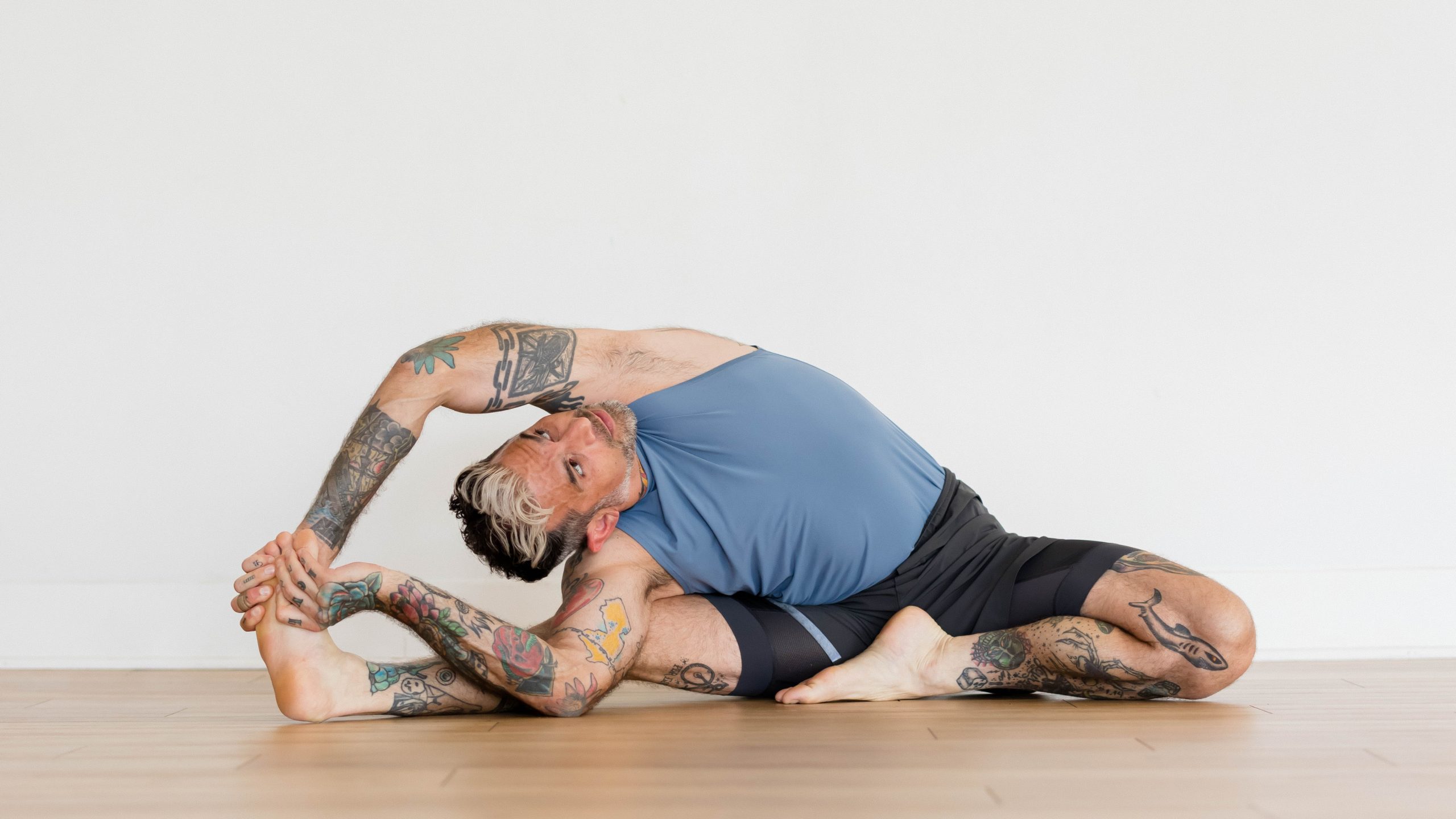
This week, we will explore the concept of dedication as done through yoga asana. Establishing and committing to a regular yoga practice is key in deepening your understanding as well as experiencing the benefits of yoga.
Dedication in a yoga practice means giving your practice (whether physical or mental) your undivided attention and full heart. Giving your full attention to yoga, even during a 1-hour class, could help distill the mind; quieting the noise of the inner landscape and devoting yourself whole-heartedly to a regular practice allows you to witness yoga in its purest form.
Yoga Sutra 1.14
Sanskrit: sa tu dīrghakāla nairantarya satkāra-āsevito dṛḍhabhūmiḥ
Translation: Your practice becomes firm and grounded when tended to consistently, without interruption and with full dedication.
“You must do the asana with your soul. How can you do an asana with your soul? We can only do it with the organ of the body that is closest to the soul – the heart. So a virtuous asana is done from the heart and not from the head. Then you are not just doing it, but you are in it. Many people try to think their way into an asana, but you must instead feel your way into it through love and devotion.”
– B.K.S. Iyengar
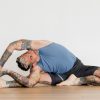
A peak pose for dedication: Revolved Janu Sirsasana
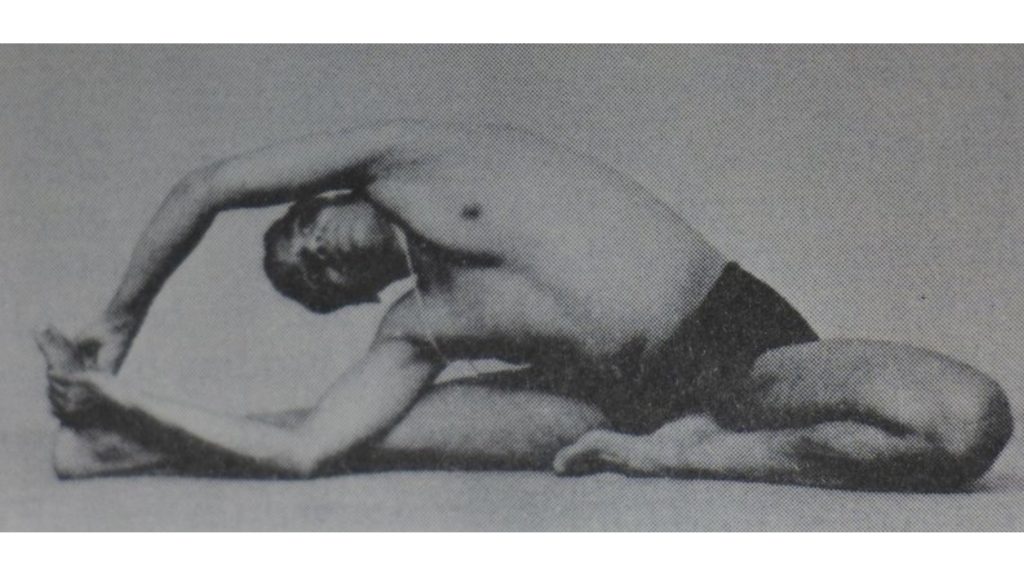
B.K.S. Iyengar in Parivrtta Janu Sirsasana
Sanskrit: Parivrtta Janu Sirsasana (परिṿṛtta जानुशीर्षासन)
In Light on Yoga, B.K.S. Iyengar considered revolved head to knee pose an intermediate pose. An elaborate twist as one leg is extended and one hugged in towards the seat, Parivrtta Janu Sirsasana requires a certain mental and physical ambition that can be obtained through dedication.
Here are some supporting postures that aid in the physical discovery of revolved head to knee pose, or Parivrtta Janu Sirsasana.
Child’s Pose (Bālāsana)
Child’s pose helps anchor into your seat while extending the sides of the torso and arms. It also aids in the deep hip flexion necessary for Janu Sirsasana and Parivrtta Janu Sirsasana.
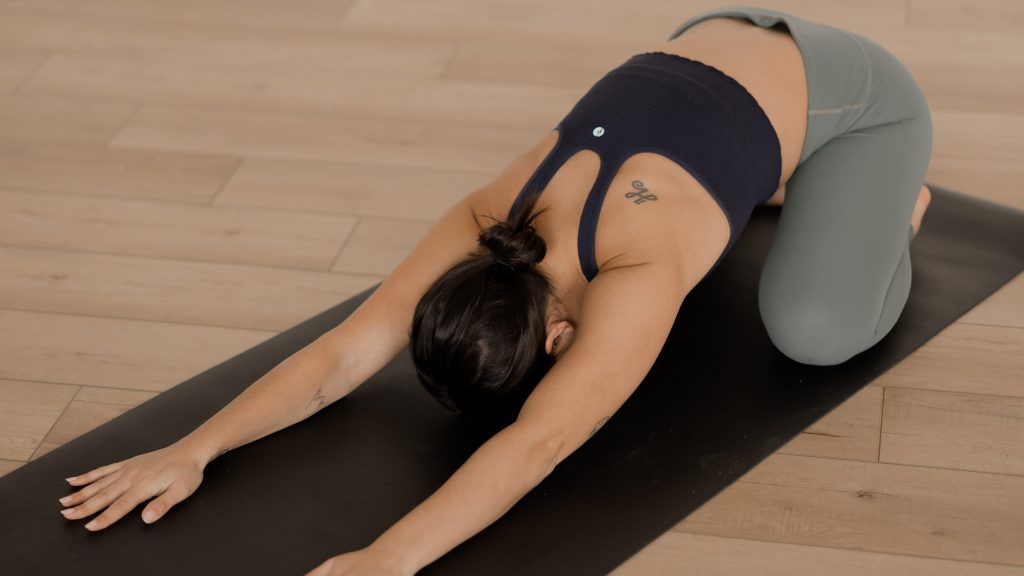
How to:
- Start in tabletop position then widen your knees the width of your yoga mat
- Sink your seat towards your heels
- Extend your arms out long & let your head drop
Gate Pose (Parighasana)
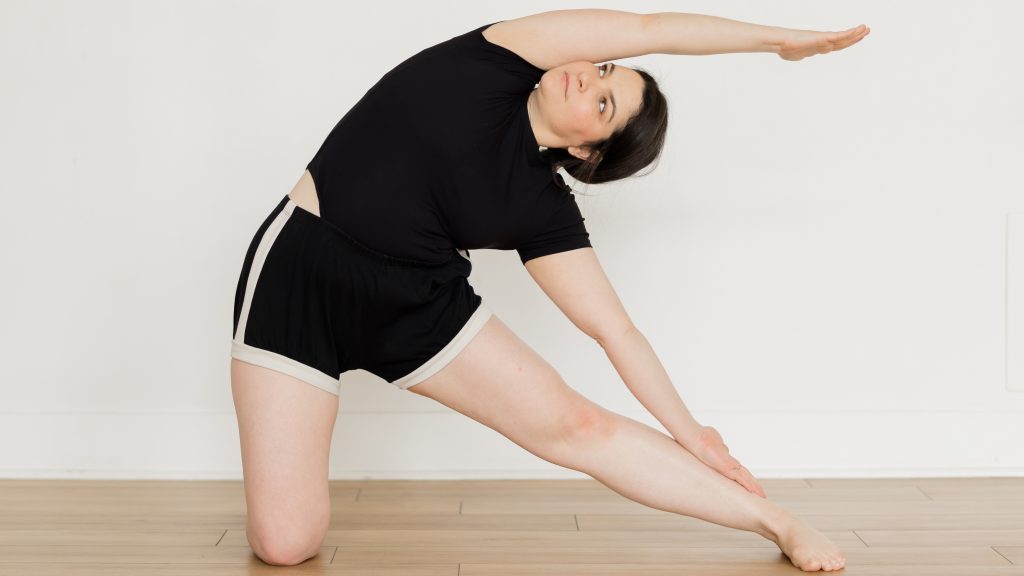
How to:
- Start on your shins & extend one leg out to the side, enough to plant your foot with toes facing 1200
- Extend the arm of the leg that’s extended to glide down, reaching toward your ankle
- The opposite arm (leg that is supported on the shin) extends up alongside your ear and over toward the extended leg
Head-to-Knee Pose (Janu Sirsasana)
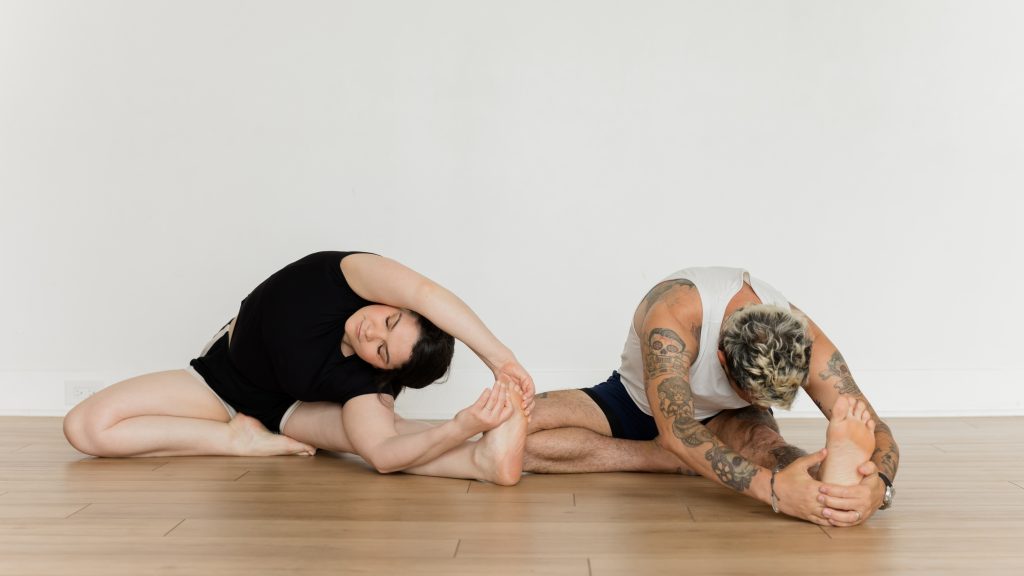
How to:
- Start in Sukhasana (easy seat) and extend one leg long, into a sort of V-shape or checkmark
- Bend the knee of the opposite leg & draw it in toward your seat
- Extend your arms up to lift your chest then reach as far forward as you can toward the knee of the extended leg
Peak pose: Parivrtta Janu Sirsasana
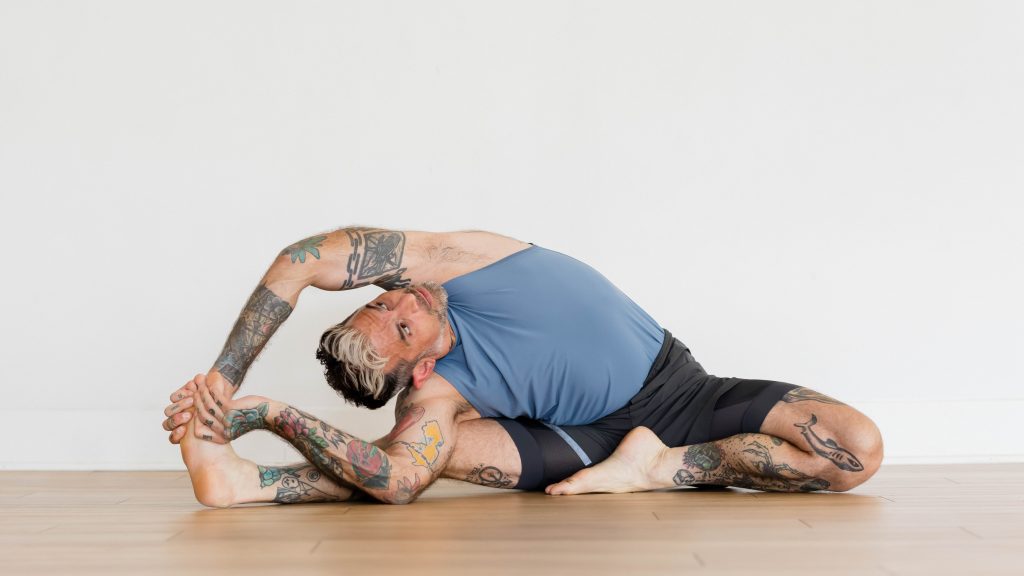
How to:
- Start in Sukhasana (easy seat) and extend one leg long, into a sort of V-shape or checkmark
- Reach one arm out toward the foot of the extended leg
- The opposite arm reaches up and over as the entire torso twists to face your chest up toward the ceiling
Yoga poses, tutorials and demos
If you enjoy our Weekly Class Themes, we also have entire directory of Yoga Poses on our website and tutorial videos on YouTube and the YogaRenew app. If you just started teaching yoga or are practicing yoga asana, we’d love to hear how it’s going! Reach out to us here or on our socials to show how you engage with YogaRenew content. 🫶 Thanks for being here.