— a field guide, a time capsule, and a blueprint for teaching with integrity
When I first picked up Light on Yoga, I didn’t so much read it as stare at it. I was a brand-new yoga teacher trying to find my voice and style, and here was this heavy, iconic book filled with hundreds of poses, Sanskrit I couldn’t pronounce, and black-and-white photos of a man folding himself into geometric shapes I didn’t know were humanly possible.
At the time, the book mostly lived on my coffee table. I’d flip through it, land on some advanced backbend or arm balance, and think, “Okay, cool—but I’ll never do that.”
For a while, I saw it more as a museum piece than a manual.
But a few years—and a few injuries, deeper studies, and teaching hours—later, I came back to it. And I realized Light on Yoga isn’t meant to be consumed cover-to-cover like a novel. It’s a reference. A map. A blueprint for how to approach the physical practice of yoga with intelligence, discipline, and care.
What’s Actually Inside the Book?
Originally published in 1966, Light on Yoga is now considered one of the most important texts in modern postural yoga. The author, B.K.S. Iyengar, was one of T. Krishnamacharya’s foremost students (alongside Pattabhi Jois and T.K.V. Desikachar) and is known as the pioneer of what we now call Iyengar Yoga—a system defined by its clarity, precision, use of props, and accessible structure for all body types and abilities.
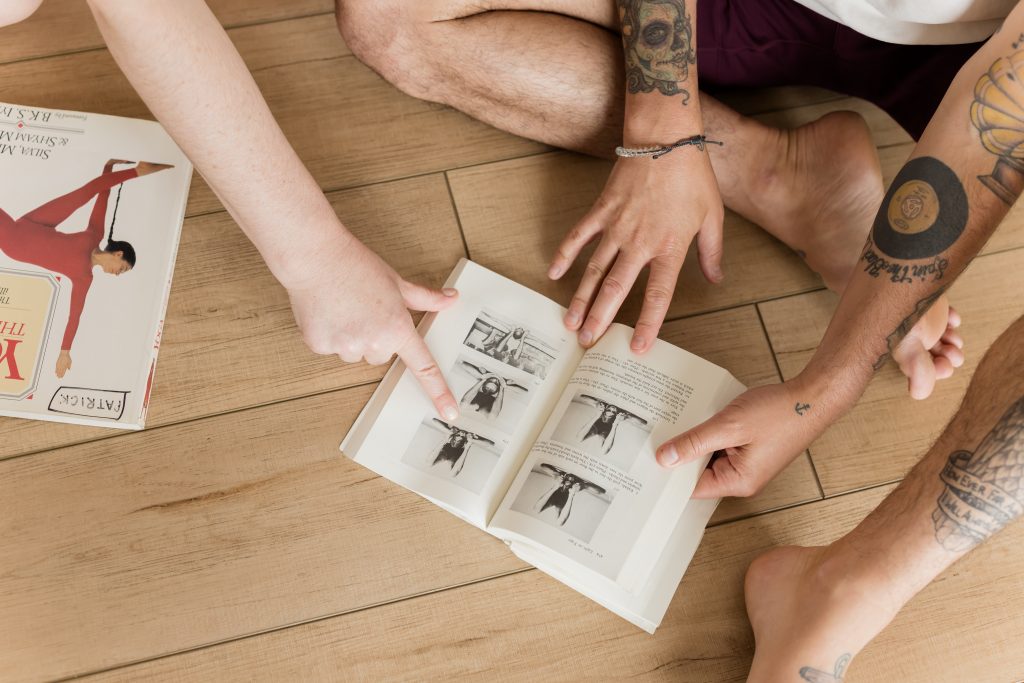
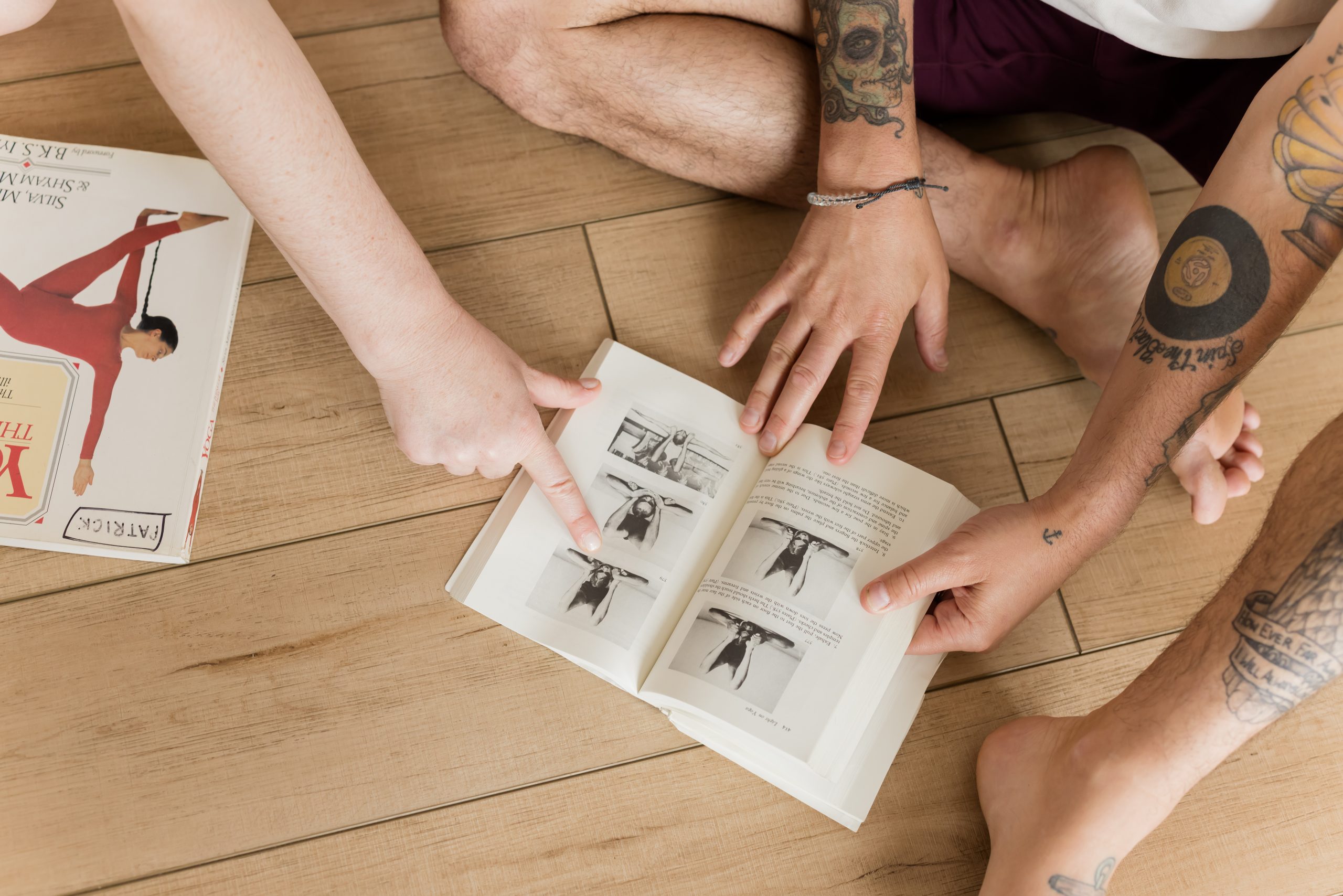
Inside Light on Yoga, you’ll find poses with descriptions and a deeper explanation on each of the yoga asanas.
The book is organized into three main sections:
- A Philosophical Introduction – Iyengar opens the book by outlining the eight limbs of yoga (ashtanga yoga) from Patanjali’s Yoga Sutras. He gives the reader a grounding in the ethical foundations of yoga (yamas and niyamas), the importance of breath, and the spiritual context for why we practice. This section is easy to skim—but worth returning to. Especially once you’ve been teaching a while and want to reconnect to the roots of the practice beyond sequencing and playlists.
- Asana Library – The heart of the book. Over 200 poses are presented with detailed instructions, black-and-white photos of Iyengar demonstrating each one, and commentary on physical effects and benefits. The asanas are organized progressively, from beginner postures to advanced shapes, including standing poses, forward bends, twists, backbends, inversions, and seated meditative postures. For teachers like me—rooted in vinyasa but trained through the lens of alignment—this section became a reference for the “classic” versions of poses. It helped me understand the form before I played with the flow.
- Pranayama + Practice Sequences – The final third of the book outlines foundational breathing practices and offers suggested sequences for practitioners at different levels. There’s also a 300-week (!!) practice plan if you want to go deep.
What Makes Light on Yoga Iconic?
What Iyengar did with Light on Yoga was create a comprehensive, accessible manual of yoga asana at a time when almost no such thing existed. This wasn’t a loose collection of shapes—it was a system. A codified method rooted in the lineage of classical yoga and adapted through the body of a modern Indian teacher.
The photos are stunning. The descriptions are detailed. And the effect is both inspiring and—let’s be real—a little overwhelming at first.
But once you shift your lens from “I need to master all of this” to “Let me understand what this pose looks like through a classical lens”, the book becomes something else entirely: a long-term reference tool for alignment, sequencing, and intention in practice.
Why It Mattered to Me Later
I didn’t really “get” Light on Yoga until I’d been teaching for a while. Once I had real questions about shape, actions, and teaching methodology, I started using it differently. I’d flip to a page to look up Triangle or Ardha Chandrasana—not to copy it pose-for-pose, but to see what Mr. Iyengar emphasized and why.
That’s when I noticed something else: even his approach evolved over time. The poses he demoed in 1966 weren’t necessarily how he taught them in the 80s, or how his senior students cue them now. The book became a time capsule—a snapshot of a method in motion.
I also started seeing how the foundations in Light on Yoga still echo across lineages. Whether you’re teaching functional vinyasa, therapeutic yoga, or a more traditional Iyengar class, many of the core actions—press through the heel, lift the kneecap, open the chest without flaring the ribs—can be traced back to this book.
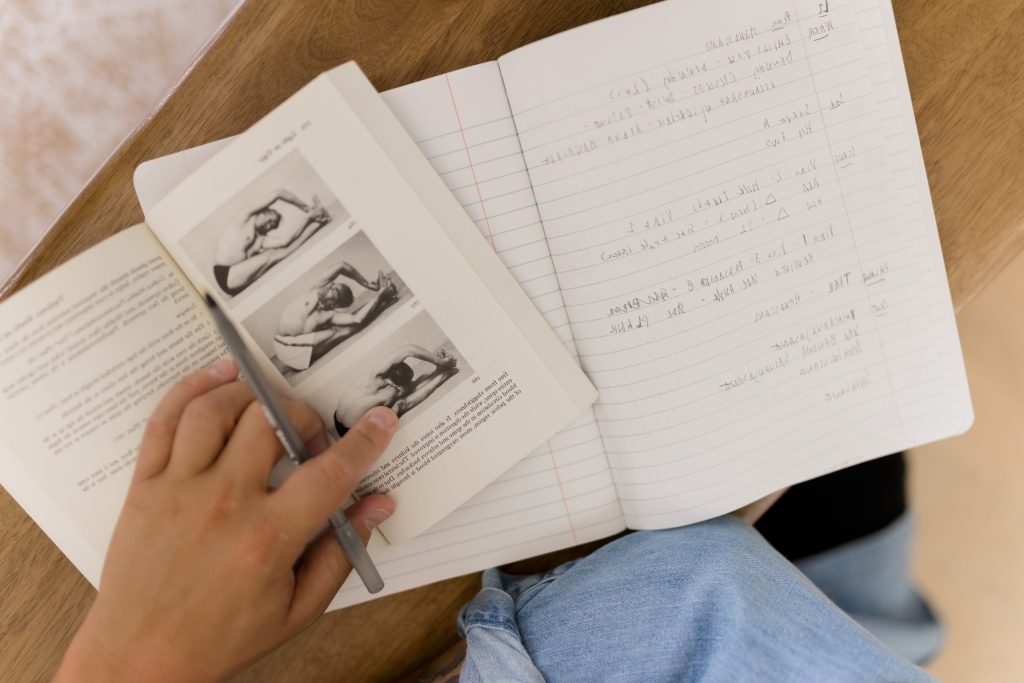
Patrick constantly draws inspiration for his sequences from Light on Yoga, equipped with information to discuss when explaining the specific pose.
How Light on Yoga is Viewed Today
For many teachers, especially those with roots in alignment-based traditions, Light on Yoga is still the gold standard. You might not agree with every instruction. You might adapt poses for modern bodies. But this book gives you a place to start from—a baseline to evolve from, not just away from.
It’s also revered in many yoga teacher trainings, often required reading even in non-Iyengar programs. Senior Iyengar teachers reference it like scripture, and alignment-informed teachers like myself use it to clarify pose intention, refine alignment, and help students progress intelligently.
Is it dense? Yes.
Is it dated in some ways? Also yes.
But is it still wildly useful and worth owning? 100%.
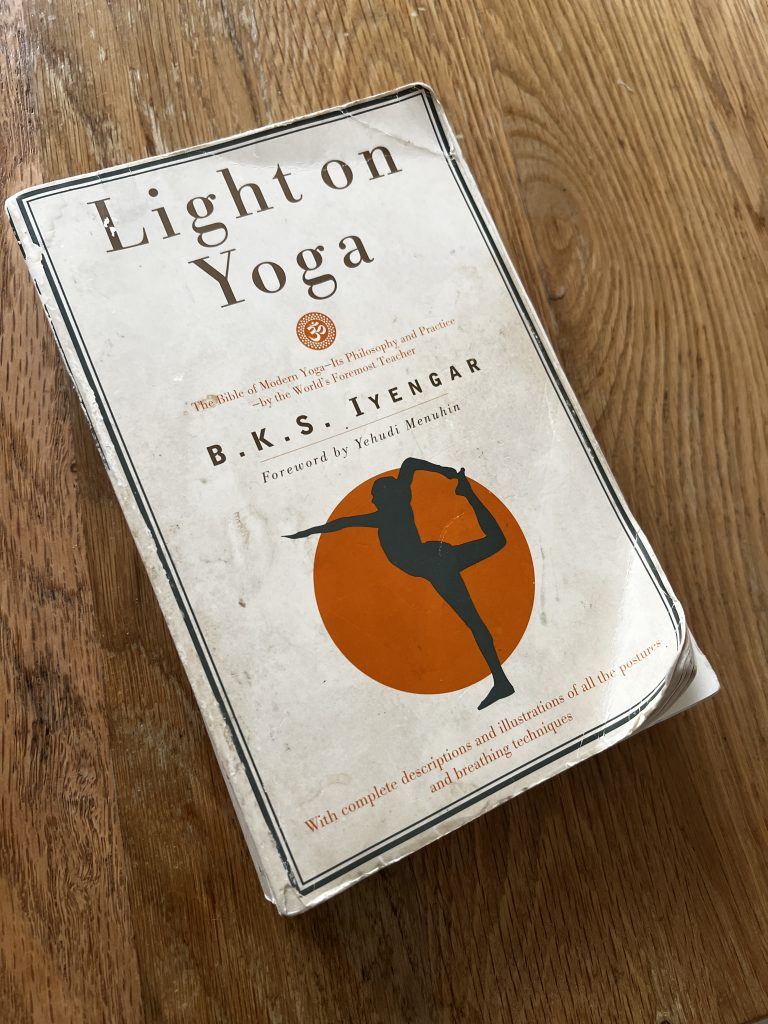
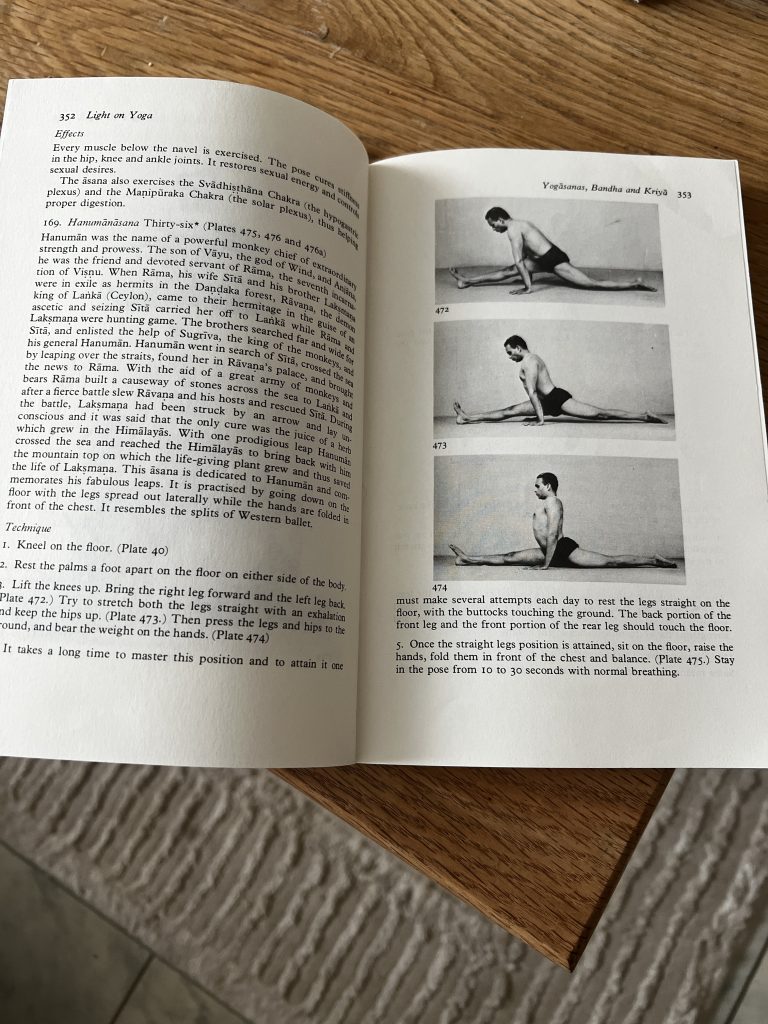
Patrick’s copy of Light on Yoga
Concluding Thoughts

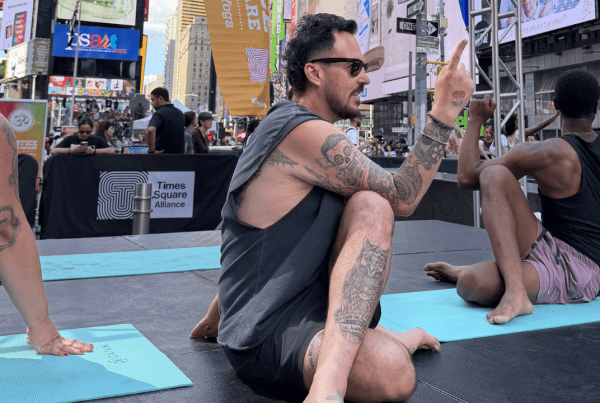
Patrick Franco, Yoga Director of YogaRenew
Light on Yoga isn’t just a book about yoga poses. It’s a document of deep study. Of practice refined through observation. Of a teacher who believed yoga should be for everyone—not just the flexible, the athletic, or the naturally gifted.
If it feels overwhelming at first, that’s okay. Put it down. Come back to it later. Let it grow with you. Use it not as a checklist of what you should achieve, but as a compass for how to build a practice that’s honest, intelligent, and rooted in something bigger than aesthetic goals.
Whether you teach, study, or just love yoga—keep Light on Yoga nearby. Not to master it, but to be reminded that mastery isn’t the point. Clarity is. Progress is. Practice is.
And that—when taught well—is what yoga really is.