The first time I ever saw a teacher teach Bird of Paradise in a yoga class I almost thought it was a joke.
Wait, you want me to do a bind, hip opener, and hamstring stretch at the same time AND while standing on one foot?!
I had to apply a serious sense of humor to my practice when I first started working on this pose because there was a lot of falling and feeling more like a bird fall out of it’s nest than a bird in paradise.
The key to teaching this is building each of the components – the hip opening, binding, and balance – throughout your class, and making sure that you offer instruction on a step-by-step entrance into the pose so students can stop along the way. A strap is also hugely helpful!
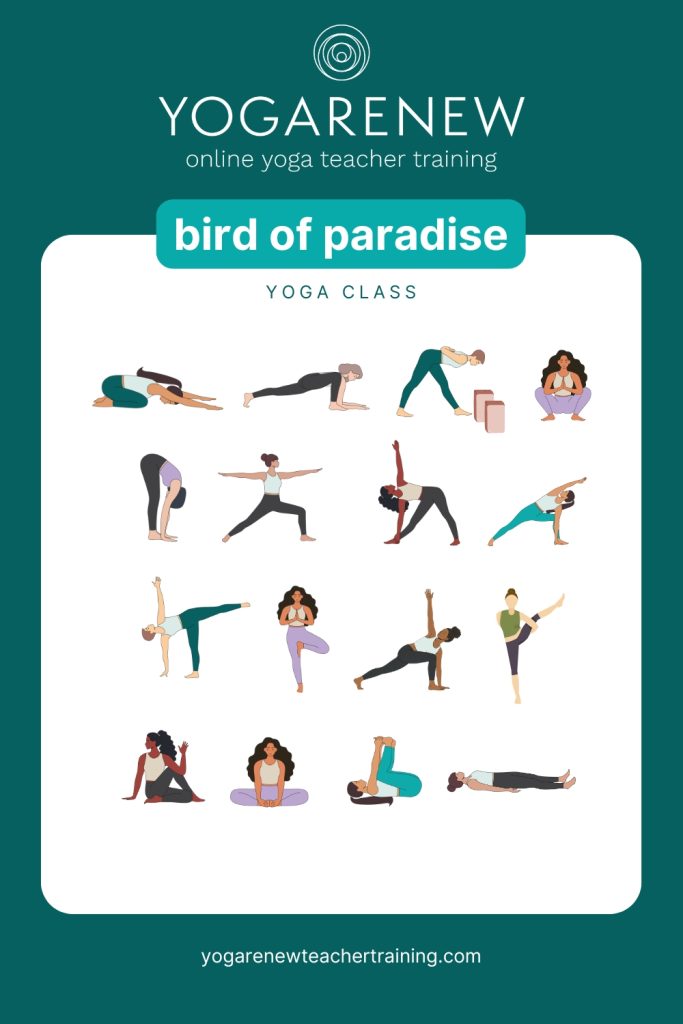
Puttering/Warm-Up:
Child’s Pose
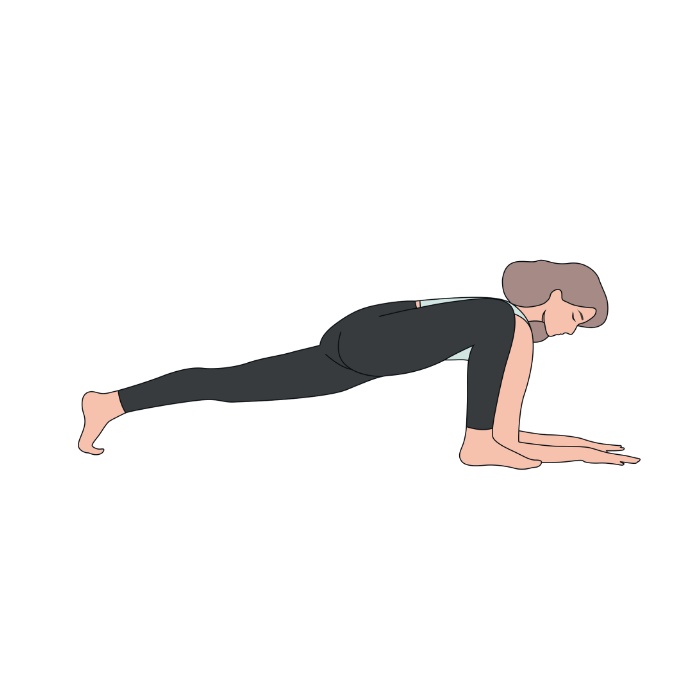
Lizard Lunge (with your back knee down)
Supported Pyramid Pose (using blocks + back heel up)
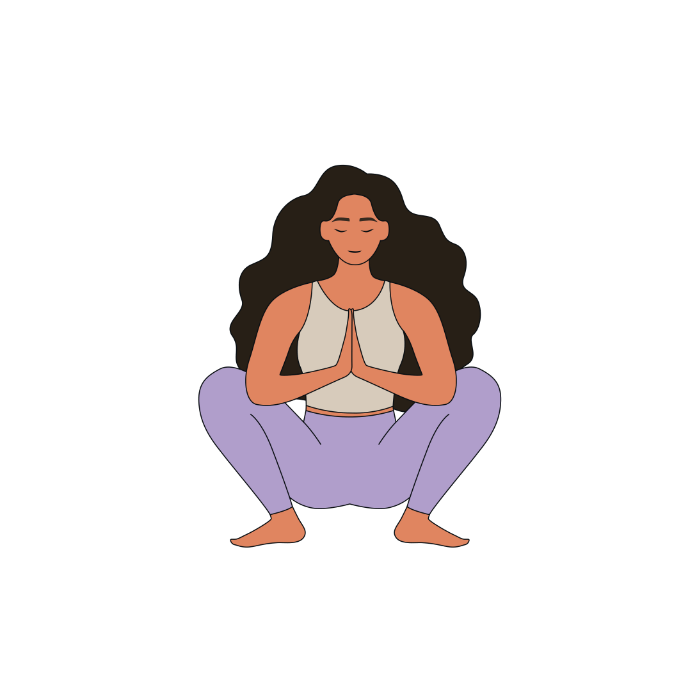
Wide Yogi Squat
Forward Fold (with clasped hands behind your back)
Standing Poses:
Warrior 2
Triangle Pose (build it from the ground up)
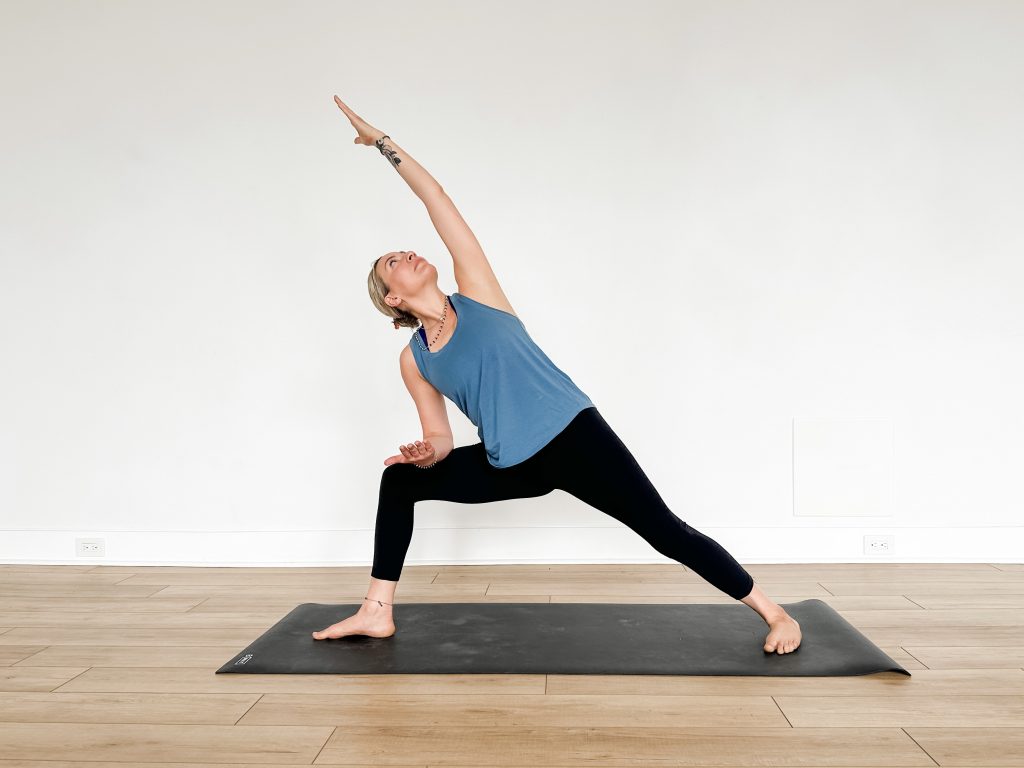
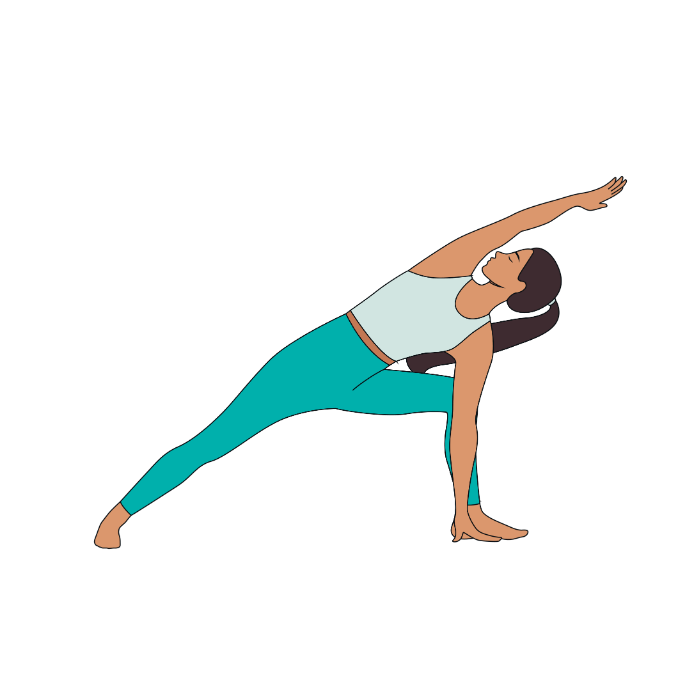
Extended Side Angle (with your hand inside of your ankle)
Half Moon Pose (with a half bind with your top arm)
Balance Pose:
Tree Pose (also build from the ground up)
Twist Pose:
Low Lunge Twist
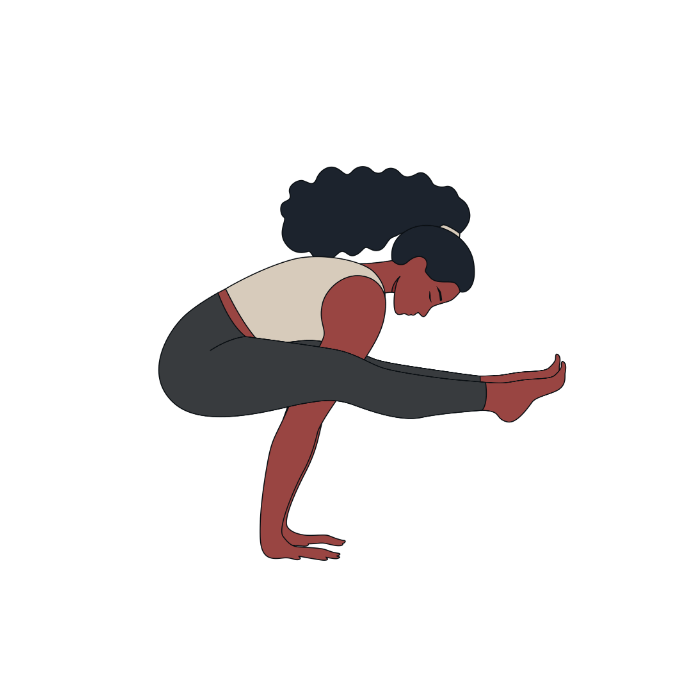
Peak Pose: Bird of Paradise
Wind Down Poses:
Seated Twist
Bound Angle Pose
Happy Baby
Savasana
Give it a try and let us know how it goes! To catch a few video clips of this sequence in action follow @kate.lombardo and @yogarenew on Instagram.
Free Classes, Tutorials & More
Download the YogaRenew App
Explore classes & pose tutorials for any style, format, duration or experience level with a free account in the YogaRenew app. Or subscribe and gain access to workshops, live classes and more.
A hybrid yoga teacher training can offer a practical middle ground between a fully online certification and spending several consecutive weeks or months at a fully in-person training.
Before choosing any course, however, it helps to understand what separates a genuinely effective hybrid training from one that merely offers a convenient schedule.
What Makes a Good Hybrid Yoga Teacher Training?
A strong hybrid yoga teacher training should do four things well:
Align with your goals
Have enough face-to-face time for practical learning
Include repeated teaching practice and useful feedback
Clearly explain its certification, schedule and graduation requirements
Align Your Training & Goals
You may be surprised at how many students are passionate about yoga and attend a training without the intention of ever teaching. Goals will vary from person to person. The question is: what are you looking to get out of a hybrid yoga teacher training? Is there a specific style of yoga you’re looking to teach? Are you looking to pursue your passion in greater depth? Are you drawn to specific aspects of the practice? There’s some variance in how schools handle training so you’ll want to find one that aligns with these goals.
Another consideration is location. Are you looking to do a hybrid training locally or do you intend to travel? Places like Bali, Thailand or Costa Rica have become really popular destinations for teacher trainings. For some students, location is just as important as the training itself. If this sounds like you, look for a school that doesn’t rely on location as its main selling point. A beautiful location won’t make up for a poor training experience, and there’s plenty of great schools in beautiful locations.
All Yoga Training is a great school providing hybrid yoga teacher training in Bali. Its program combines YogaRenew’s online Anatomy and Philosophy programs with a 12-day practical immersion conducted by All Yoga’s team at their beachfront location in Nusa Lembongan.
In-Person Curriculum Considerations
One big consideration is how the school balances their curriculum between online and in-person. If you’re looking to learn certain subjects in-person, then you’ll want to ensure your training teaches those in-person.
Anatomy, physiology, philosophy, history, and ethics are usually handled online in hybrid training curriculums. Other subjects split between online and in-person can vary quite a bit from school to school.
In-person training components will often focus on areas like:
Asana practice & technique
Pranayama & meditation
Practice teaching
Verbal, visual and physical cueing
Observing different bodies
Props & Modifications
Sequencing for a specific purpose
Managing timing and class energy
Receiving and applying feedback
Developing a clear teaching voice
Are there specific areas you’d prefer to learn during your in-person visit? If so, make sure you qualify that prior to enrolling.
Prioritize Repeated Teaching Practice
Many prospective students concentrate on how much asana, anatomy or philosophy a curriculum includes. Those subjects matter, but they don’t automatically prepare you to lead a class.
The real test is how often you will teach.
Some considerations:
Will I teach individual poses?
Will I lead short sequences?
Will I teach a complete class?
Who will observe me?
Will I receive individual feedback?
Can I teach again after receiving feedback?
How will my teaching ability be assessed?
A single final teaching assessment is not enough.
A better learning cycle looks like this:
Prepare a short teaching assignment.
Teach it to a group.
Receive specific feedback.
Adjust the language or sequence.
Teach again.
Reflect on what improved.
Useful feedback should be practical. “Be more confident” doesn’t tell a trainee what to change. Guidance on pacing, cue length, observation, sequencing or voice projection does.
Current Yoga Alliance standards also emphasize demonstrated competence, teaching methodology, practicum, mentorship and feedback rather than graduating students solely because they completed the required material.
The term “self-paced” can describe anything from a polished educational platform to a collection of long video recordings.
Before enrolling, ask to see a sample lesson or platform demonstration.
A good online component should include:
A logical order of study
Focused lessons rather than unnecessarily long videos
Clear explanations
Captions or transcripts
Quizzes or knowledge checks
Downloadable notes or resources
Progress tracking
Access across common devices
A clear way to ask questions
Transparent completion requirements
Accountability matters as well.
Another consideration is whether you gain lifetime access to the online material. Having material that you can revisit down the road is indispensable.
You should also find out whether the online modules must be completed before the in-person immersion. Completing theoretical work beforehand can make the live experience more valuable, but some students need flexibility when joining at shorter notice.
Verify the Certification Carefully
“Certified,” “registered,” “approved” and “accredited” are frequently used as though they mean the same thing. They do not always describe the same relationship.
Before paying a deposit, ask:
What certificate will I receive?
Which school issues it?
Is this exact course registered under the school’s current credentials?
What must I complete before graduating?
Are there attendance or assessment requirements?
Can graduates apply for the professional registration they want?
Are there separate registration or membership fees?
Yoga Alliance currently permits Registered Yoga Schools to deliver programs in person, through distance learning or through a mixture of both. Its standards still require schools to cover defined educational categories and assess trainees’ knowledge, skills and experience before issuing a certificate.
Check the current official directory rather than relying solely on a logo displayed on a school’s website.
Understand the Intensity of the Immersion
A shorter residential period is easier to fit around work or family responsibilities, but it may be more concentrated than a longer course.
Request a typical daily schedule before enrolling. Look at:
Starting and finishing times
Number of physical practices per day
Length of lectures and workshops
Practice-teaching hours
Meal and recovery breaks
Rest days
Evening assignments
Attendance requirements
Policies for illness or missed sessions
Don’t confuse a shorter course with an easier course. A 10- to 14-day immersion can involve long and physically demanding days.
A responsible program should be intensive without treating exhaustion as proof of commitment.
Research Who Will Actually Teach You
A school may advertise a long list of impressive teachers, but not every person on the faculty page will necessarily spend substantial time with your cohort.
Look beyond biographies and ask:
Who is the lead trainer?
Which subjects does each teacher teach?
Who supervises teaching practice?
Who provides individual feedback?
Will the advertised faculty be present throughout the course?
Who answers questions during online study?
Do specialist teachers have relevant expertise?
A gifted asana teacher is not automatically qualified to teach anatomy. Likewise, a guest lecturer who delivers one session should not be presented as though they provide ongoing mentorship.
The quality of a teacher training depends heavily on access to experienced educators, not simply recognizable names.
Consider Class Size and Trainer Access
Small classes can provide more opportunities to ask questions, teach and receive feedback. But the number of students should be considered alongside the number of active trainers.
A group of 20 students with several present and engaged educators may receive better support than a smaller group managed almost entirely by one person.
Ask how the school organizes:
Individual feedback
Pose observation
Partner work
Practice teaching
Assessments
Mentoring
Questions outside class hours
When a school promises personal guidance, its staffing and timetable should make that promise realistic.
Compare the Total Commitment, Not Just Tuition
Hybrid yoga teacher training can reduce the amount of time spent away from home, but it isn’t automatically inexpensive. If you’re looking to travel for training, there are some other expenses you’ll want to consider.
Your total cost may include:
Tuition
Flights
Airport and boat transfers
Accommodation
Meals
Travel insurance
Visa costs
Required books
Course materials
Payment-processing fees
Extra nights before or after training
Lost income or annual leave
Check exactly what the advertised price includes. A more expensive course may include accommodation or materials that cost extra elsewhere. A low tuition fee may look less attractive once all necessary expenses are added.
Read the cancellation, transfer and refund policies carefully before booking travel.
Decide Whether Hybrid Learning Fits You
A hybrid yoga teacher training may suit you when:
You cannot take several consecutive weeks away
You learn theoretical material well online
You are comfortable studying independently
You still want substantial face-to-face practice
You value travel and an immersive group experience
You can manage an intensive residential schedule
A different format may be better when:
You struggle to finish self-paced courses
You prefer live discussion for every subject
You need more time between practical sessions
You want a longer residential experience
You cannot manage long training days
You want all 200 hours delivered in person
Hybrid is not automatically better than fully online or fully in person. Its advantage comes from using each learning environment for the subjects it teaches best.
Red Flags to Notice Before Enrolling
Be cautious when a school:
Cannot explain how online and in-person learning are divided
Gives little time to observed teaching practice
Focuses more on the destination than the curriculum
Is vague about certification
Will not identify the trainers
Offers no support during online study
Promises that every graduate will feel completely confident
Has unclear assessment requirements
Uses constant urgency to pressure students
Refuses to share a sample schedule
Calls a short retreat a complete practical immersion
Makes inconsistent claims about prices, hours or inclusions
Clear information before enrollment is often a good indication of how organized the training will be after you arrive.
Questions to Ask Before Choosing a Course
Use the same questions when comparing schools:
Which subjects are online?
Which subjects are taught in person?
Why was the curriculum divided that way?
How often will I practice teaching?
Who observes and assesses my teaching?
Will I receive individual feedback?
How many students and trainers are in each cohort?
Can I view a sample online lesson?
When must the online modules be completed?
What support is available during online study?
What qualification will I receive?
What must I do to graduate?
What is included in the tuition?
What additional costs should I expect?
What support is available after the course?
Pay attention to how the school answers. Specific, direct responses are more useful than polished promises.
Don't miss a beat! Sign up for our weekly newsletter.
If you’re trying to balance teaching yoga with a full-time job, this is the episode for you! A lot of yoga teachers do not teach full time, and that doesn’t make them any less of a teacher. In fact, for many people, part-time teaching is the most sustainable way to stay connected to the practice while keeping the stability of a regular career.
In this post, we’ve woven together Kate & Patrick’s discussion from The YogaRenew Podcast into an easily digestible blog format so you can snag the major takeaways!
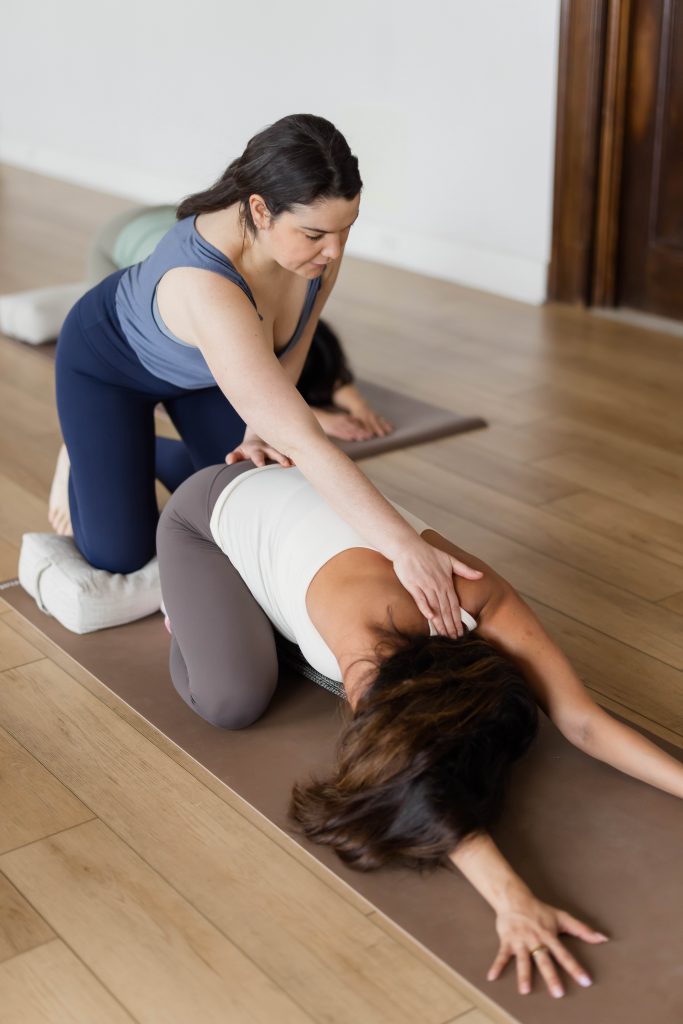
Yoga teacher giving a hands-on assist while teaching a class
Why Part-Time Yoga Teaching is a Valid Career Path
One of the biggest ideas from this conversation is simple: you do not have to teach yoga full time to be a real yoga teacher. That pressure often comes from social media, where the “ideal” yoga career can look like endless free time, beach sequences, and a fully flexible schedule. But that version of teaching is not the only version that counts.
For many teachers, the reality is different. You may love your job, value the paycheck, and still want to teach yoga because it fulfills you. That is not a compromise. It is a choice. And for a lot of people, it is the wiser choice.
There is also a financial reality that is easy to ignore when you first fall in love with teaching. Yoga can become a meaningful and rewarding career, but it is rarely the most stable or lucrative path at the beginning. If you have a full-time job with benefits, a predictable paycheck, and a career you actually enjoy, you are not “less committed” because you keep it. You may simply be building a more balanced life by also teaching yoga.
The key shift is to stop asking whether part-time teaching is enough. Instead, ask whether it works for your life, your energy, and your goals.
Protect Your Own Practice First
If you’re teaching while working full time, the first thing to protect is your own practice. This was one of the strongest takeaways from the transcript: the more you teach, the easier it is to forget that you also need to be a student. That matters more than people think. If you spend all your time planning classes, showing up for students, and managing work responsibilities, you can burn out fast. Teaching yoga without regularly practicing yoga for yourself can start to feel draining instead of nourishing.
A good rule of thumb is to set aside at least one time each week that is just for you as a student. That might mean taking a class, practicing at home, or attending a workshop where you are not in teacher mode. The point is not perfection – it’s maintaining a relationship with the practice that is separate from your role as an instructor.
A realistic teaching load
If you have a full-time job, two regular classes per week often ends up being a sweet spot. That gives you enough room to prepare thoughtfully, teach well, and still keep space for your own life.
Once you start stacking three, four, or five classes a week on top of a full-time job, the balance shifts quickly. You lose time for your own practice, recovery, and even basic rest. And if one of those classes falls on a weekend, you may suddenly feel like you’re working six days a week. That does not mean you can never take on more. It means you should be honest about what you can sustain for the long term.
Choose Commitments You Can Actually Honor
Part-time teaching can feel flexible, but it still requires real commitment. Once you say yes to a class, your students and the studio are counting on you. That is true whether you teach once a week or every day. This is especially important with weekend classes. Weekend time is often the most valuable teaching time – classes are busier, and they can help you build a following. In some studios, weekends are also more lucrative. But that convenience comes with a tradeoff.
If you take a Saturday morning class, you are not just committing to one class. You are also committing to protecting your Friday night, getting enough sleep, and being available consistently. If your schedule already includes a demanding weekday job, you need to think carefully about whether you can really honor that commitment.
Here is a simple way to decide whether a class fits your life:
Look at the full commitment, not just the class time. Add in prep, commuting, playlist planning, and recovery time.
Check your calendar for the next two months. If you already know you will need to sub often, the schedule may be too tight.
Ask whether this class helps or hurts your sustainability. A class should support your teaching journey, not make you resent it.
Be honest with studios and students. Reliability matters. If you cannot consistently show up, it may not be the right class to take.
This is one of the most practical lessons in the conversation: teaching part time is still real work. Treat it that way, and you will build more trust, both with others and with yourself.
Grow Beyond Weekly Classes Without Overloading Yourself
If you are passionate about teaching, you do not have to cap your growth at regular group classes. One of the smartest ways to expand as a part-time teacher is to add offerings that are meaningful but not weekly.
Think workshops, teacher trainings, retreats, or special events. These can give you a chance to deepen your teaching without creating a schedule that takes over your week. They also let you explore topics you care about more deeply, which can make you a stronger teacher overall.
Why this approach works:
Weekly classes are repetitive by nature. They are important, but they can also become tiring if they are the only thing you do. A workshop or monthly offering adds variety and keeps your teaching fresh.
For example, you might teach two weekly classes and then lead one workshop a month. Or you might join a teacher training for a short season each year. Another option is leading a retreat once a year, if your full-time job allows you to take vacation time.
These formats can also help you build your reputation without requiring constant availability. They are often easier to fit around a career, family, or personal schedule than adding more weekly classes.
The temptation is to keep saying yes because you love the work. But more opportunities are not always better opportunities. If the extra commitment steals your ability to rest, practice, or work well in your day job, it can backfire.
A better question is: does this opportunity deepen my teaching or simply fill my calendar? If it deepens your teaching, supports your energy, and fits your life, it may be worth saying yes. If it just adds pressure, it may be time to pass.
Make the Transition Only When It Feels Natural
For some teachers, part-time teaching is a long-term arrangement. For others, it becomes the bridge to a full-time career. The important thing is that the transition happens naturally, not out of panic.
One useful detail from the transcript is that a strong part-time foundation can make a future move into full-time teaching much smoother. When you already have a regular student base, a few teaching opportunities in place, and experience beyond just weekly classes, you are not starting from zero.
That can look like:
Two consistent weekly classes
Occasional workshops
Involvement in teacher training
A special event or retreat once a year
If those pieces are already in place, then going full time is less of a leap and more of a next step. You are not trying to build everything at once. You are simply expanding what is already working.
That said, you may never want to make that transition. And that is completely fine. A part-time teaching path can be a long-term career, a side passion, or a meaningful chapter of your life. There is no rule that says it has to become something else.
This is where a lot of teachers get stuck: they think part-time means temporary. It does not. It can be a sustainable, successful, and deeply fulfilling way to teach for years.
Frequently Asked Questions
Can you be a real yoga teacher if you only teach part time?
Yes. Teaching part time does not make you less legitimate. If you are showing up for students, continuing your practice, and teaching with care, you are a yoga teacher.
How many classes a week should a part-time yoga teacher take?
For many teachers with a full-time job, two regular classes per week is a sustainable place to start. Some teachers can handle more, but only if they still have time for practice, rest, and preparation.
Should I take weekend yoga classes if I work Monday through Friday?
Only if you can truly protect that commitment. Weekend classes can be rewarding, but they also take away from your rest time and may require changes to your social schedule.
What if I want to teach more than just group classes?
That is a great next step. Workshops, teacher trainings, and retreats are all ways to expand your teaching without overloading your weekly calendar.
How do I know if I’m ready to go full time?
You may be ready when teaching opportunities feel steady, your student base is growing, and the shift feels natural rather than desperate. If your part-time work already has momentum, the transition may be smoother.
Closing Sentiments on How to Balance Teaching Yoga + A Full Time Job
Balancing teaching yoga with a full-time job is not about doing everything. It is about choosing the right things and protecting your energy along the way. If you stay connected to your own practice, keep your schedule realistic, and take on opportunities you can truly honor, part-time teaching can be both fulfilling and sustainable.
The biggest takeaway is that you do not need to choose between being a “real” yoga teacher and having a stable career. You can do both. And for many people, that balance is exactly what makes the practice last.
If you want to keep exploring the path, look at how your current schedule supports your energy, not just your ambition. And if you’re interested in going deeper, listen to the full conversation:
One-Sentence Summary:
You can build a sustainable yoga teaching path alongside a full-time job by protecting your own practice, choosing commitments carefully, and growing beyond weekly classes only when it truly fits your life.
Don't miss a beat! Sign up for our weekly newsletter.
In the age of digital options for almost anything, it only makes sense that people would evaluate the pros and cons of each (an in-person ytt and online ytt). Whether or not to actually enroll in an online yoga teacher training program matters now more than ever because the option is still there
How YogaRenew Has Experienced Both Worlds
Yoga Directors Kate Lombardo and Patrick Franco brought decades of yoga teaching experience when they joined YogaRenew. While already being an established online yoga teacher training company, they decided to also open a physical headquarters where students could meet their digital instructors IRL to seek guidance, get tips on teaching and ask any questions they had.
The Biggest Misconceptions About Online Yoga Teacher Training
The biggest misconceptions about online yoga teacher trainings is that the learning is compromised. We can confidently stand by the fact that since Yoga Alliance became the governing body to accredit yoga schools based on consistency in learning materials that digital trainings have become equal to, if not more in-depth than in-person/in-studio yoga teacher trainings.
The Real Limitations of Learning Yoga Online
There are a few drawbacks to online learning for the physical yoga asana portion of the practice. It can be difficult to go through a training that focuses so heavily on the body without being able to observe bodies in real life. This includes, but is not limited to, the following areas:
Hands-on Assists
Physical adjustments are one of the few teaching skills that simply can’t be fully learned through video instruction alone. Safe and effective hands-on assists require an understanding of anatomy, clear communication, consent, and the ability to feel how a student’s body responds in real time.
While an online yoga teacher training can teach the principles behind assisting—including when an assist is appropriate, why it works, and when it should be avoided—the physical experience of offering adjustments comes with practice. Many teachers continue developing this skill by teaching community classes, assisting experienced instructors, or attending continuing education workshops after completing their certification.
Practice Teaching
Teaching yoga is a skill that improves every time you step in front of students. While online teacher trainings often include teaching assignments, recorded practice classes, and instructor feedback, they can’t completely replicate the experience of managing the energy of a live room.
Learning to project your voice, adjust your pacing, respond to unexpected situations, and read the needs of a group develops naturally through repetition. Fortunately, these are skills that continue to grow long after your 200-hour yoga teacher training is complete. Most experienced teachers will tell you that their greatest growth happened during their first several months of actually teaching classes.
Personal Alignment Refinement
One of the biggest advantages of attending an in-person yoga class is receiving immediate visual feedback from an experienced teacher. Small alignment adjustments can sometimes be easier to notice when someone is observing your movement from multiple angles in real time.
That said, online learning has come a long way. Multiple camera angles, video submissions, personalized instructor feedback, and detailed anatomy education help students develop a strong understanding of alignment principles. Rather than relying solely on memorizing the “correct” shape of a pose, students learn why alignment cues matter and how to adapt them for different bodies—an approach that ultimately creates more thoughtful and inclusive teachers.
Where Online Yoga Teacher Training Actually Excels
Anatomy
Anatomy is a complex subject, and having the freedom to pause lectures, replay demonstrations, review diagrams, and revisit difficult concepts often leads to deeper understanding than trying to absorb everything during a live weekend training.
Rather than rushing through muscles, joints, movement patterns, and biomechanics, students can take the time to truly understand how the body works.
Yoga Philosophy
Yoga philosophy often requires reflection more than memorization. Concepts from the Yoga Sutras, the Eight Limbs of Yoga, the Bhagavad Gita, and other traditional teachings become much more meaningful when students have the opportunity to read, journal, revisit lectures, and absorb the material over time.
Online yoga teacher training creates space for this deeper learning. Instead of quickly moving from lecture to lecture, students can spend time considering how philosophical teachings relate to both their personal practice and their future teaching style.
Learning at Your Own Pace
Self-paced learning removes the pressure of trying to keep up with an entire class. Students can spend extra time on anatomy, revisit sequencing modules before teaching, or review philosophy whenever they need a refresher. Instead of learning everything in a single intensive month or weekend format, knowledge has the opportunity to build gradually, leading to better long-term retention.
For busy professionals, parents, caregivers, and anyone balancing multiple responsibilities, this flexibility makes earning a yoga teacher certification far more realistic.
Can You Build Community in an Online Yoga Teacher Training?
YogaRenew students have found such a strong community through networks like the Facebook Group, YouTube channel, Instagram and other social platforms. The digital world allows for people from all over the world to connect. By connecting through these networks, students build a strong community where they can discuss yoga, teaching, cueing, and even more intimate topics like incorporating yoga philosophy and the principles of the practice into their everyday lives. Some can make the argument that an online community feels easier to establish than an in-person community.
Is Online Yoga Teacher Training Recognized?
Yes. Online yoga teacher trainings have widely been accepted by Yoga Alliance, an accreditation company that vets online yoga schools based on required pillars of content and the consistency in the learning materials. In fact, since 2022, Yoga Alliance has permanently allowed Registered Yoga Schools (RYSs) to offer 200-hour yoga teacher training and other certification programs fully online, provided they meet the organization’s educational standards and curriculum requirements.
For prospective teachers, this means you can earn a high-quality online yoga teacher training certification from a registered school and become eligible to register with Yoga Alliance after successfully completing your program.
When choosing an online yoga school, look for one that offers:
Comprehensive anatomy, philosophy, sequencing, and teaching methodology
Practice teaching opportunities and instructor feedback
Lifetime or extended access to course materials for continued learning
Ongoing support before and after graduation
The quality of your education depends far more on the school you choose than whether the training takes place online or in person.
Does an Online Yoga Teacher Training Produce Great Teachers?
A comprehensive online yoga teacher training provides the knowledge and framework needed to teach safe, thoughtful, and effective classes. As you begin teaching, you’ll naturally refine your cueing, classroom presence, sequencing, and communication with every class you lead.
Great yoga teachers continue learning long after they receive their certification by:
Teaching classes consistently
Receiving feedback from students and mentors
Attending workshops and continuing education courses
Deepening their understanding of yoga anatomy and philosophy
Refining their sequencing and teaching style over time
The best teachers aren’t created by a specific format—they’re created through a commitment to lifelong learning. An excellent online yoga teacher training provides the foundation, while teaching experience builds confidence and expertise.
Who Should Choose Online Training?
An online yoga teacher training is an excellent choice for students who value flexibility, affordability, and the ability to learn at their own pace. It allows you to build a strong educational foundation without putting your career, family, or other responsibilities on hold.
Online training may be the right fit if you:
Have a busy work or family schedule
Prefer self-paced learning
Want the ability to replay lessons and review material
Learn best by studying independently
Don’t live near a reputable yoga teacher training program
Want to save on travel, lodging, and commuting expenses
Enjoy taking detailed notes and revisiting course content over time
Plan to continue your education through workshops and teaching experience after graduation
Who Might Prefer In-Person?
While online yoga teacher training offers tremendous flexibility, some students simply thrive in a traditional classroom environment. If you learn best through face-to-face interaction and hands-on experiences, an in-person program may feel more natural.
You might prefer an in-person yoga teacher training if you:
Learn best through live discussion and immediate feedback
Want regular opportunities for hands-on assists and partner work
Enjoy practicing with the same group throughout your training
Prefer structured schedules with fixed class times
Value being immersed in a studio community
Want frequent in-person practice teaching opportunities
Feel more motivated by classroom accountability
Why Hybrid Learning May Be the Future
Hybrid learning gives students the ability to tailor their academic experience to fit their specific needs. This is why hybrid learning is the future of academic and physical learning. There are so many benefits to hybrid learning, namely that it combines the pros of both learning in-person and digitally. In today’s landscape, almost everything is digital – so when you can combine that with the element of human touch and in-person interaction, you get a well-rounded learning experience.
Watch what Kate & Patrick have to say on the topic:
The Yoga Sutras of Patanjali is a core text in yoga philosophy. You really cannot avoid attending a yoga class or moving through a yoga teacher training without coming in contact with The Yoga Sutras. This is because the text is meant to help us alleviate suffering.
As human beings living here on planet earth, we all have a body and we all have a mind. With this comes suffering, attachments, pain, loss, sadness, and so much more. We experience the beautiful and the breathtaking things in live, but we also experience the opposite.
Yoga Sutra 1.1 is the opening verse of Patanjali’s Yoga Sutras. It really provides the groundwork for the entire text. It reads, “Atha yoga-anushasanam,” which can be translated as “Now, the teachings of yoga begin.” or “Now begins the teaching of yoga.” The key word is “now.” It’s all happening in this very moment and it’s right here in the present.
The word “Atha” in Sanskrit is said to signify a new beginning, so it’s an opportunity to let go of whatever was in the past and whatever is attaching you to something that isn’t serving you.
Yoga Sutra 1.1 also suggests that change begins within. We live in a world where we are bombarded with advertisements to buy things that will make us happy. This specific sutra suggests, in its immediacy of using “now” that we don’t need to wait for something to change us. We have it all within ourselves.
Peak Pose: Extended Side Angle (Utthita Parsvakonasana)
Utthita Parsvakonasana is a pose that really requires your full attention. It’s almost impossible (for me, at least!), to be in this pose and think about a to-do list or worry about what I’m cooking for dinner. It’s a pose that really requires strength, full body awareness, openness, and the ability to breath through it all. This pose gives you the opportunity to elongate parts of your body as you inhale and to engage other parts of your body as you exhale.
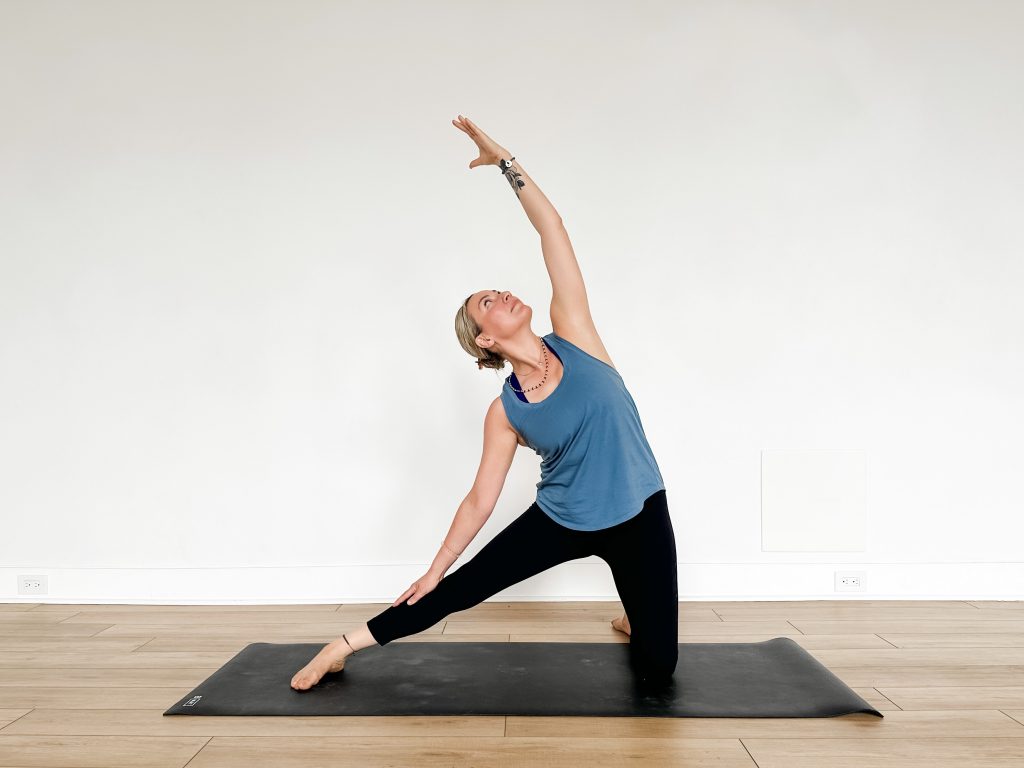
Supporting Pose #1: Gate Pose (Parighasana)
This pose helps open the inner thighs and to also help each side waist find length. A common issue that I’ve seen with this pose is that students tend to collapse the ribs onto the thigh. Instead of releasing the rips or the waist down to the top of the thigh, it’s important to think about elongating and lengthening..
How to:
Stand with your legs wide, facing the long edge of your mat.
Bring your hands to the ground or blocks if you can’t reach the ground and then bring one knee at a time to the ground so you’re kneeling.
Extend your right leg to the right with your foot down, your toes facing the long edge of the mat (the same direction your chest is facing) and try to keep the pinky edge of your foot on the mat,
Reach your arms up and begin to tilt to the right. Bring your right hand to your leg and extend your left arm high overhead. As you inhale, lengthen your right side body. As you exhale, try to turn your bottom right ribs to the sky.
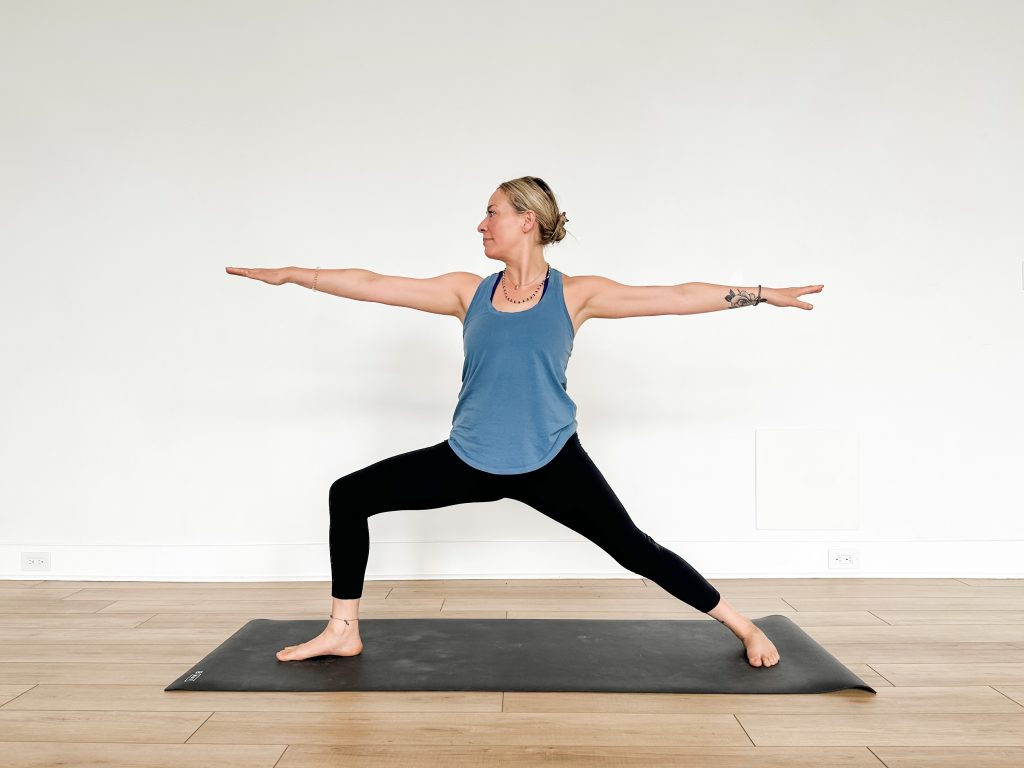
Supporting Pose #2: Warrior II (Virabhadrasana II)
This pose will help you become aware of your back leg and also the alignment of your front leg over the front ankle. It’s a powerful and open pose that may also help you find space in your upper body.
How to:
From Downward Facing Dog, step your right foot forward to a low lunge.
Turn your back heel down and circle your arms up as you turn your belly and your heart to face the long side of your mat.
Extend your arms away from your heart and try your best to have your right arm in line with your right shoulder and your left arm in line with your left.
Look over your right shoulder, but stay aware of your back arm. Inhale as you reach your arms away from each other and as you exhale, press into the outer edge of your back foot. .
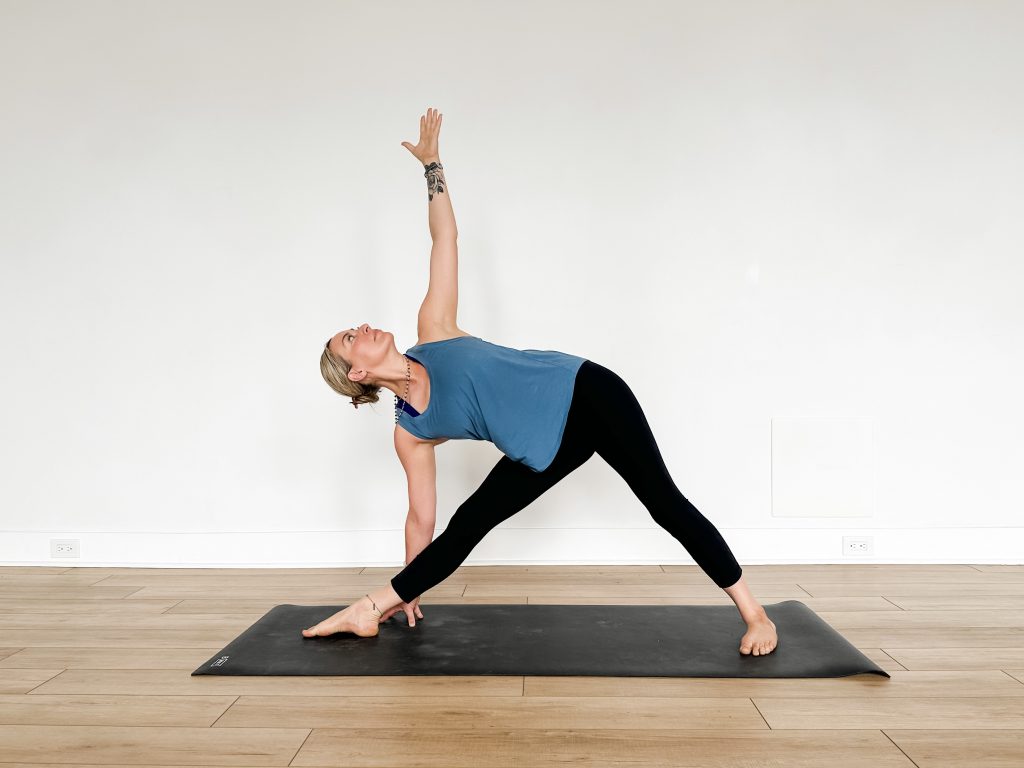
This pose really helps find the extension in the side body. You don’t already realize how much length and space you have until you approach this pose! It also offers opportunities to find more length each time you breath in and to let go of tension as you breathe out.
How to:
From Warrior II, lengthen both legs by engaging your thighs.
Reach your arms away from each other and lower your right hand down to your right shin.
Move your right hip back in space towards your left foot to create even more space in your right side body.
Press your right hand into your right shin as you glide your right hip towards the back of your mat.
Reach your arms away from each other as you inhale. Draw your shoulder blades together as you exhale.
Peak Pose: Extended Side Angle (Utthita Parsvakonasana)
How to:
From Warrior II, deliver your right forearm onto the top of your right thigh with your palm facing upwards.
Bring your left arm overhead to frame your ear and think about your left arm reaching away from your left foot.
As you breathe in, press your forearm into the top of your thigh and as you breathe out, glide your right sitting bone underneath you.
You may bring your right hand to the mat or to a block. Otherwise, keep your forearm on your thigh to maintain the space in your right side body,
If it feels okay, turn your gaze up to your left hand.
Don't miss a beat! Sign up for our weekly newsletter.
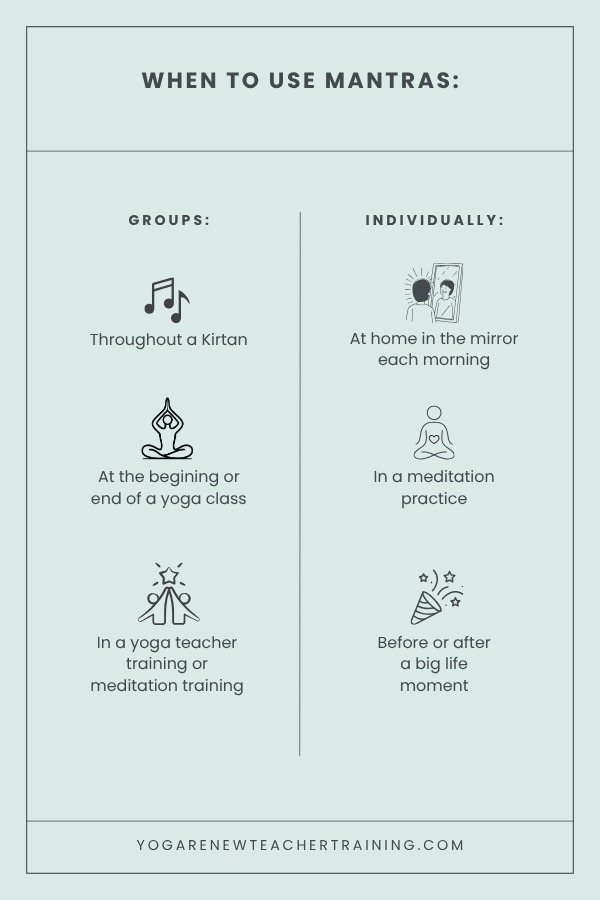
A mantra is a word or phrase that is repeated to invoke a positive mind-body response throughout a period of time. They can be said quietly internally, chanted, hummed or sang out loud, singularly or with a group.
Mantras are commonly used in the yoga practice, often through meditation or Kirtans (a call-and-response style spiritual practice where people chant mantras or hymns, often led by Bhakti yogis and can be accompanied by instruments like the harmonium).
Since they are considered a widely popular spiritual practice, they can often be found on platforms like Pinterest, TikTok, Instagram and other social platforms. Mantras can be incorporated into everyday life and used whenever needed throughout daily life or in trying or desperate times.
Hinduism. a word or formula, as from the Veda, chanted or sung as an incantation or prayer.
an often repeated word, formula, or phrase, often a truism.
“If I hear the “less is more” mantra one more time, I’ll scream.”
Mantras can also be defined in the Yoga Sutras as, “a tool for the mind.” Patanjali’s primary definition of a mantra focuses on the sacred syllable OM (also called Pranava), which serves as the verbal representation of the Supreme Consciousness or the Divine.
What is a daily mantra?
A daily mantra is a word or phrase that is repeated daily to enhance your overall mental state or reach spiritual enlightenment. Many Bhakti yogis consider chanting to be the ultimate path to enlightenment and will often utilize mantras in songs or hymns to dance to, offering praise to the divine.
Daily mantras have also gained traction in the wellness community as a way to boost confidence, increase self-worth and find ways to connect with a higher power. Incorporating a daily mantra into your life has several benefits, including:
A deeper understanding of your own spirituality and connection to a higher power
Increased mental clarity, focus and consistency
Recognizing limiting beliefs and overcoming them through the power of repetition of a positive phrase
Enhanced view of the self; a deeper understanding of wants and desires and how to transmute them into something good for the soul
What’s the difference between a mantra and an affirmation?
Mantras and affirmations are virtually the same except for their tense and spiritual subtext. A mantra is energy or a sentiment you wish to invite or call in whereas an affirmation is something you say with the belief that it is already true. Both can be used to manifest certain feelings, emotions or mental states and both have the ability to create space for a positive impact on an individual’s daily life.
Daily mantras
Here are 5 daily mantras that can be cycled through at any point in time.
Om (the sound of the universe)
Om Shanti Shanti Shanti (peace)
Om Namah Shivaya (I bow to Shiva, the Hindu goddess)
The present moment is all that matters
I focus on the good in life and the good in life is revealed to me
Daily affirmations
Here are 5 daily affirmations that can be cycled through at any point in time.
I am safe
I am free
I am confident
I am stronger than any obstacle before me
I have the ability to create the life I desire
Don't miss a beat! Sign up for our weekly newsletter.
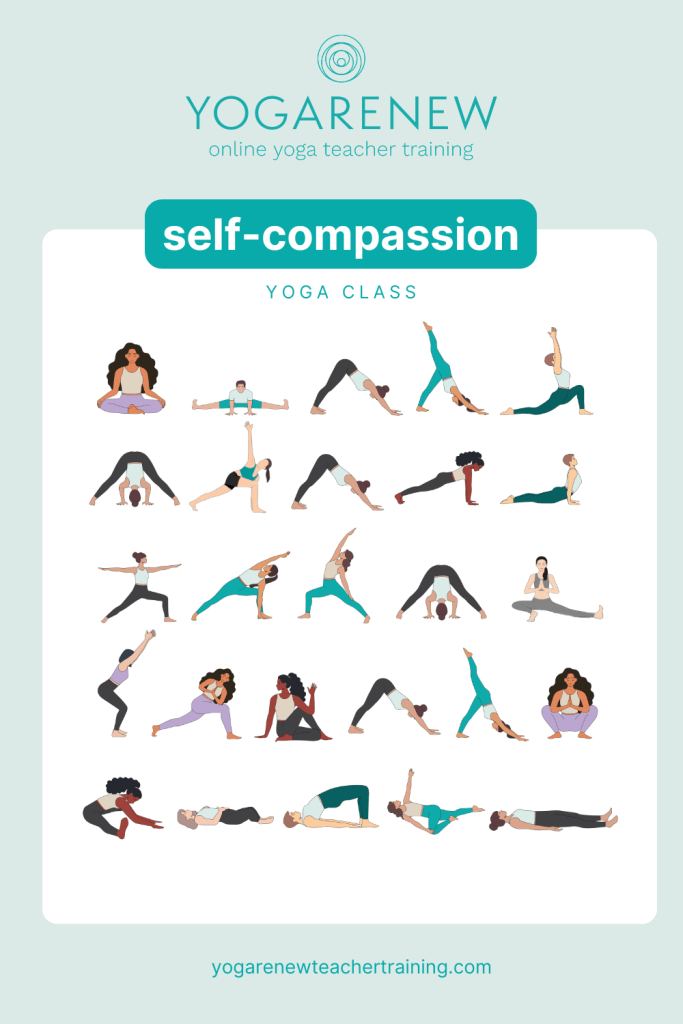
This week we’re focusing on self-compassion and what better way to honor that than trying to get into the posture Revolved Head to Knee pose?
Parivrtta Janu Sirsasana, translated as Revolved Head-to-Knee Pose, is a seated twist and side bend that offers a deep stretch through the entire side body. This posture lengthens the spine, opens the rib cage, and stretches the hamstrings, hips, and shoulders. Often described as both grounding and expansive, the pose encourages spacious breathing while cultivating stability and awareness through the torso.
In this sequence, we focus on creating length through both sides of the waist, anchoring through the sitting bones, and rotating the chest upward toward the sky. Emphasis is placed on extending through the reaching arm while maintaining a steady foundation through the legs. These actions help develop the mobility and strength necessary to safely explore the full expression of Revolved Janu Sirsasana.
Practicing this pose allows us to be mindful of how far our body can/is willing to go. This posture teaches us compassion and the intent skill of listening in order to find ourselves in a comfortable place. This peak pose can also be attempted with a chair, strap, and other yoga props to make it more accessible.
As we think about self-compassion, try to honor where your body wants to go today and thank it for all it does for you in times of movement!
Puttering/Warm-Up:
Sukhasana (incorporated side leans, reaching up and over to each side to lengthen the sides of the body)
Seated Wide Leg Forward Fold (gentle stretching in this posture to get comfortable with lengthening the legs out)
Downward Facing Dog
Three Legged Dog
Anjaneyasana
Prasarita Padottanasana
Low Lunge Twist
Downward Facing Dog > Plank > Cobra
Sun Salutations:
Surya Namaskar A (3-4 Rounds)
Standing:
Warrior 2
Extended Side Angle
Peaceful Warrior
Prasarita Padottanasana
Skandasana
Balance & Twists:
Chair
Revolved Side Angle
Seated Spinal Twist
Downward Facing Dog
Three Legged Dog
Yogi Squat
Peak Pose:
Revolved Janu Sirsasana (image shows the yogi leaning forward, instead you’ll reach your arms up and over your extended leg, twisting your torso to grab onto your foot or ankle)
Wind Down Poses:
Supta Baddha Konasana
Bridge Pose
Supine Twist
Savasana
Don't miss a beat! Sign up for our weekly newsletter.
Over the past several decades, yoga has transformed from a niche wellness practice into a global movement. Today, millions of people practice yoga around the world, thousands of studios offer classes, and more people than ever are exploring the path of becoming a yoga teacher.
With that growth comes an important question:
Is the yoga industry oversaturated?
If you are considering becoming a yoga teacher, you may have wondered:
Are there already too many yoga teachers?
Is there still room for me in the yoga industry?
Can I actually build a meaningful career teaching yoga?
These are common questions—and they are worth exploring. Choosing to invest your time, energy, and resources into yoga teacher training is a meaningful decision. It is natural to want to understand what opportunities exist and how you can create a path that feels sustainable.
The short answer?
No, the yoga industry is not oversaturated. And quite honestly, it never has been.
The teachers who thrive today are not necessarily the ones trying to appeal to everyone. They are the ones who develop their unique voice, continue their education, understand their students’ needs, and create meaningful experiences through yoga.
Yoga teaching today extends far beyond leading a single class at a studio. Teachers can build careers through online yoga classes, workshops, retreats, specialized programs, corporate wellness, private sessions, continuing education, and community-based offerings.
The opportunity is still there. The path just looks different than it did before.
Key Takeaways: Is the Yoga Industry Oversaturated?
The yoga industry continues to grow as more people seek movement, mindfulness, stress relief, and holistic wellness.
The biggest opportunity for yoga teachers comes from specialization, authenticity, and building trust with students.
Students are not simply looking for another yoga class—they are looking for teachers who understand their specific needs.
Continuing education helps yoga teachers stand out and serve their communities more effectively.
The future of yoga belongs to teachers who continue learning and adapting.
The Short Answer: Is the Yoga Industry Really Oversaturated?
The idea that yoga is “oversaturated” often comes from looking at one part of the industry: the number of yoga teachers. And yes, there are more certified yoga teachers today than ever before. However, focusing only on the number of teachers misses the bigger picture.
The number of people practicing yoga continues to grow. People are turning to yoga for many different reasons, including improving flexibility, managing stress, supporting mental health, recovering from injury, building strength, and creating more balance in their daily lives.
“But in terms of oversa oversaturation, I also just think like there’s so many people who have never stepped foot on a yoga mat. There’s so much opportunity to introduce this practice to more people to be unique about the way you do it and creating like yoga for golfers, like and trying to help people like spinal mobility helps it improve.” — Kate Lombardo
The demand for yoga is expanding—but so are the ways people want to experience it.
A student experiencing burnout may be searching for restorative yoga practices that support relaxation and nervous system regulation.
An athlete may want yoga designed specifically for mobility and recovery.
A pregnant student may be looking for a prenatal yoga specialist who understands the unique needs of pregnancy.
A beginner may want a teacher who creates a welcoming environment where they feel comfortable learning.
This leads us to the point of all the different avenues you can tale when teaching yoga.
The Difference Between Competition and Opportunity
Every growing industry experiences competition. The presence of more yoga teachers does not mean there is no room for new voices—it means the industry is evolving.
Think about other wellness professions. There are thousands of fitness instructors, nutrition professionals, and wellness coaches, yet people continue seeking support from experts who can help them reach specific goals.
Why?
Because people are not only looking for information. They are looking for connection, guidance, expertise, and someone who understands their individual journey.
Yoga is no different.
The teachers who build sustainable careers are not simply teaching yoga poses. They are creating meaningful experiences, building relationships, and helping students improve their physical, mental, and emotional wellbeing.
On this episode of the YogaRenew Podcast, Kate & Patrick discuss the yoga industry and debunk many of the “over-saturation” myths circling
Why It Feels Like Everyone Is Becoming a Yoga Teacher
The Growth of Yoga Teacher Training Programs
One reason the yoga industry feels crowded is because yoga education has become more accessible than ever.
In the past, becoming a yoga teacher often required traveling to a retreat center, taking significant time away from work, and making a large financial commitment.
Today, online yoga teacher training has opened the door for students around the world to pursue certification from the comfort of their own homes.
This accessibility is a positive development. More trained teachers means more people who can share yoga with their communities and help others experience the benefits of the practice.
However, increased accessibility also means that simply earning a certification is no longer the only factor that sets a teacher apart.
Successful teachers understand that education is ongoing. They continue developing their skills, exploring new areas of yoga, and learning how to better serve their students.
Social Media & Media Has Changed What Yoga Teaching Looks Like
Another reason the industry can appear oversaturated is because yoga has become highly visible online. Platforms like Instagram, YouTube, and TikTok have allowed yoga teachers to share their practices with audiences around the world. At first glance, it may seem like everyone is already teaching yoga.
But social media does not show the full picture.
You may see teachers with large followings, advanced poses, and polished content—but you do not see the thousands of students searching for a teacher who feels approachable, knowledgeable, and authentic.
Most students are not looking for the most impressive yoga teacher.
They are looking for the teacher who understands them.
We’ve seen countless depictions of yoga in television and movies, but it always seems to be from a different angle — transmuted through the lens of that specific teacher or practitioner’s experience and understanding of the practice. This is important. It gives perspective with the yoga practice. And beyond the depiction of yoga in the media, people must form a personal connection with the practice to truly make it something special for them.
What the Data Actually Says About the Yoga Industry
While it may feel like the yoga industry is crowded, the broader wellness landscape tells a different story.
Yoga continues to be one of the most recognized and widely practiced forms of movement and mindfulness in the world. As people prioritize health, stress management, and holistic wellness, the demand for qualified yoga teachers continues to expand.
The growth of yoga is also becoming more diverse. Students are no longer looking for only one style of yoga. They are seeking practices that meet their specific needs and life circumstances.
This shift creates opportunities for teachers who are willing to specialize.
The future of yoga is not necessarily about having more teachers offering the same type of class. It is about having more teachers who can serve unique communities and provide specialized experiences.
Why General Yoga Teachers Struggle to Stand Out
One of the biggest challenges new yoga teachers face is trying to appeal to everyone.
It is understandable. When beginning a teaching career, many instructors want to welcome as many students as possible. They may describe themselves simply as a “yoga teacher” and offer general classes to anyone interested.
But in an increasingly competitive industry, being specific can actually help you reach more people.
Students Are Looking for Specialists
Today’s yoga students often have specific goals.
They may want to:
Reduce stress and manage burnout
Improve mobility and flexibility
Support their mental health
Practice safely during pregnancy
Recover from physical challenges
Build strength and confidence
Create a consistent meditation practice
A teacher who understands a student’s specific needs can provide a deeper level of support.
Specialization does not mean limiting yourself. It means becoming more valuable to the students you are meant to serve.
Experience Matters More Than Follower Count
There is a common misconception that successful yoga teachers need thousands of followers, a perfect social media presence, or the ability to perform advanced poses.
In reality, many successful teachers build their careers through something much simpler: trust. Students return to teachers who make them feel seen, supported, and welcomed.
A teacher’s ability to communicate clearly, create safe spaces, and understand their students’ experiences often matters far more than how many people follow them online.
Authenticity Beats Perfection
Yoga has always been about connection. Students are drawn to teachers who show up authentically and share their own perspective, experiences, and passion for the practice.
You do not need to be the most flexible person in the room. You do not need to have the largest audience. You do not need to teach exactly like anyone else. Your unique background, personality, and approach are what allow you to connect with the students who need you.
Why Finding Your Yoga Niche Matters
A yoga niche is a specific area of focus that allows you to develop deeper knowledge and serve a particular group of students.
Finding a niche can help you:
Build confidence as a teacher
Create more meaningful classes
Attract students who resonate with your expertise
Differentiate yourself in a growing industry
Create additional career opportunities
Your niche does not have to define your entire teaching career. Many teachers begin with one area of focus and continue expanding their education as they grow.
The goal is not to put yourself in a box. The goal is to develop expertise that allows you to better serve your students.
Yoga Niches That Continue to Grow
As the yoga industry evolves, specialized forms of yoga are becoming increasingly valuable. Students are searching for teachers who can help them address specific needs and goals.
Restorative yoga has become especially relevant as more people experience stress, burnout, and the need for practices that support relaxation and nervous system regulation.
Restorative yoga teachers help students slow down, release tension, and create space for healing and recovery.
Pregnancy creates unique physical and emotional experiences, and many expecting parents seek teachers who understand how to safely adapt yoga practices during pregnancy.
Prenatal yoga certification allows teachers to confidently support this growing community.
Meditation and Breathwork
As interest in mindfulness continues to grow, many students are looking beyond physical movement and exploring meditation and breathwork practices.
Teachers who incorporate these tools can offer a more complete approach to wellness.
Chair Yoga
Chair yoga creates accessibility for students who may have mobility limitations, older adults, workplace wellness groups, and anyone who wants a gentle approach to movement.
This specialty opens opportunities for teachers to serve communities that may not traditionally have access to yoga classes.
Trauma-Informed Yoga
More students are seeking environments where they feel safe, respected, and supported.
Trauma-informed education helps teachers create more inclusive spaces and better understand the diverse experiences students bring into the practice.
Athletes, professionals, and specific communities are increasingly looking for yoga teachers who understand their unique needs.
From mobility-focused practices to recovery-based yoga, specialized instruction allows teachers to bring yoga into new spaces.
How to Build a Successful Yoga Career in Today’s Market
The yoga teachers who thrive in today’s industry understand that success is not about competing with every other teacher. It is about building a career that reflects your strengths, values, and the needs of your students.
Whether you want to teach full-time, build a side business, offer online classes, lead workshops, or simply deepen your own practice, there are more opportunities available than ever before.
Here are some of the most important ways to build a sustainable yoga career.
Continue Your Education
Completing a yoga teacher training is an important first step, but the best teachers remain lifelong students.
Continuing education allows you to expand your knowledge, develop new skills, and better serve different types of students.
Additional certifications in areas like yin yoga, restorative yoga, meditation, breathwork, prenatal yoga, and other specialties can help you create unique offerings and grow your confidence as a teacher.
The yoga industry is always evolving. Teachers who continue learning are better prepared to evolve with it.
Develop Your Unique Teaching Voice
One of the most valuable things you can offer as a yoga teacher is your perspective.
Your teaching voice comes from your experiences, your training, your personality, and the way you connect with others.
Two teachers can teach the same yoga sequence and create completely different experiences. That is the beauty of yoga.
Students are not looking for a perfect teacher. They are looking for a teacher they trust.
Create Multiple Income Streams
Many successful yoga teachers build careers through a combination of offerings rather than relying on one source of income.
Opportunities may include:
Studio classes
Private yoga sessions
Online yoga classes
Corporate wellness programs
Workshops and retreats
Specialty yoga programs
Continuing education courses
Yoga content creation
The modern yoga teacher has more options than ever before to create a career that fits their lifestyle.
Build Community Instead of Just an Audience
A large following does not automatically create a successful yoga career.
The strongest yoga businesses are built on relationships.
Students remember teachers who make them feel supported, welcomed, and connected. A small community of dedicated students can be more valuable than a large audience that does not engage.
Focus on creating meaningful experiences, and growth will follow.
Focus on Serving People, Not Competing With Others
It can be easy to compare yourself to other teachers, especially when social media highlights the success of others.
But yoga has never been about comparison.
The most impactful teachers focus on one simple question:
“How can I use yoga to help people?”
When you approach teaching from a place of service, authenticity, and continued growth, you naturally attract the students who need what you offer.
Final Thoughts: The Future of Yoga Needs More Dedicated Teachers
So, is the yoga industry oversaturated?
No. The yoga industry is evolving.
While there are more yoga teachers than ever before, there are also more people seeking meaningful movement, mindfulness, and wellness practices.
The greatest opportunity is not in becoming another yoga teacher who offers the same experience as everyone else.
The opportunity is in becoming a teacher who understands your students, continues your education, and creates meaningful transformation through yoga.
If you feel called to teach yoga, there is still room for you.
The world does not need fewer passionate yoga teachers. It needs more knowledgeable, compassionate, and authentic teachers who are prepared to meet students where they are.
Your yoga teaching journey can begin today.
Explore YogaRenew’s online yoga teacher training programs and discover how you can build the skills, confidence, and knowledge to share yoga with the world.
Frequently Asked Questions About the Yoga Industry
Is the yoga industry oversaturated?
The yoga industry is not oversaturated, but it has become more competitive. Successful yoga teachers stand out by developing specialized skills, building authentic relationships, and continuing their education.
Is it still worth becoming a yoga teacher?
Yes. Yoga continues to grow as more people seek support for physical health, stress management, mindfulness, and overall wellness. Teachers who bring expertise and authenticity can build meaningful careers.
Can you make a living as a yoga teacher?
Many yoga teachers create sustainable careers through a combination of studio teaching, private sessions, online classes, workshops, retreats, specialty programs, and wellness offerings.
How can a new yoga teacher stand out?
New teachers can stand out by finding their unique voice, specializing in areas they are passionate about, continuing their education, and focusing on creating meaningful experiences for students.
What type of yoga teachers are most in demand?
Teachers with specialized training in areas such as restorative yoga, yin yoga, prenatal yoga, meditation, breathwork, trauma-informed yoga, and accessible yoga practices are increasingly valuable as students seek more personalized experiences.
Are online yoga teacher trainings respected?
Online yoga teacher trainings can provide high-quality education when they are led by experienced instructors and meet recognized certification standards. Many students choose online programs because they offer flexibility and accessibility.
Each of us is born with an internal guidance system of consciousness and wisdom that resides within us. This powerful tool allows us to navigate through life and make the best decisions for ourselves. Intuition awareness is something we can each develop more with practice. Intuition can be a difficult idea to teach because it is something that we all have, and it is merely “felt” with a deep sense of knowing or “gut instinct.” The simplest way to get in touch with our intuition is to sit in stillness and allow our own inner guidance to give us answers to questions we might have. Or, we can simply allow stillness and quiet to create more clarity. Yoga is a great practice to help us get in touch with our intuition because it creates a space for us to be present and for our minds to be calmer.
“Intuition is seeing with the soul.” – Dean Koontz
Yoga poses to support the peak pose, Tittibhasana (Firefly Pose)
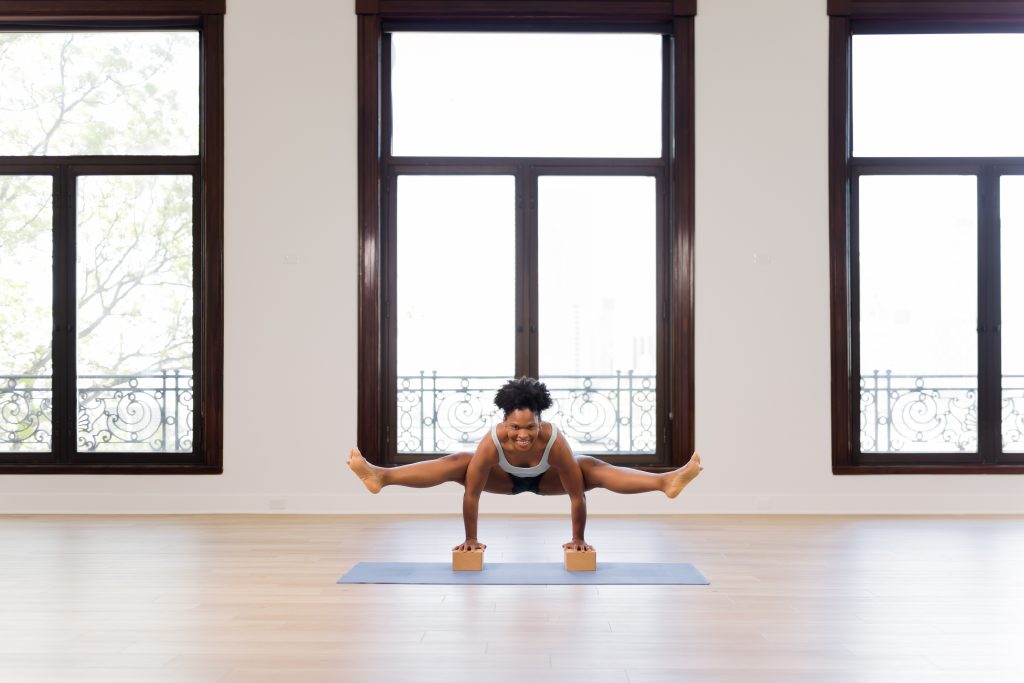
In this class, the goal is to tap into intuition: oftentimes the way that you know if something is wrong or right is that gut feeling. It’s that exact place that needs to build a fire in order to correctly do Firefly pose. One thing that’s important to reach Firefly, is the lifting of the abdominal muscles and the solar plexus area.
Malasana (Yogi Squat)
How to:
1. From Mountain pose, step your feet out about 2-3 feet apart.
2. Bend your knees and come into a squat. If your heels lift off the ground, you can place a folded blanket underneath them for support.
3. Bring your hands together in prayer and press your elbows into your knees.
4. Lean your torso forward slightly and work to keep your torso right in between your thighs.
5. Keep length in your spine and the chest open.
6. Point your tailbone down towards the mat and shift your weight into your heels.
7. Hold for several breaths. To release, bring your hands to the mat or hips. Engage your core and thighs. Rise up slowly.
Utthita Parsvakonasana (Extended Side Angle)
How to:
1. Begin in Warrior II pose.
2. Bring your front forearm onto your front thigh.
3. Extend your opposite arm up toward the sky with your fingers pointing towards the front of your mat.
4. Allow the bicep of your top arm to frame your ear. If this is too much, you can keep the arm lifted straight up towards the sky.
5. Keep your chest rotated upward and root down through the outer edge of your back foot.
6. Lift your head up towards the top arm. If this is too much, keep your gaze towards the ground.
7. To advance the pose, bring your top arm and extend your fingers toward the outside of your front foot. To help with flexibility, you can place a block by your front foot and place your hand on it.
8. To come out of the pose, press into your front thigh and activate your core to lift you back up to Warrior II.
Lizard Lunge (with Shoulder Under Knee)
How to:
1. Begin in Plank pose. Step your right foot forward in between your hands.
2. Align your front knee with your front ankle.
3. Come up onto the ball of your left foot and push slightly forward. If you are new to the pose or working on hip flexibility, keep your left knee back down on the mat.
4. Bring both of your hands on the inside of your right foot and begin to move your right foot closer to the edge of the right side of your mat.
5. Engage and activate your core and back leg muscles to keep you balanced.
6. To deepen the pose, you can opt to come down on your forearms.
7. Stay here for several breaths. Release out of the pose gently and switch sides.
Tittibhasana (Firefly Pose)
How to:
1. Begin in in a forward bend.
2. Bring your right hand through your right leg and around your right calf, placing your shoulder behind your knee.
3. Bring your left hand through your left leg and around your right calf, placing your left shoulder also behind your knee.
4. Lift your chest forward and let your legs rest upon the back of your upper arms.
5. Inhale, lifting your feet off of the mat entirely.
6. Point or flex your feet and extend them out long in front of you.
If you want to learn to teach vinyasa yoga classes that build to a peak pose, check out our Vinyasa Yoga Sequencing Lab. In this online yoga teacher training, you’ll learn how to sequence the perfect vinyasa yoga class that builds to an apex, or peak pose like this one.
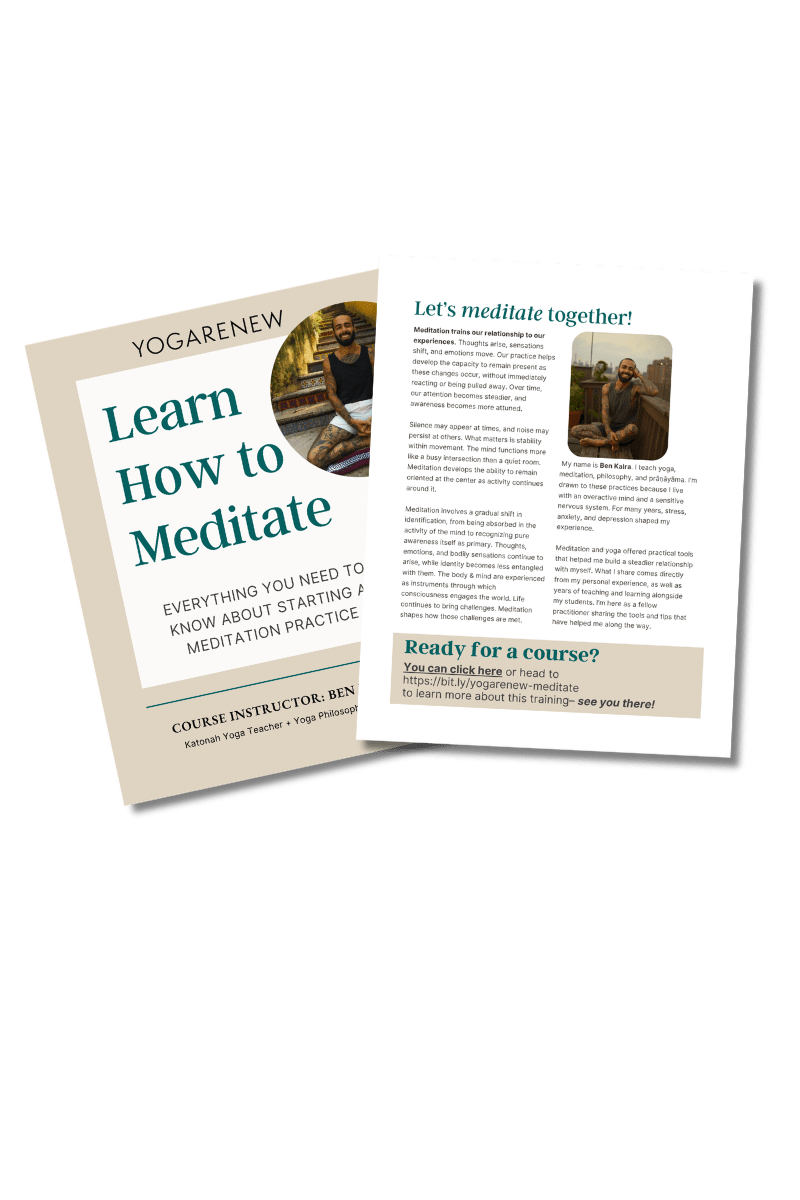
Everything you need to know about starting and maintaining a meditation practice complete with free PDF guide!
Meditation isn’t about stopping your thoughts—it’s about learning how to relate to them with clarity, patience, and calm. This guide will walk you through everything you need to start meditating, even if you think you “can’t.”
“People come to meditation for many reasons: focus, emotional balance, creativity, stress relief, spiritual inquiry. Meditation meets people where they are. It doesn’t require adherence to a belief system or spiritual identity. Sitting with experience and observing the mind is a human capacity, available to anyone willing to give it time and effort.” – Ben Kalra, Meditation Course Instructor
Quick Answers:
How long do I meditate for?
Start with a short amount of time, like a 2 or 5 minute timer. Gradually begin to increase the length of time until you are at a desired time.
What is the best way to sit for meditation?
Sit however is comfortable to you. If you are in a chair, try to have your feet make contact with the ground. Sit up tall so the spine is long & use support as needed.
What if my mind won’t stop?
That's normal! Let the thoughts come & go and remember to bring your focus back to the present moment. This is the practice of meditation.
How do I stay consistent?
Keep returning to your practice. Even if it's only 2 or 5 minutes a day. You can meditate anywhere as long as your mind is in the present moment.
What is meditation?
Meditation is the practice of training your attention and focusing to be in the present moment. Rather than trying to control your thoughts or escape your life, meditation helps you become more aware of what’s happening moment to moment.
Through a regular, consistent practice, you develop the ability to respond with greater clarity and less reactivity. Over time, this creates more ease, balance, and presence in everyday life.
Why meditate?
Research shows that a consistent meditation practice may help to:
Improve focus and concentration
Boost compassion and empathy
Support better sleep
Support brain health
Increase self-awareness
Reduce stress and anxiety
The science of meditation
Psychology Today writes, “The romantic notion of quitting everything and joining Tibetan monks on a mountaintop is not the only way to meditate. You don’t need to quit your job, give up your possessions and spend 30 years chanting. Recent research indicates that meditating brings about dramatic effects in as little as a 10-minute session. Several studies have demonstrated that subjects who meditated for a short time showed increased alpha waves (the relaxed brain waves) and decreased anxiety and depression.” (Full article: The Science of Meditation)
Meditation can aid in cognitive function, enhanced brain function and stimulates the parasympathetic nervous system (PNS). Countless studies have proven that people who engage in meditation and commit to a steady practice often see an increase in their overall quality of life almost immediately. Carving out time each day to meditate not only physically signals to your body and brain that you are calm and relaxed, but it allows your mind to commit to a routine and learn consistency.
“Meditation trains our relationship to our experiences. Our attention becomes steadier, and awareness becomes more attuned. Thoughts will come. Sensations will shift. With practice, you learn to remain present through it all. That’s where freedom lives.” – Ben Kalra