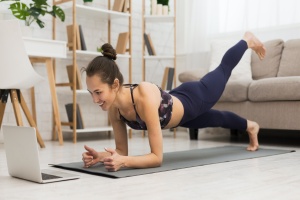
As we enter a new era where adaptation and often sheer survival instincts are essential, how can we possibly make time for stress management? In an ideal world, we would have all tested and practiced various stress management techniques to find out what worked for us before self-isolation and social distancing was recommended or required, but that simply wasn’t the case for most of us. We’re now dealing with more stressors than ever before, from learning how to co-work in a little studio with our partner or figuring out the best home-based learning solutions for our children.
How Stress Management Can Be Beneficial
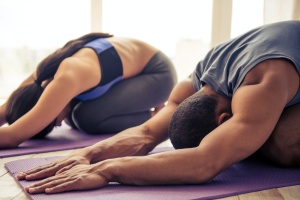 Stress management isn’t a luxury. It’s part of our inherent and very necessary survival skill sets as human beings. We have no choice but to adapt in many situations, including the one we’re in right now. There are countless avenues to alleviating stress and anxiety, and not all of them are healthy. If we don’t take a conscious effort to explore and identify healthy relief that works for us, we’re likely to reach for vices that provide temporary but dangerous and harmful results. Smoking, drinking, or spending hours bingeing on Netflix are all very common “stress relievers” that don’t do us any favors in the long run—or even in the short run.
Start Simple: Short, Easy and Accessible
You’ve probably heard that yoga and meditation are fantastic avenues to relieve stress and anxiety, and they are! However, many of us—particularly in western countries—have been conditioned to think there’s a “right way” or “best way” to practice both. For instance, maybe you’ve heard that a proper yoga session should be 90 minutes, and you can certainly find studies to back up just about any claim. Rest assured, 90 isn’t a magic number. The reality is that any time you can spend on the mat is beneficial.
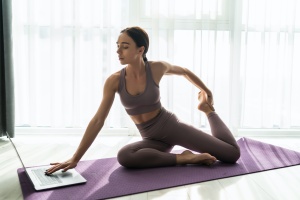
I personally have a daily 30-minute yoga practice. Admittedly, this began before the COVID-19 issues, and I started practicing at home in November. It worked for me then, and it works for me now, because as a small business owner I simply don’t have the time to get ready to go to a studio, commuting 20 – 30 minutes each way. It would honestly be more stressful to watch the clock all day to see what else I have to squeeze in before I had to go.
I “graduated” from using free YouTube yoga classes to simply writing down key asanas I wanted to practice every day and creating my own new daily flow. Granted, I had the benefit of 600 hours of yoga teacher training to help me with this, but that isn’t a requirement either. If you’ve practiced yoga before, you can start experimenting with creating your own flows. There are countless flows online you can use and tweak.
Plus, know that 30 minutes also isn’t the magic number for everyone. It’s simply what works for me and my schedule. You can amplify that time by selecting background ambiance if that helps you deepen your practice. Ever the multi-tasker, I have taken to listening to 30 minutes of classical music as my yoga practice background. Classical music isn’t something I was able to indulge in on a daily basis before a home practice, so there’s the added benefit of imbuing that joy into my daily life, which you can add to your practice as well. I also burn incense in my little office-cum-studio and face my mat towards the window that overlooks my front yard. Any little thing you can do to enhance whatever length practice you have at home is beneficial. The important thing is to make this your time to get on the mat. And if you have kids with no other adult in the house to watch them during this time? It might be time to start exploring yoga videos to practice with children.
Making Time for Meditation
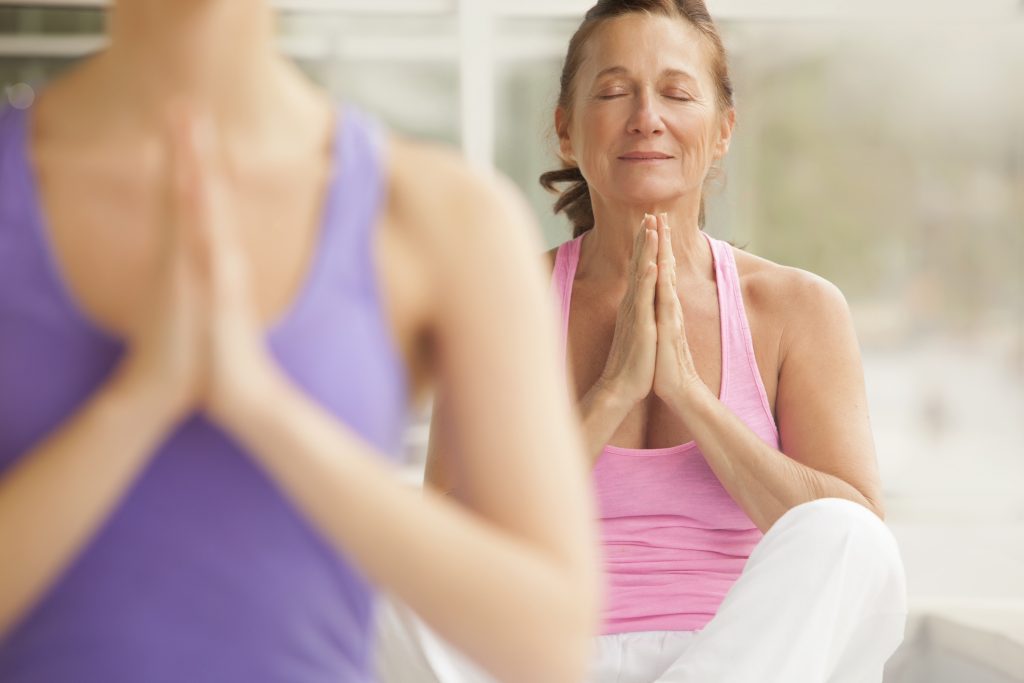
 One of the pillars of meditation is concentrating on living in the present. It’s extremely difficult to do, so simply trying not to get flustered is a big part of the practice. My personal meditation practice usually follows my yoga practice or takes place first thing in the morning. I’ve tried out several types of meditation in my life, and I’ve found that candle meditation (staring at the base or tip of a flame in the dark) and mala beads work best for me.
It’s been said that you can practice meditation anywhere, and to an extent, that’s true. However, it can be difficult to really live in the present and focus solely on your breath if you’re trying to multi-task and meditate while you wash dishes. I adopted a ten-minute meditation because—at this point in my life—that’s what my body and mind can handle. Yours may be longer or shorter, in the dark like me (honestly, it’s my closet) or in the daylight.
Final Throughs from the Author
Be kind to yourself. Be realistic. And remember that what your yoga teacher said was true—the toughest part usually is just getting to the mat (even when it’s in your living room).
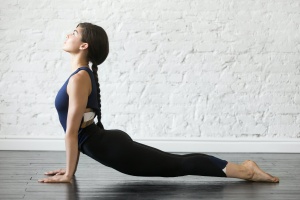



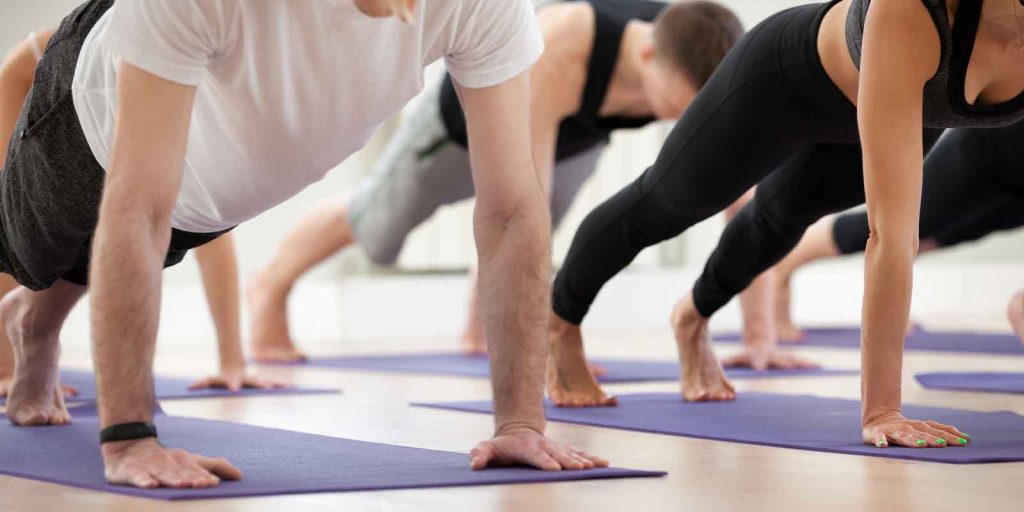
 Chaturanga begins in plank pose. However, you can train your body and mind to shift into Chaturanga from plank simply by moving forward about one inch. Your wrists should be directly under your shoulders while in plank, but prep for Chaturanga requires you to be slightly forward.
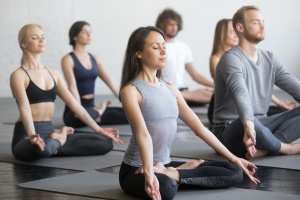 Linking breath with movement is one definition of yoga. It’s not just “movement.” If you’re not practicing the breathing half of things, you’re only doing half of yoga.
 Think of verbal cues as a practice of connecting with people through language. Our words will likely fall flat from time to time, but we’ll always have the opportunity to try again. If a cue results in confusion or students move in a way we didn’t intend, that’s helpful information. In that situation, try a different approach instead of moving on. Self-correcting in the moment reveals our leadership and care. Our students’ responses to our cues are feedback on the cue itself and are not judgements on our value as yoga teachers. Here are some tips for improving our communication skills in class:
 When it comes to verbal cues, less is more. We don’t want to muddy our key message with a lot of words and it’s important to give our students time in the poses without us talking so they can turn inward and listen to whatever surfaces. Keep it clear and concise, and allow the combination of breath and asana to work its magic.
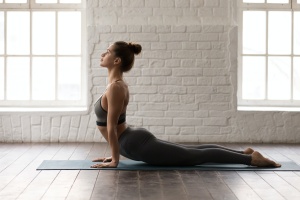 Yoga happens to be an activity that actually has all many
 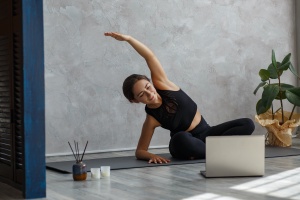 “We’ve seen a significant uptick in referrals from psychologists, especially for patients with anxiety,” says Steve Hickman, PsyD, executive director of the University of California San Diego Center for Mindfulness, where health care practitioners — including psychologists — conduct mindfulness research and offer classes for patients. “Therapists and doctors are rethinking their attitudes toward meditative approaches largely because there’s a persuasive body of evidence showing that [these modalities] can help with stress and mood disorders.”
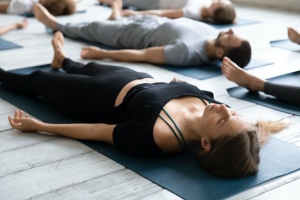 What’s the first thing a yoga or meditation instructor usually asks you to do at the beginning of a class? Usually, it’s to begin focusing on your breath. Breathing techniques, or Pranayama, are a powerful tool to regain
 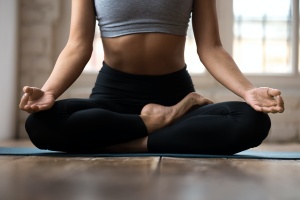 Practice as many cycles as you’d like, I would recommend at least 9 cycles if you can. If you can increase the length of your cycles you are welcome to do so, you may find that your lung capacity and breath control increase with practice. Once you are finished with your cycles take a couple deep rounds of breath regularly. How do you feel?