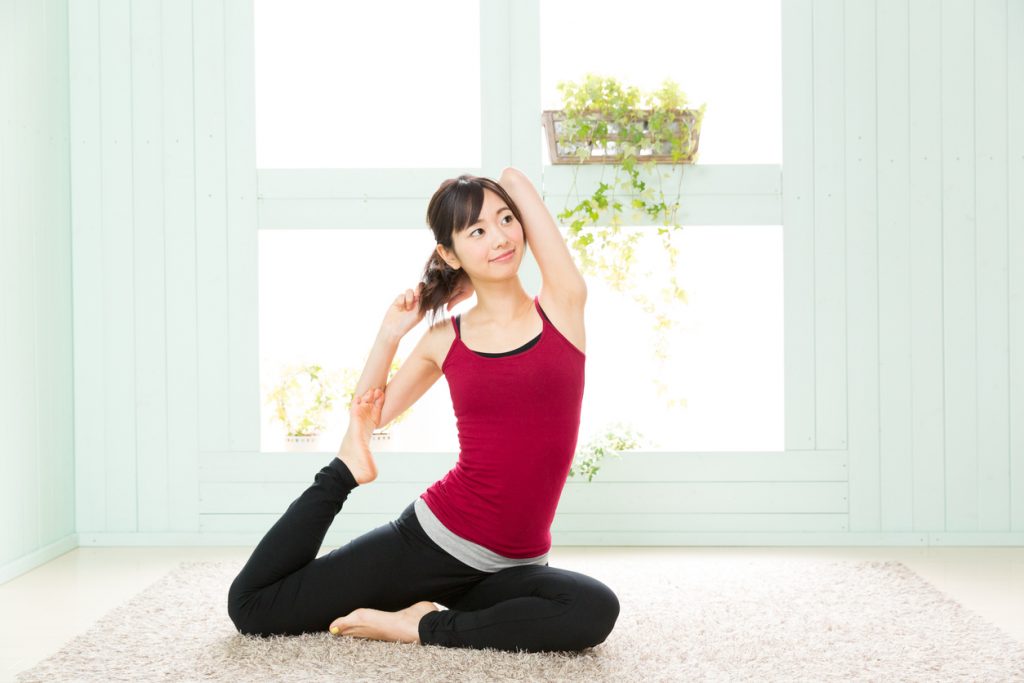
Yoga can and should be a tool to better many aspects of wellness. Flexibility, endurance, strength, balance—and functional fitness. Functional fitness is just what it sounds like: Working towards achieving and sustaining a level of fitness that serves functional purposes in your life. As we age, we naturally lose functional fitness to varying degrees. If you’re a westerner, your lifestyle has probably drastically stunted your innate functional fitness, too. Desk jobs, Netflix binges on couches or in bed, western-style toilets, and wearing comfy socks and shoes destroy functional fitness.
A popular doctor’s test for a patient 55+ is to ask them to stand up from a seated position on the ground without using their hands or arms. A lot of people can’t do it, and you certainly don’t need to be in your golden years to fall into this camp! It’s a simple test that can tell you so much. However, it’s just one example of functional fitness that we lose.
You don’t want to be unable to get up from the ground without using your hands. You don’t want to be traveling in Asia and find yourself incapable of using a Turkish toilet (especially if said toilet is in a bar with unmentionable liquids surrounding it … trust me). You don’t want to have poor balance simply because you wore socks (or as I like to call them: foot mittens) and shoes for so many years that your toes have atrophied and stick together.
Function. It’s our job to practice it and keep it.
Putting the “Fun” in Functional
Okay, that was a pun I couldn’t resist thanks to the writer in me (and general love of puns). Still, functional fitness pairs perfectly with yoga and is ideally a part of every practice. A synonym of “functionality” is “purpose,” and that’s exactly what we all need more of in our life. A life of purpose is one that helps you thrive.
One of my favorite asanas (poses) for functional fitness is prayer squat. Work towards getting your heels to touch the floor if they don’t already. And if they don’t, know that it may never happen. Every body is different, and prayer squat can be especially challenging for distance runners who need those tight hamstrings to stay safe.
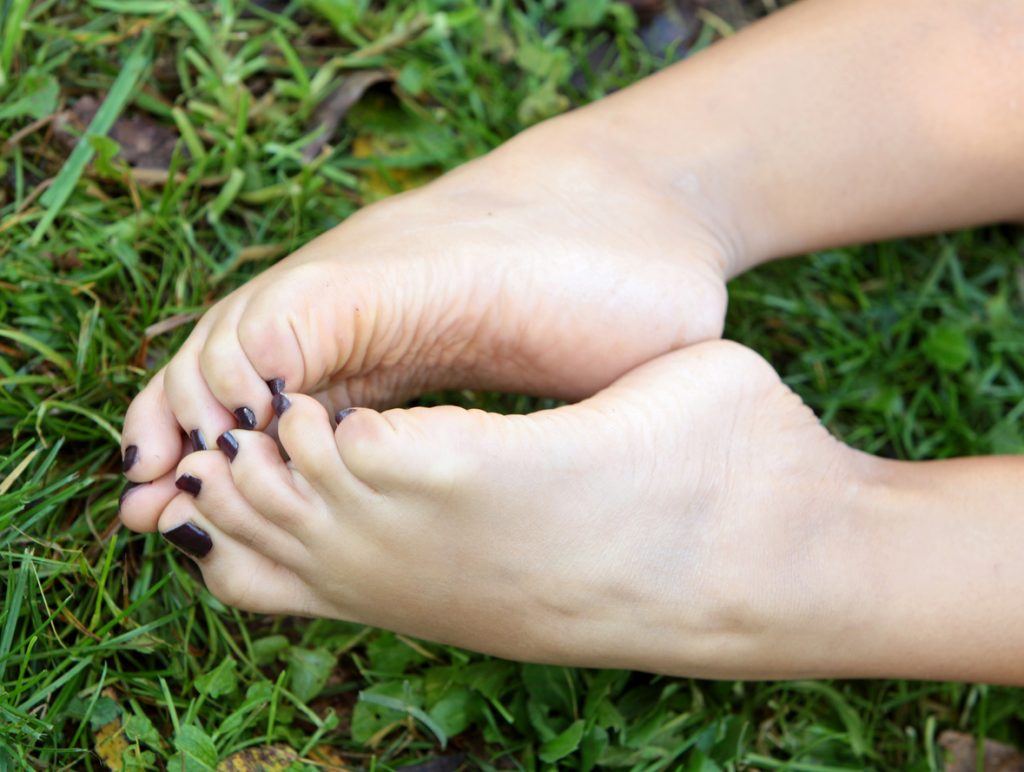
I also like to earmark part of every practice for foot fitness. Your feet have 52 bones, which is one quarter of all the bones in your body! Each foot also has 19 muscles and tendons, 107 ligaments and 33 joints. They were designed to move and flex (in both directions) a lot. Toes should be able to separate, flex, and lift individually (seriously!) just like our fingers. Think they don’t move as much as fingers because they’re so short? That’s just not true. Children’s fingers are very short, and our thumbs are relatively short, yet we know just how strong and flexible they are regardless of length.
Get a Foot Fetish
During each yoga practice, and at least once a day regardless, dedicate a few minutes to working out your feet. Try to lift and spread all toes while keeping the rest of your foot squarely on the floor with equal weight distribution. Practice lifting each toe individually. This might take a lifetime of practice and you’ll never fully get there, but you will certainly get better with practice.
More importantly, embrace the barefoot lifestyle whenever you can. Go without shoes, no matter how “good for you” marketers claim them to be. All shoes, even the Vibram five-finger shoes, are no match for barefoot. Ditch the socks, too, which gently squish your toes together. Recognize that in the western world, we’re very spoiled when it comes to surface areas. We walk on pavement, hardwoods, and carpets, which all weaken our foot and ankle bones that are begging for a challenge. Go off course, walk on trails, take a hike, and trust the lowest part of your body to find balance on uneven ground.
Finding balance. It’s a goal that we never fully achieve for more than a few brief seconds. It’s really the journey where the magic happens. The destination? Well, it doesn’t really exist, so allow yourself to fall in love with the ups and downs, those peaks and valleys.
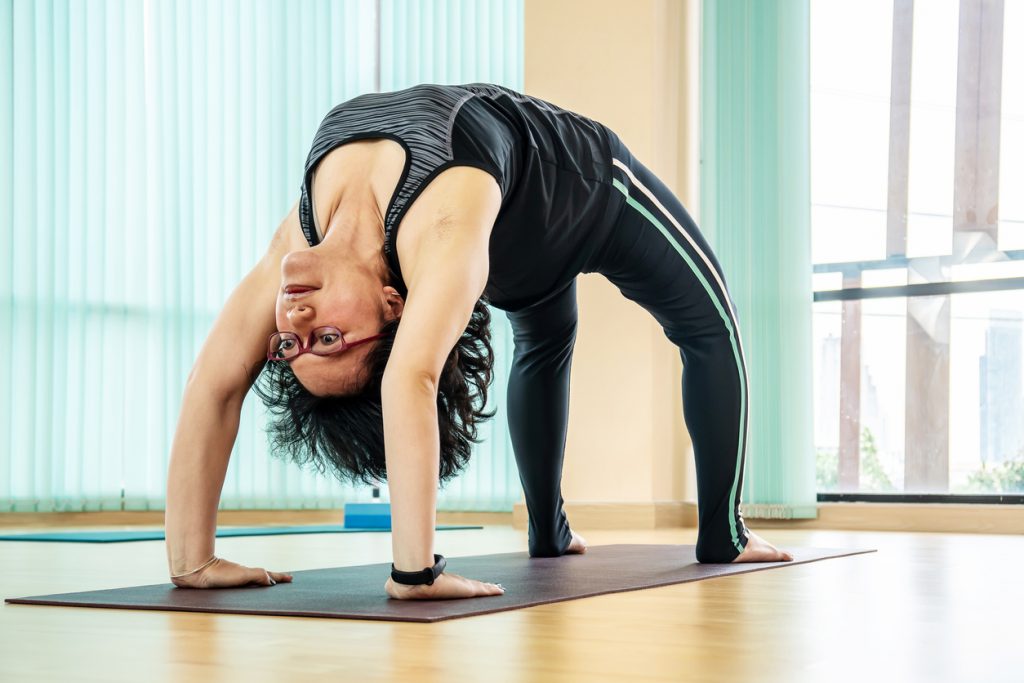

 By no means are the postures insignificant; Iyengar asserted that, for the average person, practicing āsana and prāṇāyāma are the two most effective disciplines for quieting the mind. But, in reality, the postures are only a piece of a much bigger process of self-discovery and transformation. Teaching āsana is not the only way to share yoga.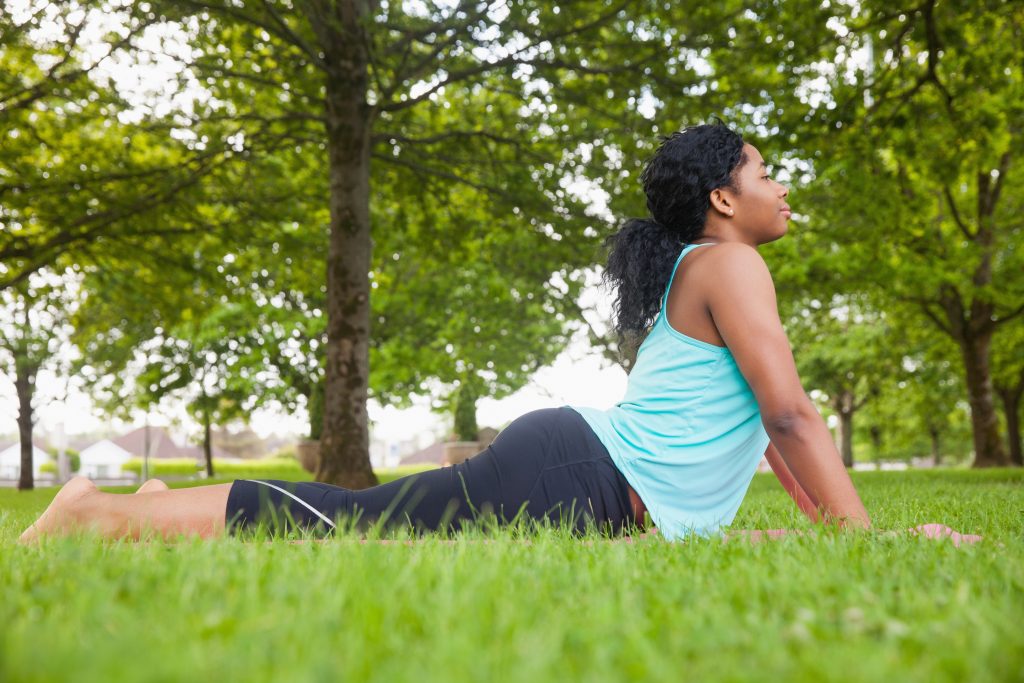
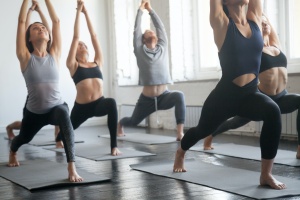
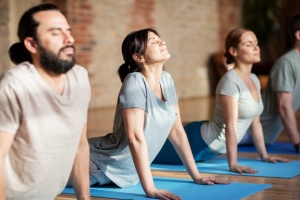 Vinyasa yoga has its roots in Ashtanga yoga; a style of practice developed by K. Pattabhi Jois in the mid-twentieth century, which is considered to be the backbone of modern Western yoga. Ashtanga yoga’s formulated sequence of poses is preformed in a specific order, whereas vinyasa yoga is a freeform practice with limitless variations. Both styles are energetic, dynamic, and steadily paced. The term vinyasa is a linkage of two Sanskrit words: nyasa, meaning “to place”, and vi, “in sacred accord.” To vinyasa, therefore, is to preform poses in accordance to the breath, each transition synchronized with either an inhalation or exhalation.
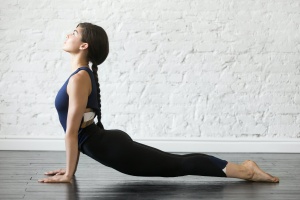 Building from Cobra Pose, Upward Facing Dog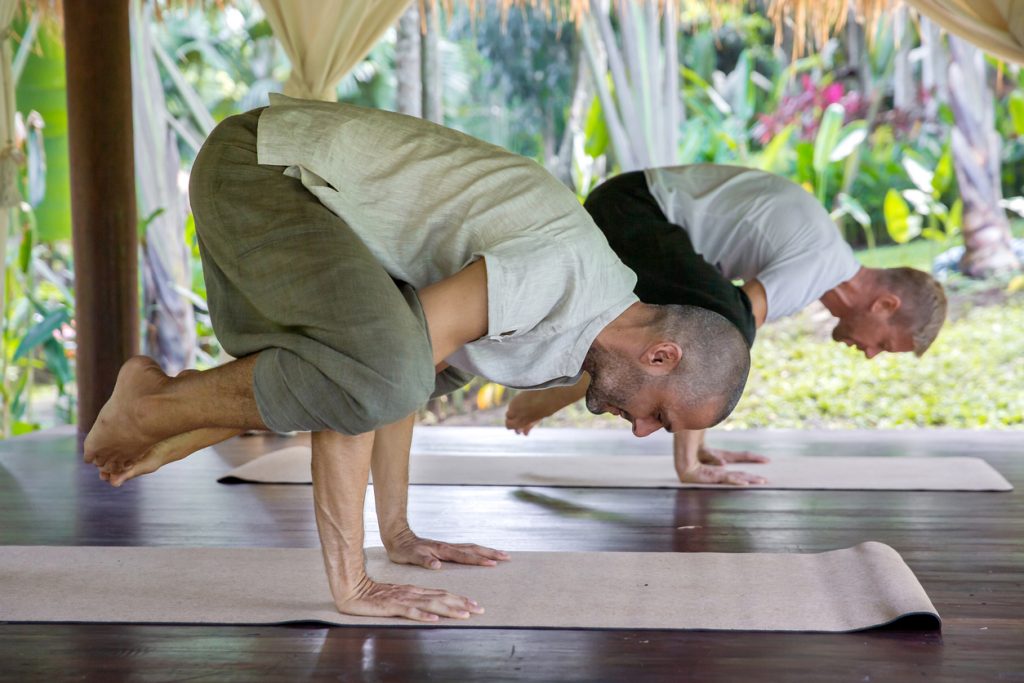
 The yin practice sets us up to tap into a
 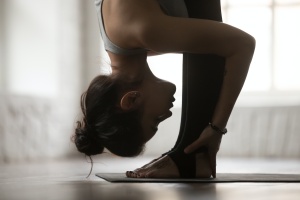 Our body’s tissues can experience a revival of sorts with a long soak the same way that an old, stiff sponge can. As you hold a yin pose, the slow release that takes you deeper into the pose is the tissues lengthening, hydrating, and becoming more pliable. Many times you even can sense the tissues being stretched, squeezed, twisted, and compressed if you really focus your attention on the physical body. A yin practice has the potential to leave you feeling as though you’ve had a massage.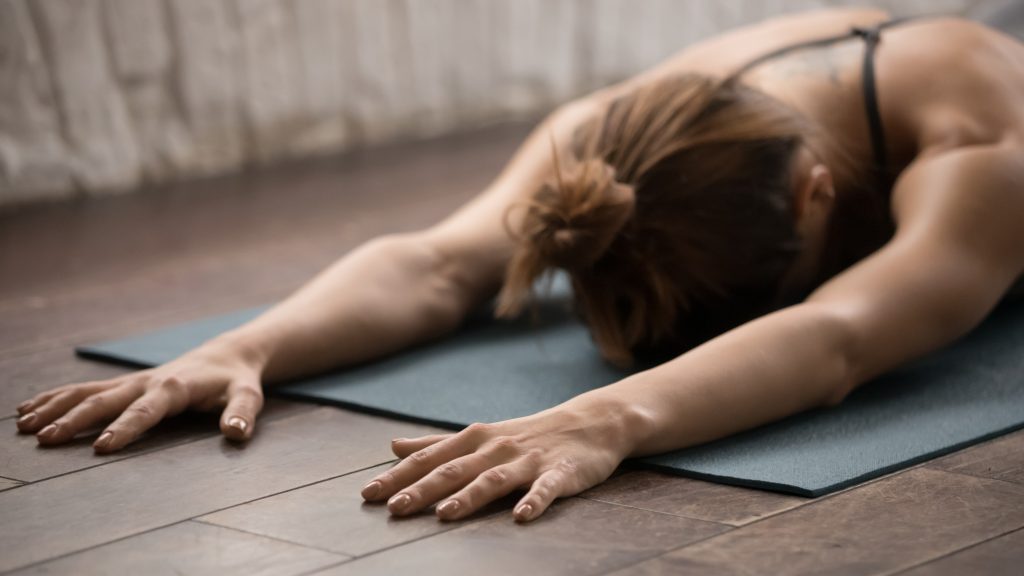
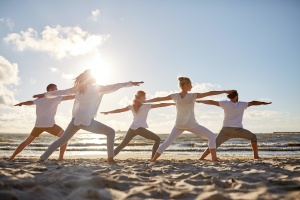
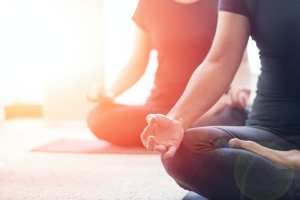 The ancient Chinese concept of yin and yang relates to the idea that within two opposing forces, there is balance. Certain styles of exercise can be categorized as either yin or yang according to their qualities. Workouts such as running, HIIT, and heat building yoga classes are considered yang because they are active, sweat-inducing, dynamic, and repetitive. The principles of yang relate to masculinity, heat, and movement. Yin is the feminine force and is related to stillness, rest, balance, cooling, and release. Exercises that are based in stretching and relaxation are yin in nature. If yang-style workouts are overused without the balance of yin, there is the potential for the body to become overworked, injured, or fatigued. Bringing yin yoga to your movement routine will help with improved flexibility and relaxation.