samskaras

Samskaras

By Yoga Philosophy

A friend of mine told me this story long ago – “I was a shy kid. Not really fitting in, no friends. Then one day a group of the “cool kids” asked me to come along with them to the store. When we got there, they said we should all run in as fast as we could, grab as much candy as we could, and then run out without paying. I had never stolen anything before, but I was desperate to be part of this group. My heart was beating so fast, I thought, young as I was, I was having a heart attack. My mouth was dry. I kept seeing my parent’s face in my head – the disapproval, the anger. I felt a little sick to my stomach, but in I ran with the others.

I was the slowest one, because my guilt stopped me from going at top speed, but I made it out of the store and several blocks away without being caught. For a week I was shaking – but then, the feeling of shame went away. And, when that group asked me to come with them again, I did. My heart didn’t beat as fast, I felt less shame, I got more candy. After that, stealing in this way, wasn’t a problem for me, in fact it became a habit, that took a very long time to break.”

I remember looking at my friend, who I now could not even imagine doing anything that wasn’t righteous and wonderful, and understanding that the process of going from being afraid of being caught breaking the law, to being nonchalant about it, was demonstrating what happens when something becomes habitual behavior. We all have habits, patterns, things that we do without really even thinking about them – it just seems like they are part of us. Where do these things come from? In Yoga, we would call these patterns Samskaras, and they reside in the mind.

The malleability of the Mind and Samskaras

It’s important to note that in Yoga, when we say the Mind (Citta), we aren’t talking about the brain. The brain is the thing that looks like cauliflower between your ears, while the mind is part of the subtle body. It’s not any less real than the physical brain, but not tangible in the way, say, your frontal cortex would be. The Mind is not hard like a stone or a piece of wood – it’s more like a ball of clay – completely malleable, totally changeable. Everything we see, smell, touch, hear, feel and experience makes an impression on the Mind. Those imprints are called Samskaras. Knowing this fact lets us know that we really can change our minds. Not just “I changed my mind, and I am going to wear my blue shirt, instead of my grey one.” But, like a sculptor creates a vase out of a lump of clay, we have the ability to change the very shape of our Mind, and therefore change the very outcome of our lives –  for where does everything in our lives actually stem – our Mind!

The thoughts that our mind produces are the engine to our actions. When we understand that, it spurs us to be more mindful about what we allow into our Minds. Think of all the times that you read a label before you buy a food item, or check the ingredients before you put something on your skin – can we say we are that mindful about what we allow to roll around in our Minds? Each time we think a thought, a grove is created in our Minds, and the more we think it, the deeper the Samskara gets – going from a light stroke to a deep impression.

We can think of this only in the negative connotation, but it could be thought of positively, too. What modern day science calls affirmations, is simply the acknowledgement of Samskaras. When we read that we should speak optimistically to ourselves – this is the process of creating and then deepening Samskaras that will shape our Mind to be more the way we want it to be. This is why it is said, “What you say to yourself, WILL come true!” – because if you have spent a life time making Samskaras of it being okay to steal – then guess what – that’s exactly what you are going to do.

What the Yoga Sutras say about Samskaras

In the Yoga Sutras of Patanjali, the goal of Yoga is stated definitively as “Yoga citta vritti nirodha” – meaning that Yoga is the stopping of the turnings (or chatter) of the mind. We can think of the Samskaras as the thing that helps turn the mind (the seeds if you will) from where thought starts.

In the Yoga Sutras, we find this:

  • 1.50 – The Samskaras born out of truth – bearing wisdom obstruct other Samskaras from emerging. Meaning, if we can create positive Samskaras, those can help us overcome the Samskaras that are not so good for us. We all have probably experience that it is easier to break a bad habit, by replacing it with a good one, as opposed to just trying to shut it down.
  • 3.9 – The state of restraint, nirodha (the stopping of the turning of the mind) is when there is disappearance of outgoing (worldly) Samskaras and the appearance of restraining Samskaras. These emerge in the mind at the moment of restraint. Here we see how important Samskaras is to the goal of yoga! The first commentator on the Yoga Sutras – the great sage and writer, Vyasa says that the mind is made of Samskaras, and what is actually happening when we meditate is that we are not wiping away Samskaras, but rather creating Samskaras that are helpful, in that they are quieting the Mind – stopping the turnings of the Mind, so that – as the Yoga Sutra says – “Tada Drastuh Svarupe Vasthanam” – the Soul, that has been caught in the whorl of the Mind, can finally perceive itself. This is backed up by:
  • 3.10 – The mind’s undisturbed flow occurs due to Samskaras – it is through these helpful Samskaras – that one can conquer the Mind. It is important to note that Samskaras do not evaporate – both the beneficial and the detrimental ones, remain either active, or inactive – but they are there. Another reminder that we must be careful what we put into our minds.

Creating Samskaras that are beneficial to us

I heard a speaker once say, “The subconscious mind cannot take a joke!” When we truly understand that the thoughts that we invite in, and then spend time unpacking – even if it does not turn into an outward action, is doing something to us in a very impactful way. It is digging a trench in your Mind – a Samskara. So, in our every day life, as we carefully keep harmful things out of our digestive system, and train ourselves to reach for an apple instead of a candy bar, we must do that with our Minds. This is the very heart of much of yoga philosophy.

The Yoga Sutras 2.33 says,

“Upon being harassed by negative thoughts, one should cultivate counteracting thoughts. Create a positive Samskara, and keep reminding yourself that you have the power to shape and control, the most powerful thing in your body – your Mind.”

Learn more about yoga philosophy with Julie!

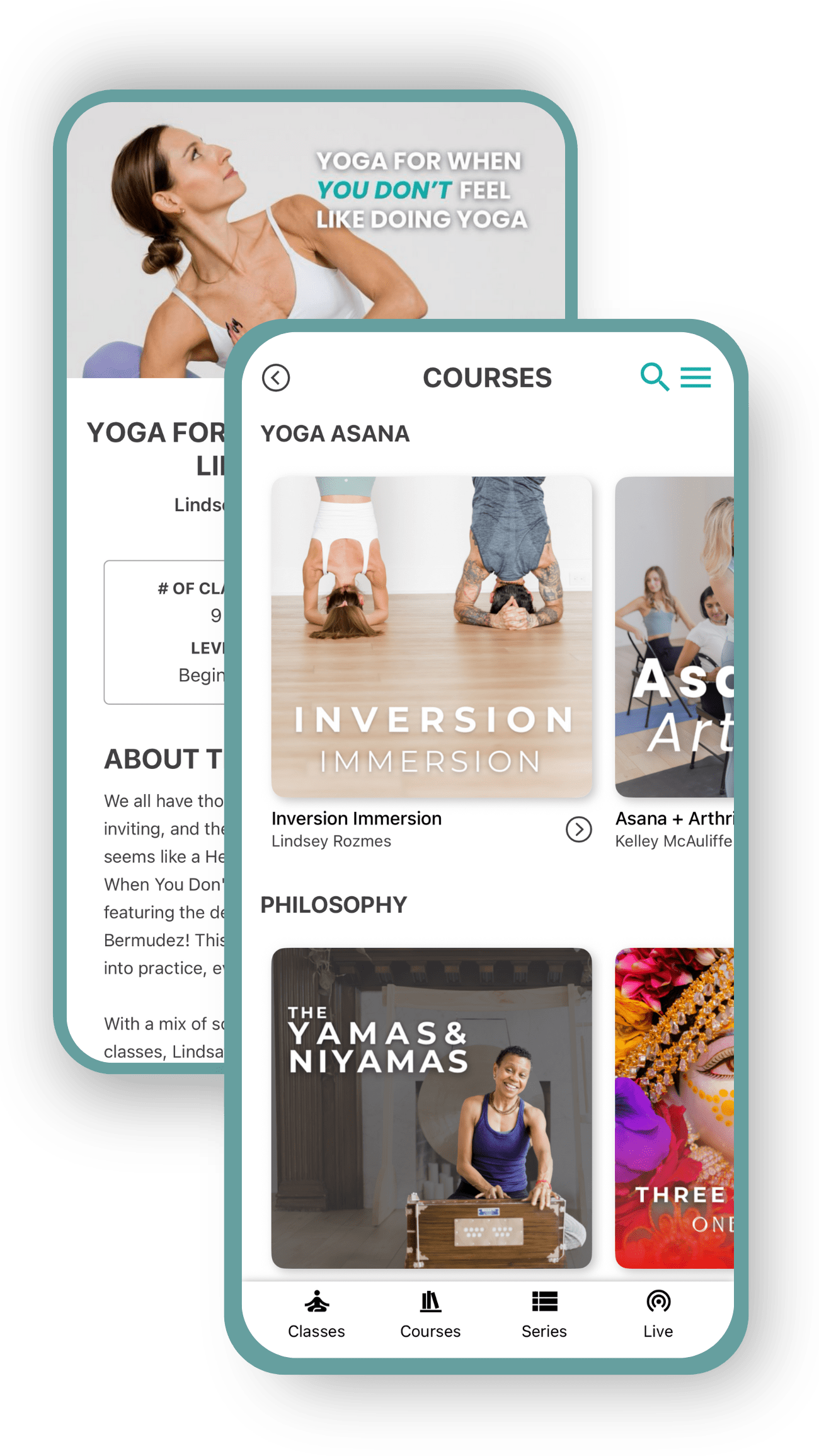
Enhance your spiritual journey with incredible insight on the Yamas/Niyamas in Julie Pasqual’s immersive and transformative online course. Get started for free, and gain access to YogaRenew’s app with all of our workshops, classes, series and live events.

Explore all of YogaRenew’s app from your desktop, phone or tablet.

Explore Yamas/Niyamas Course

Online Yoga Teacher Training Courses:

200 Hour Online Yoga Teacher Training

200 Hour Online Yoga Teacher Training

300 Hour Online Yoga Teacher Training

300 Hour Online Yoga Teacher Training

500 Hour Online Yoga Teacher Training

500 Hour Online Yoga Teacher Training
warrior 3 hatha yoga class pdf

Virabhadrasana 3 (Warrior 3) – 60 Minutes

By Yoga

Virabhadrasana 3 (Warrior 3) – 60 Minutes

Peak Pose: Warrior 3
Level: Mixed Level
Style: Hatha
Teaching Focus: Straight Legs, Extension
Props: 2 blocks, strap

Warm-up:

  • Reclined Hand to Foot A + B (Supta Padangusthasana) with Strap
  • Downward Facing Dog > Hop or step to Uttanasana > Ardha Uttanasana > Urdhva Hastasana >
  • Tadasana
  • Tadasana with fingers interlaced overhead. Switch the interlace to equally stretch the shoulders.
  • Urdhva Hastasana with strap on arms, strap below elbow on the upper arm.

Sun Salutations:

  • 3 Round of sun breaths: Tadasana > Urdhva Hastasana > Uttanasana > Ardha Uttanasana > Uttanasana > Urdhva
    Hastasana > Tadasana

Standing Poses:

  • Round 1: Triangle Pose
  • Round 2: Triangle Pose > Extended Side Angle
  • Round 3: Warrior 1

Balance/ Twist:

  • Tree Pose
  • Standing Hand to Foot at Wall

Peak Pose:

  • From Warrior 1 > Warrior 3 > Warrior 1

Cool Down:

  • Virasana with Gomukasana Arms
  • Locust
  • Supine twist
  • Savasana

200 HR YogaRenew Yoga Teacher Training Resource ©

yoga for the holidays pdf

Weekly Class Theme: Yoga for The Holidays

By Yoga

Dance your way through the chaotic holiday season with King Dancer Pose! Though you may be feeling the hustle and bustle of the season, it’s never too late to roll out your mat… and practice.

This ancient method of syncing the body, breath, and the mind is a way to keep you grounded, peaceful, and able to take on any stressful remark or demand during the holidays. Yoga always has a special way of connecting us to that inner tranquility that exists within us, always, it’s just waiting to be tapped into.

This week’s Weekly Class Theme will be a short class built around King Dancer Pose, Natarajasana and includes all the versions of lifting your leg – even if you need a strap to connect your hands to your foot!

Weekly Class Theme Outline:

Puttering

For the puttering portion, we’ll focus on actions like stretching the hips and quads and reaching the arms up and back.

Poses:

  • Virasana w/ Gomukhasana Arms
  • Lizard Lunge w/ Quad Stretch
  • Crescent Lunge (reaching the arms up)
  • Cobra Pose

Sun Salutations

Rounds & Variations:

  • 3-4 Rounds (as normal)
  • Add in cues to lift the chest, gaze forward, and reach your arms up & back

Open Hip Standing Poses:

For this portion of class, we can keep it simple by introducing poses like Warrior 2 and Peaceful Warrior to help open the hips and find the ability to reach!

Poses:

  • Warrior 2
  • Peaceful Warrior

Balance & Twists:

Again, we kept this round simple, but adding poses like Vrksasana (Tree Pose) to Warrior 3 to Revolved Side Angle makes for a nice transitional flow focusing on balance & stability (much of what King Dancer brings to light).

  • Tree Pose
  • Warrior 3
  • Revolved Side Angle

Peak Pose: Natarajasana (King Dancer) with all of the Phases

To explore the evolution of the pose, have students start by kicking one of their legs back into their hand. If they can do this, have them kick their foot into their hand and lift their leg. Keeping their hips facing forward, see if they can extend their leg a little more. Be mindful of the chest staying lifted, using the free hand to extend & reach forward for balance.

There is always the option for students to grab a strap, make a tiny loop to fit around the ball of their foot and swing the strap over the shoulder of the lifted leg to bring to light the connection of the hand grabbing the foot up overhead.

Take this progression slowly and let students feel it out in their own bodies! It’s important the peak pose is explored through varying skill levels and feels accessible for all students in the class.

Wind Down Portion of Class

You can also keep this portion pretty simple. A few reclined figure fours on their backs to massage the hips and get a little twist in and Legs up the Wall to relax their nervous system. And of course… sealing in all of the efforts with Savasana.

Happy practicing!


Take Your Teaching to the Next Level: Why Our 300-Hour Yoga Teacher Training Is Worth It

By Yoga

Take Your Teaching to the Next Level: Why Our 300-Hour Yoga Teacher Training Is Worth It

If you’re a dedicated yogi or already a yoga teacher, you know that real growth doesn’t stop at a 200-hour certification. That’s where the YogaRenew 300-Hour Online Yoga Teacher Training comes in — to deepen your knowledge, transform your practice, and elevate your teaching in ways you never imagined.

Why Choose Our 300-Hour Training?

1. Advanced Practice + Teaching

Our training dives deep into advanced asana, alignment, sequencing, and teaching techniques. You’ll learn how to cue, modify, and teach complex poses — including injury-informed variations — giving you the confidence to lead all-level classes.

2. Rich Philosophical Foundations

Explore yoga’s roots through ancient teachings like the Bhagavad Gita and the Yoga Sutras. You’ll learn how to make these timeless insights meaningful for your modern students.

3. Holistic Modalities

  • Ayurveda: Understand the Doshas and how to use them in lifestyle & teaching.
  • Yoga Nidra: Learn to guide powerful deep relaxation experiences.
  • Chair Yoga: Teach accessible, inclusive classes for all bodies.
  • Advanced Pranayama & Meditation: Deepen your breathwork and meditation toolkit.

4. Applied Anatomy & Safety

You’ll gain a clear understanding of alignment, tension vs. compression, and how to safely support students at different levels — especially those working with injuries.

5. Ethics, Service & Personal Growth

This isn’t just about technique — it’s about integrity, seva (service), and developing your authentic teaching voice. Expect

An online 300 hour yoga teacher training will give you the flexibility and knowledge needed to enrich your current practice or 200 hour yoga teacher certification.

transformation on and off the mat.

6. Flexible, Self-Paced, Lifetime Access

  • 100% online — study from anywhere.
  • Self-paced — move through lessons whenever it works for you.
  • Lifetime access — revisit material anytime you need to grow.

7. Supportive Community

Even online, you’re never alone. Enjoy:

  • Live Zoom sessions with experienced mentors
  • A private Facebook community for connection and questions
  • Ongoing support from seasoned teachers

8. Yoga Alliance Certification

Because the course is Yoga Alliance–approved (RYS 300), 200-hour graduates can use it to become RYT-500, giving you advanced credibility and professional opportunities.

9. Risk-Free Enrollment

If it doesn’t feel like the right fit, you can unenroll within 30 days for a full refund — completely risk-free.

10. Flexible Payment Options

Monthly payment plans make advancing your training accessible without financial strain.

Real Transformation — What You’ll Walk Away With

  • Confidence & authenticity in your teaching
  • Broader teaching skills for different levels and styles
  • Professional credibility with RYT-500 eligibility
  • Deep personal growth rooted in philosophy and service
  • A lifetime library of lessons and resources

Why Online Makes Sense for 300-Hour Training

Many assume advanced teacher training must be in-person, but online learning actually offers powerful advantages:

  • Learn at your own pace and integrate teachings slowly and meaningfully.
  • Save money by avoiding travel, lodging, and time off work.
  • Receive mentorship through live sessions and community connection.

Who Should Enroll?

This training is perfect for:

  • 200-hour certified teachers ready for the next step
  • Yogis who want to deepen practice, philosophy, and anatomy
  • Teachers seeking advanced skills or RYT-500 status
  • Students wanting flexibility without sacrificing quality

Final Thoughts: Do It For More Than Just the Certification

This isn’t just another yoga course — it’s a transformative experience. It helps you grow into a teacher who leads with clarity, wisdom, and compassion. If you’re ready to expand your impact and evolve your teaching, the YogaRenew 300-Hour Online Yoga Teacher Training is an investment your future self will thank you for.

Click here to enroll today.

online vinyasa yoga class sequence pdf

Online Vinyasa Yoga Class Sequence

By Yoga

This is a great online vinyasa yoga class sequence to build strength towards handstand. This class can be utilized as a 45-minute flow, incorporating Chaturanga to Upward Facing Dog, back to Downward Facing Dog as the vinyasa piece and can be placed in between sides.

The warm-up for this class, known as “Puttering” by YogaRenew standards, focuses on finding length and straightening the arms and legs. You can find similar classes to this one on the YogaRenew app!

Happy practicing!

Puttering/Warm-Up:

  • Balancing Table (Bird Dog)
  • Cat/Cow
  • Child’s Pose
  • Crescent Lunge
  • Wide Legged Forward Fold
  • High Lunge

Sun Salutations:

  • 3-4 Rounds
  • Add Straight Leg Spring Forward
  • Add Chair

Standing Poses:

  • Warrior Two
  • Star Pose
  • Peaceful Warrior
  • Extended Side Angle
  • Half Moon
  • Side Plank

Peak Pose: Handstand or L-Shape Handstand at the Wall

  • Practice Kicking Up at the Wall
  • Practice L-Shape Press Ups

Wind Down:

  • Supine Twist
  • Savasana
3 different images of yogis practicing yoga online & in a yoga studio

Yoga in 2025: Trends, Benefits & The Future of Practice

By Yoga

Yoga continues to evolve — yet its essence remains timeless. In 2025, yoga is more accessible, diverse, science-supported, and technologically enhanced than ever before.

Whether you’re new to yoga or deepening your practice, this guide explores what yoga looks like today — its trends, benefits, styles, and future direction.New to sequencing classes? Try our detailed guide on creating an online Vinyasa yoga class sequence.

Commonly Asked Voice Search Questions

“What is yoga in 2025?”

Yoga in 2025 is a blend of traditional mindfulness and modern wellness science. It includes physical postures (yoga asana), breathwork, meditation, and technology-enhanced tools such as AI-guided classes and wearable-assisted alignment feedback.

While the physical, old-school style approach is still relevant, teachers and studios have found ways to morph technology with the physical, in-person practice, making it the best way to enhance the overall quality of life and enjoyment of physical and mental wellness.

“Is yoga still good for beginners in 2025?”

Absolutely. You can try/start yoga at any point in your life. Yoga nowadays is even more beginner-friendly with things like adaptive classes, chair yoga, slow-flow styles of vinyasa yoga, and beginner-focused online classes and series.
We’ve even developed an Online Beginner Series on the YogaRenew app!

“What type of yoga is best for stress?”

It’s up to the practitioner. Many people have caught on to the trend of yin yoga where postures are held for longer periods of time, making it a very relaxing practice. Some yin yoga teachers have even added a sound meditation to the end of the practice during Savasana, which makes it extra relaxing.
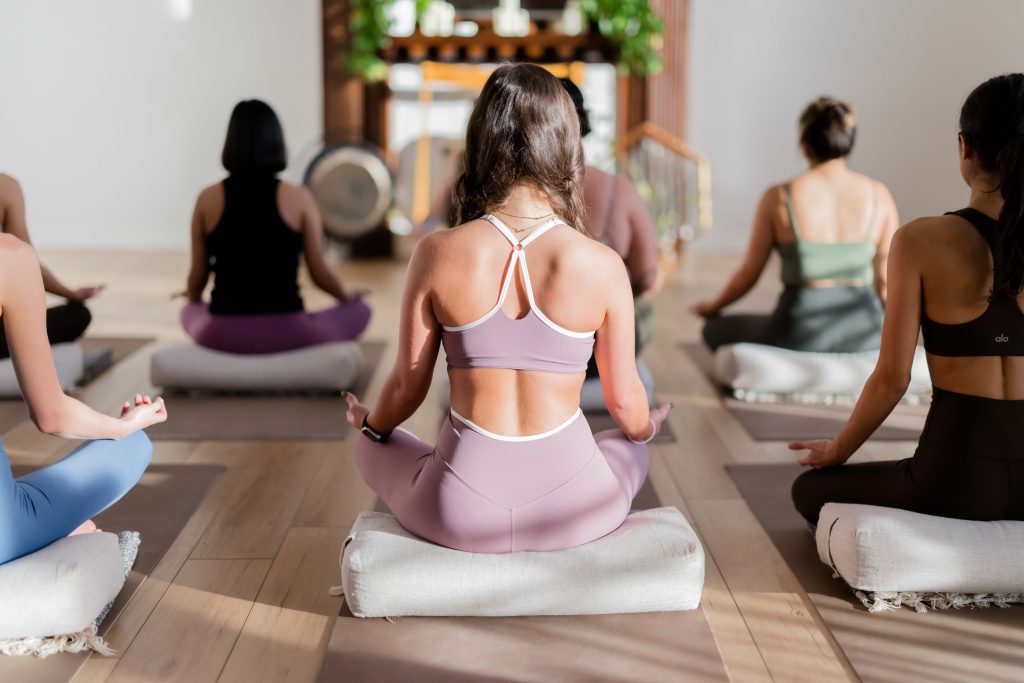

Restorative yoga has also been a favorite stress-relieving style of yoga. Restorative yoga has gained popularity in 2025 and is often coupled with acupuncture to enhance the restorative aspect of the practice. Since postures are supported mostly by props and are done lying down, it makes it a perfect companion to the energy alignment and relaxation of acupuncture.

The Benefits of Yoga in 2025

Physical Benefits of Yoga

  • Improved flexibility and mobility
  • Stronger, more stable joints
  • Better posture and alignment
  • Increased muscular strength
  • Enhanced cardiovascular health

Mental & Emotional Benefits of Yoga

  • Reduced anxiety and stress
  • Greater mental clarity
  • Better emotional regulation
  • Lower burnout levels

Holistic Lifestyle Benefits

  • Improved sleep quality
  • Enhanced mind-body awareness
  • Sustainable healthy habits
  • A sense of community and belonging

Popular Yoga Styles in 2025

These are the styles people practice most this year:

  • Vinyasa Yoga – fluid, breath-connected movement
  • Hatha Yoga – slower foundational practice
  • Yin Yoga – deep tissue release and long holds
  • Power Yoga – strength-driven and athletic
  • Restorative Yoga – prop-supported relaxation
  • Kundalini Yoga – breathwork, Kriyas, and mantra
  • Hot Yoga – warm rooms promoting circulation

How to Start Practicing Yoga in 2025

1. Start with beginner-friendly classes: Look for Hatha, gentle Vinyasa, yoga for beginners, or slow-flow classes to build a strong foundation.

2. Use both online and in-person options: Online classes offer convenience; in-person offers alignment support and community.

3. Practice 10-15 minutes a day: Consistency matters more than intensity.

4. Prioritize breath awareness: The breath is the anchor of every yoga practice.

5. Use props without hesitation: Blocks, straps, chairs, blankets and cushions make poses safer and more accessible.

6. Try multiple styles: Your perfect style may change over time — explore until you find your rhythm.

The Future of Yoga: Mindful, Inclusive & Tech-Supported

Yoga in 2025 proves that an ancient practice can evolve with modern life while maintaining its traditional heart. Whether you practice in-studio, outdoors, or via AI-supported home sessions, yoga continues to promote balance, strength, emotional clarity and overall wellbeing.

The future of yoga is inclusive, mindful, accessible — and open to everyone.


Online Yoga Teacher Training Courses:

200 Hour Online Yoga Teacher Training

200 Hour Online Yoga Teacher Training

300 Hour Online Yoga Teacher Training

300 Hour Online Yoga Teacher Training

500 Hour Online Yoga Teacher Training

500 Hour Online Yoga Teacher Training
Join the community of +99k students worldwide!

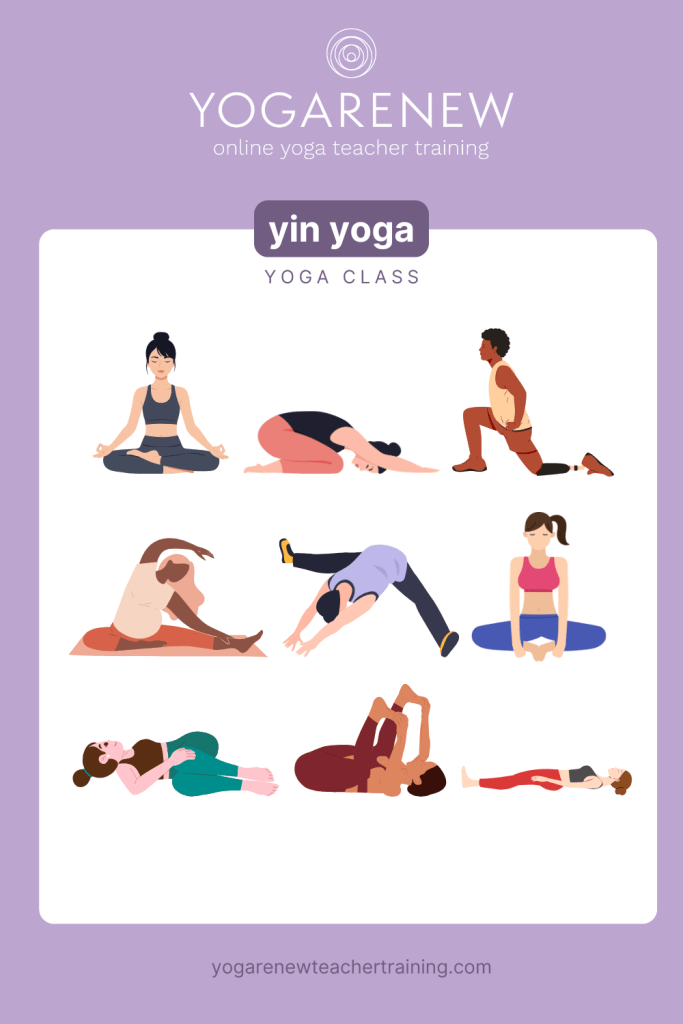
A Class Sequence to Improve Flexibility (Yin Yoga)

By Yoga

Pose by Pose Guide

1. Arrival & Breath

(5 minutes)

How to: Begin seated or lying on your back with support under your head if needed. Close your eyes. Take 5-10 deep breaths. Let your shoulders soften, your belly soften. Set an intention for the practice—perhaps “ease,” “space,” or “openness.”

2. Butterfly Pose / Seated Wide-Leg

(3–5 minutes)

How to: Come to a comfortable seated position. Bring the soles of the feet together and let your knees fall to the sides (or widen your legs). Use a bolster or blanket under your hips if you feel tension. Lean forward slightly or stay upright—whatever your body needs. Feel the stretch in inner thighs and hips.

Benefit: Targets groin/inner thighs, releases hip mobility, invites surrender.

3. Dragon Pose Variation (short-lunge)

(4–6 minutes each side)

How to: From all fours, step your right foot between the hands. Let your back knee rest on the mat (pad if needed). Slowly walk your hands forward and lower your hips, keeping the right foot forward and the left leg long behind. Use blocks under your hands if helpful. Stay here, then switch sides.

Benefit: Deep hip flexor & quad stretch, opens front hip line and psoas—key for flexibility and release.

4. Sphinx or Seal (Backbend)

(3–5 minutes)

How to: Lie on your belly, bring your elbows beneath your shoulders, forearms parallel, lift gently into a sphinx. If your spine allows, you may slide into seal by straightening arms. Let your chest softly open, gaze forward or down.

Benefit: Opens the front body, encourages spine extension and elasticity—not just bending but creating space and flexibility in the spine.

5. Caterpillar (Seated Forward Fold)

(4–6 minutes)

How to: Sit with legs extended in front of you. Use a strap if your hamstrings are tight. Exhale to fold forward—hinging from hips, allowing head and arms to relax and gravity to guide you. Stay here, breathe deeply.

Benefit: Deep hamstring and spine stretch; forward folds also activate the parasympathetic system (rest & digest)—this combination fosters flexibility and relaxation.

6. Reclined Twist (or Supine Spinal Twist)

(3–5 minutes each side)

How to: Lie on your back. Draw knees into chest, then let them fall to the right, arms out wide in a “T” shape, gaze left (or stay neutral). Stay here, then switch sides.

Benefit: Gentle spinal rotation, releases lower back and glutes, helps integrate the flexibility you’ve built through the hips and hamstrings.

7. Legs Up The Wall (Viparita Karani) or Savasana

(5–10 minutes)

How to: End your practice by lying on your back with legs up a wall (if available) or simply lying flat in Savasana with arms by your sides. Close your eyes and settle into stillness. Let gravity complete the work, let your nervous system embody the new length and openness.

Benefit: Circulatory support, core nervous system calm, assimilation of practice effects.

Yin yoga is a great practice to incorporate alongside vinyasa because of its flexibility and mobility benefits. Because it targets the deep, connective tissues of the body, it allows the muscles and tendons to get a more substantial stretch.

yin yoga child's pose hero image

Yin Yoga

By Weekly Class Theme

What is yin yoga for?

Yin yoga is a specific type of yoga rooted in Chinese medicine that focuses on holding poses for extended periods of time to access the fascia, or connective tissue, of the body. Yin yoga is designed to improve flexibility, enhance mobility, and deepen steadiness in being able to hold poses and quiet the mind.

Is yin yoga okay for beginners?

This style of yoga can be suitable for beginners if they listen to their body and incorporate props. A lot of times, the teacher will assign props at the beginning of class and can make a huge difference when utilized throughout the practice. Incorporating props helps students access the pose in a different way, oftentimes allowing them to hold the postures in the extended period of time (5-7 minutes) more comfortably.

What is the difference between yin yoga and normal yoga?

Vinyasa yoga is typically the most popular type of yoga. This type of yoga often incorporates Sun Salutations and a “flow” throughout the class. The flow is considered the transition between Downward Facing Dog to Plank Pose to Chaturanga Dandasana (or lowering all the way down) to Upward Facing Dog (or Cobra Pose). That little segment of a flow is considered a vinyasa and will be woven throughout class to create a rhythm of movement.

Yin yoga doesn’t typically include any standing poses let alone Sun Salutations. There are thoughtful transitions done throughout the class, but no structure of a “flow,” or moving through various poses in a vigorous manner. Yin tends to be more passive, as you are in a pose for longer than 3 minutes. Yin poses are typically held anywhere from 3 to 7 minutes, depending on how many the instructor wants to incorporate into a single class.

What are the four types of yoga?

The four paths of yoga are karma yoga, bhakti yoga, jnana yoga, and raja yoga. Each comes with their own respective way of practicing yoga. Karma yoga is through the practice of selfless service, realizing you are the physical manifestation of the divine work of a higher power. Bhakti yoga is through the lens of devotion, practicing through prayer, chanting, and offering of full devotion to the divine (pure love). Jnana yoga is a philosophical path of knowledge and involves the method of self-study to reach a point of realization about the true nature of reality. Lastly, raja yoga is the path of meditation (this path also includes the physical practice yoga asana) to achieve enlightenment. It is done through the eight-limbed path, which includes: Yama, Niyama, Asana, Pranayama, Pratyahara, Dharana, Dhyana, and Samadhi.

What is the gentlest type of yoga?

It depends what you’re inquiring about as being gentle. There are plenty of “yoga” practices that don’t involve physical movement per se and instead focus on the stilling of the mind. These practices tend to be more meditative and help people experience the feeling of “flow” that you get from a yoga asana class without moving the body physically.

Some gentler types of yoga include, yoga nidra, restorative yoga (though physical, you aren’t moving much as most of the poses are done heavily assisted by props), sound meditations (sound baths), “slow flow” yoga classes (vinyasa classes that are far slower paced than a standard vinyasa yoga class).

Yin yoga targets the connective tissue of the body, which is why poses are held for longer and often rely on the support of props to maintain the posture.

More about yin yoga

Philosophy

  • Yin Yoga is a slow, meditative practice rooted in ancient Taoist philosophy.
  • It focuses on finding balance between yin (passive, cool, and still) and yang (active, warm, and dynamic) energies in the body.
  • The practice encourages mindfulness, acceptance, and inner stillness.
  • Instead of “doing” a pose, practitioners are invited to surrender and allow the body to open naturally.

Benefits

  • Enhances flexibility by gently stretching connective tissues (fascia, ligaments, joints).
  • Promotes relaxation and reduces stress by activating the parasympathetic nervous system.
  • Improves circulation and joint mobility.
  • Supports emotional balance by creating space for stillness and reflection.
  • Complements active yoga styles (like Vinyasa or Power Yoga) and athletic training.

Pose Duration

  • Poses are typically held for 2 to 7 minutes, sometimes longer for advanced practitioners.
  • Holding poses for extended periods allows deeper access to the body’s connective tissues.
  • The focus is on gentle sensation, not muscular effort or intensity. See example class: Yin Yoga for Stillness

Common Poses

  • Butterfly Pose (Baddha Konasana) – Opens the hips and groin.
  • Dragon Pose – Deep hip opener that stretches the quads and hip flexors.
  • Caterpillar Pose – Forward fold that releases the spine and hamstrings.
  • Sphinx or Seal Pose – Gentle backbend to open the chest and strengthen the spine.
  • Reclined Twist – Relieves tension in the back and massages internal organs.

History

  • Yin Yoga evolved in the late 1970s and 1980s, blending Taoist philosophy with traditional Chinese medicine and modern yoga.
  • It was popularized by Paulie Zink, a martial artist and Taoist yoga teacher, and later developed by Paul Grilley and Sarah Powers.
  • The practice draws inspiration from ancient Chinese concepts of Qi (energy flow) and the meridian system, similar to acupuncture.

Questions from ChatGPT:

Yin yoga focuses on balancing energy, doesn’t it?

It does! Yin yoga is exceptionally valued for its ability to target the subtle body whereas most other yoga asana practices focus on the flow and movement. Vinyasa yoga is considered a yang practice, meaning it builds head in the body typically through rhythmic movements like Sun Salutations and Chaturanga.

Yin yoga poses for relaxation and stress relief

Most yin yoga poses help reduce stress and calm the body and the mind. While the postures are held longer and can be quite challenging, the effort of finding stillness in a pose helps the body decompress and relaxes the nervous system.

Yin yoga poses that could improve my flexibility

Most yin yoga poses can help with enhancing flexibility. Although, some postures might be avoided due to anatomical restraints or personal injury. It is recommended to avoid certain poses if advised by a doctor but generally yin yoga poses help improve flexibility, mobility, and can reduce stress and inflammation.

Check out our online yin yoga course!

Yin Yoga Online Teacher Training

200 Hour Online Yoga Teacher Training
yin yoga poses pdf for relaxation & stress relief

Yin Yoga Poses for Relaxation and Stress Relief

By Yoga

Yin yoga is the practice of pure and complete stillness. In a yin class, poses are typically held twice or even three times as long as in a vinyasa yoga class. The idea is that when held, these poses help us stretch the connective tissues, or fascia, of the body. This is a great method for enhanced mobility and flexibility with both the joints and muscles!

In this week’s Weekly Class Theme, we’ve compiled a few popular yin yoga poses for relaxation and stress relief. They can be practiced as a sequence in a yin yoga class, or separately as needed. These poses not only target the fascia, but they allow for the mind to quiet and still, finding peace, solitude and relaxation — no matter where you are.

6 Yin Yoga Poses for Relaxation & Stress Relief

1. Sukhasana Side Stretches (Easy Seated Pose with Lateral Stretch)

Begin in a comfortable cross-legged position. Rest your hands on your knees, sit tall, and take a few deep breaths.

When you’re ready, place your right hand on the floor beside you and sweep your left arm overhead, gently leaning to the right. Feel the length along your left side body, from hip to fingertips. Breathe deeply, letting your rib cage expand and soften. Stay for 1–2 minutes, then switch sides.

Benefits: Side stretches open the intercostal muscles between your ribs, helping you breathe more deeply and releasing tension stored around the chest and shoulders.

2. Child’s Pose (Balasana)

From your seated position, shift onto your hands and knees, then bring your big toes to touch and your knees wide. Sink your hips back toward your heels and rest your forehead on the mat or a cushion.

Extend your arms forward or place them by your sides—whichever feels more restful. Stay here for 3–5 minutes, breathing slowly and fully.

Benefits: Child’s Pose calms the nervous system, eases lower back tension, and provides a sense of safety and grounding—perfect for melting away stress.

3. Puppy Pose (Uttana Shishosana)

From all fours, walk your hands forward while keeping your hips stacked above your knees. Lower your chest and forehead toward the mat, allowing your heart to melt down.

Hold for 2–3 minutes, breathing deeply into your chest and shoulders.

Benefits: Puppy Pose gently opens the heart and shoulders, areas that tend to tighten during stressful times. It’s also deeply soothing for the upper spine.

4. Seated Spinal Twist (Ardha Matsyendrasana)

Sit tall with both legs extended in front of you. Bend your right knee and cross your right foot over your left thigh. Place your right hand behind you for support and your left elbow on the outside of your right knee.

As you inhale, lengthen your spine; as you exhale, gently twist to the right. Hold for 1–2 minutes per side.

Benefits: Twists detoxify the body by stimulating the digestive organs and spine, helping release stored emotional tension and energy blockages.

5. Caterpillar Pose (Seated Forward Fold)

Sit with your legs extended in front of you. As you exhale, slowly fold forward, rounding your spine and letting your head and arms relax. Use a bolster or pillow under your chest if needed.

Stay for 3–5 minutes, allowing gravity to gently deepen the stretch.

Benefits: Forward folds are naturally calming. They activate the parasympathetic nervous system—your body’s “rest and digest” mode—helping to ease anxiety and quiet the mind.

6. Legs Up the Wall (Viparita Karani)

End your practice with this ultimate relaxation pose. Lie on your back near a wall and extend your legs up, letting your arms rest by your sides. Close your eyes and breathe deeply for 5–10 minutes.

Benefits: This gentle inversion promotes circulation, relieves tired legs, and supports your body’s natural relaxation response. It’s a simple yet powerful way to release tension and restore balance.

Join the community of +99k students worldwide!

Join our online yin yoga teacher training:

Online Yin Yoga Teacher Training

Online Yin Yoga Teacher Training

Surya Namaskar A (Sun Salutation A) by YogaRenew

By Yoga Asana

“YOGA, AN ANCIENT BUT PERFECT SCIENCE, DEALS WITH THE EVOLUTION OF HUMANITY. THIS EVOLUTION INCLUDES ALL ASPECTS OF ONE’S BEING, FROM BODILY HEALTH TO SELF-REALIZATION. YOGA MEANS UNION THE UNION OF BODY -WITH CONSCIOUSNESS AND CONSCIOUSNESS WITH THE SOUL. YOGA CULTIVATES THE WAYS OF MAINTAINING A BALANCED ATTITUDE IN DAY-TO-DAY LIFE AND ENDOWS SKILL IN THE PERFORMANCE OF ONE’S ACTIONS”

— BKS IYENGAR

Sun Salutations have been considered an integral and fundamental piece of the yoga practice. If there are no other asanas you practice, let Surya Namaskar be the one you stick with. The full sequence of sun salutations moves the body through all the necessary movements to open the body up and stay consistent with the practice. Sun Salutations (Surya Namaskar) are also relatively simple in nature and can be practiced by someone at any skill level. Learning the repetition of sun salutations will help lay the groundwork for a lifelong, fruitful yoga practice.

In this article, we’ll break down sun salutations the way they’re done at YogaRenew. We hope to see you on your mat!

Surya Namaskar A Breakdown

Let’s outline the order of the sun salutation graphic you see. In order from left to right, cueing the breaths, it goes like this:

Begin in Mountain Pose, grounding down through the feet. You can have your hands in a prayer at heart center or down by side your side with palms energizing forward.

Repeat Left + Right Side (2xs)

  • INHALE: Reach your arms up overhead for Urdhva Hastasana (upward facing hands)
  • EXHALE: Fold forward and down over your legs for Uttanasana (forward fold)
  • INHALE: Plant your palms, step your right leg back (low lunge)
  • EXHALE: Downward facing dog
  • INHALE: Come forward to plank
  • EXHALE: Lower all the way down to your belly
  • INHALE: Lift your chest for cobra pose
  • EXHALE: Lower down and press back into downward facing dog
  • INHALE: Lift your right leg up high
  • EXHALE: Step it in between your hands
  • INHALE: Look forward and lengthen
  • EXHALE: Step forward and fold (Uttanasana)
  • INHALE: Reach your arms up overhead
  • EXHALE: Fold down over your legs
  • INHALE: Plant your palms, step your left leg back (low lunge)
  • EXHALE: Downward facing dog
  • INHALE: Roll forward to plank pose
  • EXHALE: Lower all the way down
  • INHALE: Peel your chest up off the mat for cobra pose

Feel free on the second round of each the right and left leg to cue Chaturanga (lowering halfway down) instead of all the way down to the mat if they’re ready!

On the last round of stepping each leg (right + left) back (low lunge), have them bring their feet closer together in downward facing dog, bend their knees, and jump to the front of their mat (2 times).

Then lastly, after jumping forward two times, have them plant their palms and hop straight back to downward facing dog or Chaturanga Dandasana.

Learn Sun Salutations in This Step by Step Video with Kate Lombardo

YogaRenew Sun Salutations

We hope you learned our way of moving through Sun Salutations. Obviously feel free to adapt them and modify as you see fit! The typical way they are seen is the following: Begin in Mountain Pose (Tadasana), grounding through the feet. Inhale, sweep the arms overhead into Upward Salute (Urdhva Hastasana). Exhale, fold forward into Standing Forward Fold (Uttanasana). Inhale, lift halfway to a flat back (Ardha Uttanasana). Exhale, step or jump back into Plank Pose, then lower through Chaturanga Dandasana. Inhale, lift into Upward-Facing Dog (Urdhva Mukha Svanasana), opening the chest. Exhale, press back into Downward-Facing Dog (Adho Mukha Svanasana), and hold for five breaths. To complete, inhale as you step forward and lift halfway, exhale to fold, and inhale to rise back to standing.

Regular practice of Surya Namaskar A boosts flexibility, builds strength, and sets a mindful tone for the day—making it an essential part of any morning yoga routine. Happy practicing!