Patrick from YogaRenew looking up yoga classes online

The Best Free Yoga Classes Online

By Online Yoga

In the ever-changing landscape of the digital world, it can be hard to find yoga classes online that you enjoy and that elevate your practice. If you’ve ever taken class with us, or have joined one of our trainings, you’ll notice YogaRenew has a specific style of sequencing designed to keep students invigorated, inspired and help give them an idea of what to expect in each class — starting with puttering, working towards a peak pose, having a full wind down section and of course, a blissful savasana.

Below you’ll find an incredible selection of online yoga classes you can practice for free, whenever your schedule allows. You can even browse different categories if there’s a specific style of yoga you’re looking for.  Aside from our list of the best free yoga classes on YouTube, we’ve developed an app where you can stream high-quality yoga classes with incredible soundtracks for free with our instructors.

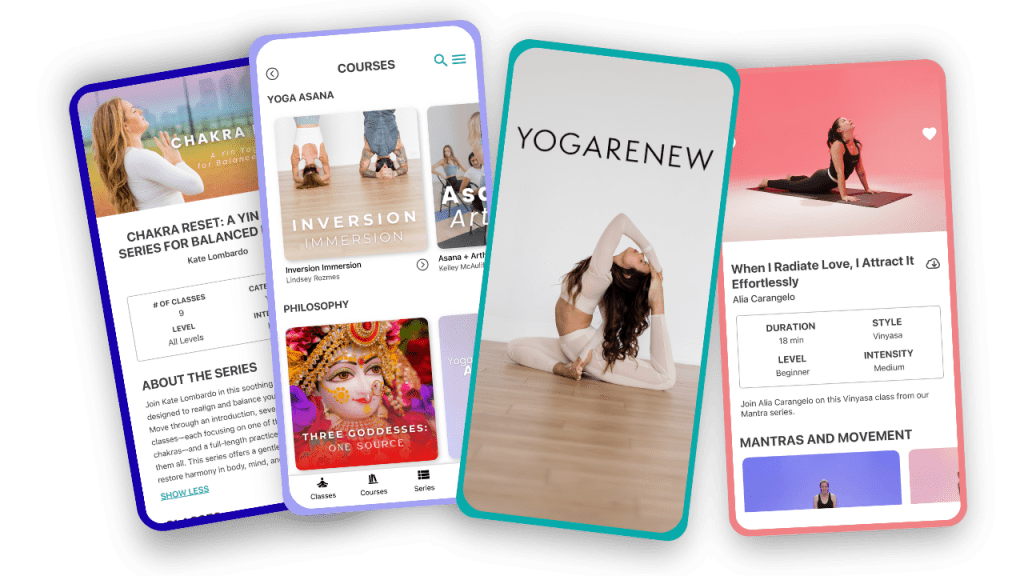
With the YogaRenew app, you can access over 200 FREE yoga classes & pose tutorials. And its Ad-free. Download the YogaRenew app below and check out all of our free classes, or head further down to check out our list of the best free yoga classes on YouTube!

Access Hundreds of Free Online Yoga Classes

Whether you’re a beginner or advanced yogi, the YogaRenew app has hundreds of free classes & tutorials from yoga’s best instructors. Explore classes with incredible soundtracks based on your experience level, goal, intensity level or duration. Save your favorites or watch offline with a free account. Or subscribe and gain access to over 1,000 on-demand classes, courses, workshops, live classes, exclusive events and more.

The Best Free Yoga Classes on YouTube

Scroll down to browse our list of the top free yoga & meditation classes available on YouTube. We’ve conveniently sorted them by style or format so if you’re unsure which style suits you best, take a moment to check out our article on the different types of yoga. If you’re looking to practice with an app, you can check out our list of the best free yoga apps.

  1. Yoga Basics Online Classes
  2. Vinyasa Yoga Online Classes
  3. Meditation Online Classes
  4. Restorative Yoga Online Classes
  5. Yin Yoga Online Classes
  6. Hatha Yoga Online Classes
  7. Prenatal Yoga Online Classes
  8. Gentle Yoga Online Classes

Yoga Basics (Fundamentals of the Practice)

Using Yoga Props

In this video, Patrick explains how props can be an essential tool in the yoga practice. Our channel offers insights as well as tips and tricks of becoming a great teacher but also expanding as a practitioner. This information can be greatly helpful before stepping on your mat.

Best Free Vinyasa Yoga Classes Online

Perhaps the most popular style of yoga in modern times, Vinyasa is characterized by energetic flows and dynamic body movements. Each movement in a Vinyasa Yoga is linked to the breath, providing a more cardio-centric experience. Check our list of the best free vinyasa yoga classes on YouTube below.


60 Minute Vinyasa Flow | Free Online Yoga Class
Instructor: Patrick Franco
Length: 60 Minutes
Style: Vinyasa Yoga

Fresh Air Flow in Hawaii | No Props Needed
Instructor: Desiree Fiorentino
Length: 30 Minutes
Style: Vinyasa Yoga

Live Music Vinyasa Flow
Instructor: Patrick Franco
Length: 30 Mins
Style: Vinyasa Yoga

Yoga for Your Core
Instructor: Desiree Fiorentino
Length: 15 Mins
Style: Vinyasa Yoga

Best Free Online Meditation

Meditation comes in many different formats, each with their own intended results. Whether you’re looking to drift off to sleep or wrap yourself into a warm sound bath – we have you covered.  Find our list of the best free meditation classes available on YouTube below.


5 Minute Body Scan Meditation | YogaRenew
Instructor: Lindsay Monal
Length: 5 Minutes
Style: Body Scan Meditation

Meditation For Sleep | YogaRenew
Instructor: Joe Miller
Length: 14 Minutes
Style: Meditation

Sound Bath & Meditation | YogaRenew
Instructor: Lindsay Monal
Length: 23 Minutes
Style: South Bath & Meditation

Best Free Restorative Yoga Classes Online

Restorative yoga classes are typically prop-heavy, slow paced classes designed to help the body recover, replenish and recuperate. Find our list of the best online Restorative Yoga classes on YouTube below.


Restorative Yoga | Restorative Energy Practice
Instructor: Joanne Silver
Length: 30 Mins
Style: Restorative Yoga

Restorative Yoga | Yoga For Anxiety
Instructor: Keely Garfield
Length: 15 Mins
Style: Restorative Yoga

Best Free Yin Yoga Classes Online

Yin Yoga classes are slow-paced, relaxing classes designed to target deeper connective tissue. Find our list of the best Yin Yoga classes on YouTube below.

Morning Yin Yoga Class
Instructor: Kate Lombardo
Length: 35 Minutes
Style: Yin Yoga

Balancing Yin Yoga for Ultimate Relaxation | Free Online Yoga Class
Instructor: Lindsay Monal
Length: 70 Minutes
Style: Yin Yoga

Best Free Hatha Yoga Classes Online

Hatha yoga is meant to encompass all physical postures within traditional yoga, however modern definitions often characterize this practice as a slower paced class with emphasis on posture and breath.


Yoga for a Strong & Flexible Spine
Instructor: Joe Miller
Length: 30 Mins
Style: Hatha

Teach a Hatha Style Class to Virasana (Hero Pose)
Instructor: Deidra Demens
Length: 60 Mins
Style: Hatha

Best Free Prenatal Yoga Classes Online

Prenatal Yoga classes are designed to help aid in the body’s transformation through pregnancy, delivery and postnatal. Their structure is designed to accommodate and supplement the pregnant body at each stage of pregnancy. Find our list of the best Prenatal Yoga classes available on YouTube below.


Prenatal Yoga for Acid Reflux
Instructor: Melie Purdon
Length: 15 Mins
Style: Prenatal Yoga

Prenatal Yoga for Labor
Instructor: Melie Purdon
Length: 16 Mins
Style: Prenatal Yoga

Best Free Gentle Yoga Classes Online

As the name suggests, gentle yoga classes take a more gentle approach to the practice. Find our list of the best gentle yoga classes on YouTube below.


Yoga for When You Don’t Feel Like Doing Yoga
Instructor: Lindsey Rozmes
Length: 20 Minutes
Style: Gentle Yoga

Beginner Yoga – Gentle Floor Sequence
Instructor: Patrick Franco
Length: 20 Minutes
Style: Gentle Yoga

Patrick Franco and Kate Lombardo of YogaRenew looking at a laptop with YogaRenew's 200 hour online yoga teacher training pulled up

Why You Should Do Your 200 Hour Yoga Teacher Training with YogaRenew

By Yoga Teacher Training

There’s a lot that goes into deciding where and how to complete your first 200 hour yoga teacher training. If you’ve been thinking about it for a while, there’s probably something hindering or encouraging your decision. Perhaps you’re waiting for a sign, or maybe the timing doesn’t feel quite right — whatever the case, we are going to try and convince you that our 200 hour online yoga teacher training program is perfect for you.

Let’s take a look at some of the reasons you should do your 200 hour yoga teacher training with YogaRenew!


Trustworthy, Credentialed & Experienced

YogaRenew has been leading online yoga teacher training since 2018, and our instructors have been leading trainings for much longer than that. We’ve had students from over 170 countries move through our courses with over 10,000 5 star  reviews and tons of testimonials available online. There are countless graduates who have gone on to teach, open studios and build businesses after completing our certification.

We are registered with Yoga Alliance, so students interested in registering as a RYT-200 or RYT-500 are able to do so through us. We are also the sole yoga certification provider for the American Council on Exercise (ACE).

Those looking to register continuing education credits with AFAA or NASM are able to do so through our partnership with those organizations as well.


Live Access & Feedback

One of the most important considerations in choosing a yoga teacher training is feedback. Most trainings will offer a weekly call, or sometimes even monthly calls. Students of our 200 hour certification gain access to 30 live calls every single week. Far and above any online yoga teacher training we’ve ever seen.

Our live calls give students an opportunity to ask questions, gain feedback and connect directly with our instructors and wider community. Yoga Alliance requires 30 hours of live interaction in order to register as a RYT-200. Anybody looking to register with Yoga Alliance should put serious consideration into this. So if you’re attending a training that has only 1 or 2 calls a week you’ll be in the course for quite a while. And that’s assuming those calls are at a time your schedule allows you to attend.

Furthermore, many trainings have one or two people leading the entire course acting as a jack of all trades. With YogaRenew, you’ll learn anatomy from experts in anatomy, philosophy from experts in philosophy, business from business leaders and so on.

Every single student receives personalized feedback prior to graduating as well. Oh, and did we mention that you gain lifetime access to all those live calls too? 

Resources

We decided early on that we were going to provide a ton of additional resources for our students. These aren’t just supplements for our training curriculum – it goes above and beyond what you’d expect to see in a 200 hour course. In fact, we have over 100 hours of supplemental video content students can take advantage of if you’re looking to dig deeper into certain topics or areas of interest. We also have a tremendous set of eBooks, business templates, class themes, sequences, flash cards and other resources you can use in your journey and as an instructor after graduating.

Community

A yoga teacher training is a transformational experience, but you don’t have to go at it alone! Outside of the support from our instructors, you’ll also gain access to our incredible community. With students and graduates from over 170 countries, our community is an active, supportive and engaging space. After enrolling, you’ll gain full access to connect with others on this shared journey which makes all the difference. The Renew Crew is an absolute treasure and we can’t wait to see you there!

Flexibility & accessibility

No, we don’t mean flexibility as in the yoga asanas — we’re talking about flexibility being able to access the course materials whenever, however. All of the materials provided throughout the duration of the trainings are completely downloadable and yours for a lifetime; so you can return to them if you’ve taken a slight pause or need a little extra time in between your studies.

We try to make our courses as accessible as possible and are looking into enhancing our offerings so that they are suitable for a wider demographic. We are also looking into creating courses that are more ADA compliant. It’s important to us that anyone and everyone feels like they can have easy access to good, quality yoga — digitally and in person.

You’re learning from experts

In a 200 hour yoga teacher training, you are reliant on the quality of the information being given and the teachers that are providing it. All throughout our courses, you’ll meet friendly, experienced yoga teachers that are the experts in their crafts. If you choose to enroll in our 200 hour yoga teacher training, most of your time will be with Kate and Patrick, but beyond that, our specialized trainings invite you to meet a plethora of new teachers who have such deep, extensive knowledge in their specific lane of yoga.

Here are a few highlights of teachers in our other courses:

  • Julie takes you on a journey in every one of her tales of ancient yogic philosophy. Her captivating use of story telling helps make the Yoga Philosophy Online Course both digestible and fun.
  • Mélie Purdon is our resident experienced prenatal yoga teacher both online and at our headquarters. You can gain access to Mélie’s elite Prenatal Yoga Teacher Training both virtually and in-person as it can be purchased as a hybrid course! This means you’ll have opportunities to learn with her at our HQ in Hoboken, NJ.
  • Lisa Bermudez has facilitated all of our Ayurveda trainings and continues to host free challenges through us on YouTube to help get you introduced and acclimated to the sister science of yoga.
  • Trevor Vaughan and Julie both lead the kids yoga teacher training where you can become certified to bring the gift of yoga into classrooms and help bring on the next generation of mindful youths!
  • We have an entire course on how to lead your first yoga retreat, mindfulness and mindful eating, breathing workshops and more!

YogaRenew’s signature sequencing method

One major benefit of enrolling in our 200 hour yoga teacher training is YogaRenew’s signature sequencing teaching method. This simple outline gives you the template you need to create classes that keep students coming back! If you’re not planning on becoming a teacher, the way you’ll learn sequencing in this 200 hour training will greatly benefit how you take notice of the benefits of yoga asana.

At YogaRenew, each class is taught towards an apex (peak pose) and the offers a wind down and full Savasana. The beginning of the class is known as puttering (or the warm up), then the class typically follows the structure below. Once you understand how it all comes together, you can plug and play your poses in a class to teach towards a peak pose. This takes the stress out of teaching and can teach you so many new things of how you understand even your personal practice.

YogaRenew’s Sequencing Method:

  • Dharma talk (~5 minutes)
  • Puttering (warm up ~ 5-7 minutes)
  • Sun Salutations (Surya A)
  • Open hip standing poses
  • Balance and twists
  • Peak pose
  • Wind down
  • Savasana

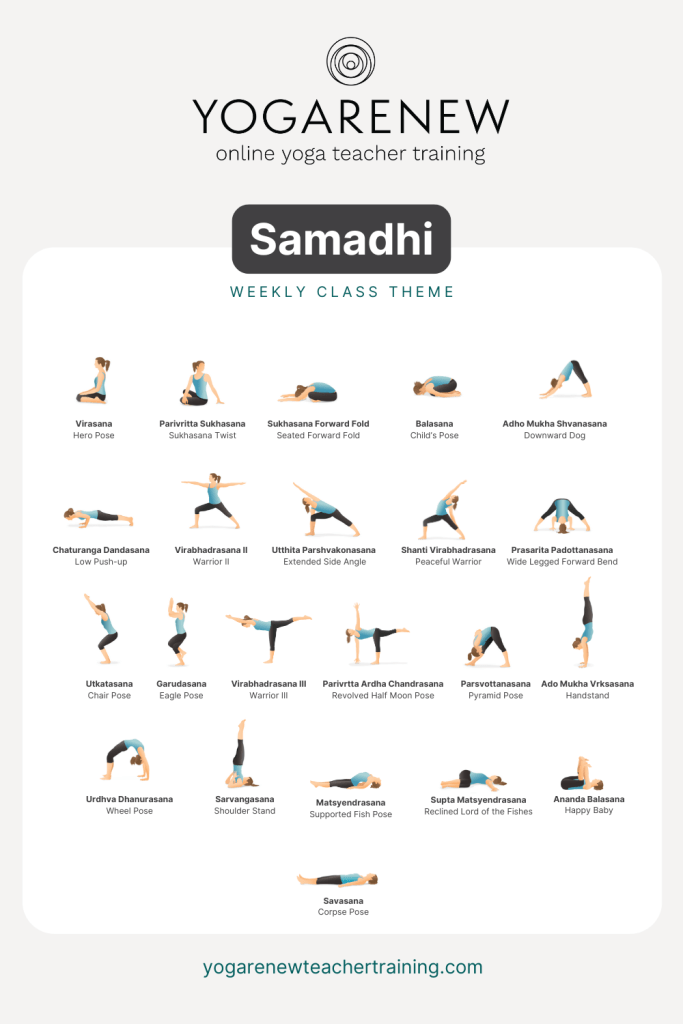
Here is an example of a Weekly Class Theme that Kate wrote working toward handstand with a downloadable PDF!


Online yoga teacher trainings are STILL popular

During the delicate and uncertain times of COVID-19 when we were all mandated to stay inside, the rise of online learnings took off. Finding ways to workout and learn through YouTube became increasingly popular and people took to the internet to immerse themselves in a digital world that felt accessible.

Fast-forward to 2025 and people are still chronically online. The ease of having access to a training, digitally, appeals to a lot of people. The cost of producing these trainings is also much lower so the product can be circulated at a more affordable and attainable rate.

Online trainings are great for people who wish to connect virtually instead of attending lectures or teachings in person. People also like the added convenience of weaving their training into their already well established schedule. For some, online trainings can be a great way to grow a community and foster a real-life school environment with the added benefit of accessing it from anywhere in the world.

YogaRenew has a plethora of online yoga teacher trainings, including the initial 200 hour yoga teacher training, where you can choose which facet of yoga you’d like to specialize in. We also offer various online workshops and have a full YouTube channel that displays snippets of our courses, all of which are also available to our newly launched YogaRenew app.

Here are some of our most popular online trainings:

We’ve recently launched an app!

We’ve had great success and engagement on our YouTube channel where we’ve offered yoga teacher tips, fun challenges, and invigorating and restful classes so we just felt like it was time…

Get immersed and take your yoga to the next level with the YogaRenew App. You’ll see the same friendly faces and quality learnings from all our online yoga teacher training courses. From there, you can build your own stacked class playlists and find courses that will help you float up into handstand ~ there’s a little bit of something for everyone on the app.

*Available to be downloaded via the Apple and Google Play store – search: YogaRenew.

Join the community of +99k students worldwide!

Online Yoga Teacher Training Courses:

200 Hour Online Yoga Teacher Training

200 Hour Online Yoga Teacher Training

300 Hour Online Yoga Teacher Training

300 Hour Online Yoga Teacher Training

500 Hour Online Yoga Teacher Training

500 Hour Online Yoga Teacher Training
YogaRenew proudly partners with NASM + AFAA graphic

YogaRenew is an Approved Partner with NASM and AFAA

By Yoga

NASM, AFAA Yoga Course


YogaRenew is now an approved provider for NASM and AFAA! We know that a lot of you have been asking for this. Graduates of YogaRenew’s 200 HR Yoga Teacher Training will be able to register their certificate with NASM or AFAA moving forward.

More information about NASM, AFAA, our yoga teacher training course, and how to register credit for your course follows below!

About NASM

The National Academy of Sports Medicine (NASM) provides certification and courses to over 1.5 million fitness and wellness professionals with over 12,000 gym and health club partnerships. NASM provides certifications for personal trainers, group fitness instructors, wellness coaches and nutrition coaches.


About AFAA

The Athletics and Fitness Association of America (AFAA) has provided certifications for group and personal trainers for over 40 years. Their certifications include group fitness, indoor cycling and personal trainer certifications.

AFAA is the sister company of NASM with both companies falling under the umbrella of Ascend Learning.

YogaRenew’s 200 Hour Online Yoga Teacher Certification

This comprehensive yoga teacher training provides a strong immersion into the business and practice of yoga through detailed videos, readings, workbooks and lectures.

The course is entirely online and self-paced, however students looking to get live support are also able to pick from 30 live calls held each week from experts in areas like anatomy, philosophy, business, class structure, sequencing, etc.

Students gain access to over 100 hours of supplemental video content they can browse in addition to their core training. We’ve also added extensive material including eBooks, templates, class sequences, and other resources instructors can use for their classes and business.

In addition to our support through live calls and email, students also gain access to our incredible & active community with students from over 170 countries.

Lifetime access is provided for the course and all of its resources (including the live calls!)

Graduates of our 200 hour course are able to register with Yoga Alliance as a RYT-200 as well.

AFAA or NASM Credit For YogaRenew’s 200 HR Course

NASM and AFAA students will submit their recertification differently. NASM trainers will login to their online NASM recertification portal at nasm.org and add the course and certificate from there.

AFAA trainers will email their AFAA renewal application to recerts@ascendlearning.com.

Our provider number is the same for both NASM and AFAA:

Course: 200 HR Yoga Teacher Training
Provider Number: PRO-014328
CEUs: 1.9/15.0

American Council on Exercise (ACE) 200 Hour Yoga Teacher Training

In addition to NASM and AFAA, ACE offers YogaRenew’s 200 hour yoga teacher training in a joint partnership. ACE has been a leader in the fitness certification space for a long time, and we’re thrilled about the ongoing connection between their community and our training program. See ACE’s press release on our joint partnership for more information.


See more information about YogaRenew’s education partners here.

Online Yoga Teacher Training Courses:

200 Hour Online Yoga Teacher Training

200 Hour Online Yoga Teacher Training

300 Hour Online Yoga Teacher Training

300 Hour Online Yoga Teacher Training

500 Hour Online Yoga Teacher Training

500 Hour Online Yoga Teacher Training
Yin Yoga Sequence PDF including clipart for the following poses: child's pose, half butterfly (both sides), butterfly pose, and legs up the wall by YogaRenew Online Yoga Teacher Training

Yin Yoga for New Beginnings

By Yin Yoga

You don’t have to wait for the ball to drop to start anew. In fact, in Vedic tradition, the “new year” is considered spring time, when things start to open up and blossom again. If you’re extra optimistic, you may even view each and every day as a new beginning — a new chance at life; a new day to start again.

This post will act as a yin yoga class template to echo the sentiment of new beginnings. The yin yoga postures chosen will embody the feeling of starting anew. Feel free to practice it at home, share it with your students, or keep it safe to revisit at a time you feel you need it most.

Child’s Pose

Child’s pose is always a great way to begin any class as it acts as a pose that can be returned to at any point throughout class.

How to:

  • Widen your knees mats-width distance apart
  • Set your arms out in front of you
  • Sit back on your heels (pad the area under your seat if you feel there’s too much space)
  • Let your forehead come down to the mat
  • Breathe all along your spine

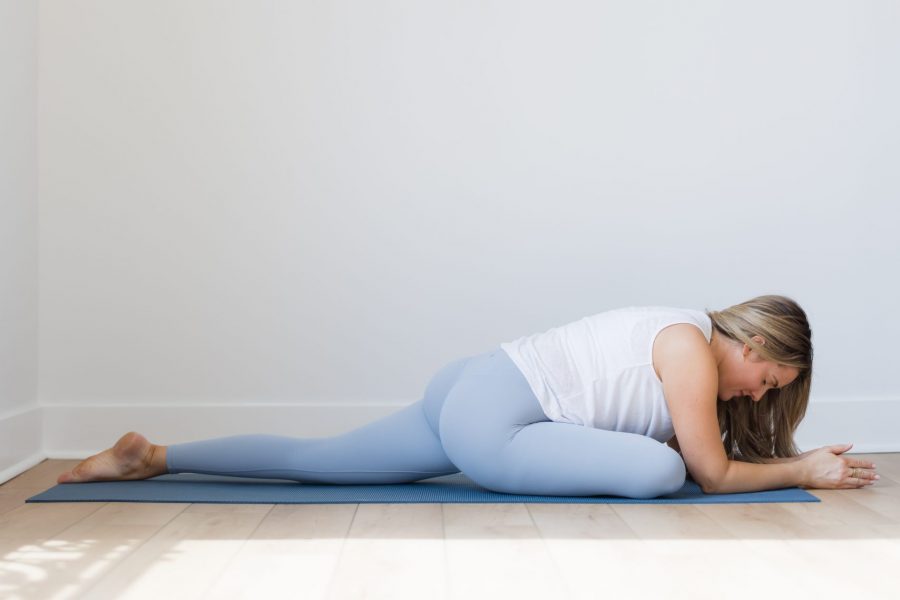
Half Butterfly Pose (Both Sides)

Half Butterfly will prepare you for full Butterfly Pose and it’s a great way to gain symmetry on both sides of the body.

How to:

  • Send your right leg out long
  • Bend your left knee and tuck your left foot in towards your seat
  • Fold forward (you can place blocks or a bolster beneath you for extra support)
  • Repeat on the other side

Butterfly Pose

Butterfly Pose represents the birth and opening up of new energy. This rejuvenating yet restorative pose is perfect to usher in new energy.

How to:

  • Sit upright with your legs spread wide
  • Bring the soles of your feet together
  • Fold forward (you can use a bolster or blocks to come down onto if folding forward feels strenuous)

Legs Up The Wall

This is the ultimate relaxation yin yoga pose, inviting you to unwind, drop in, and let your mind quiet. In this posture, you can call to mind any intentions that feel indicative of a fresh start.

How to:

  • Set up a blanket folded the long way in half twice with the fringes facing the wall
  • Sit with your butt on the blanket, against the wall sideways
  • Swing your legs up the wall with the blanket supporting your seat underneath you
  • Let your eyes close and cactus your arms out to the side or support them on blankets as well


Yin Yoga Online Teacher Training

Ether App

200 hour ytt journey header image of a hands-on assist being done on a 200 hour ytt student

200 Hour YTT Journey

By Yoga, Yoga Teacher Training

You’re probably wondering what “ytt” stands for. At least I did when I first started publishing pieces about the yoga practice. This acronym, I noticed, was also placed after numbers often. I started to ask the yoga teachers around me, “What does E-RYT 500 mean?” and, “What is 200 hour versus 300 hour versus 500 hour?” Here’s what I learned…

YTT stands for Yoga Teacher Training

A 200 Hour YTT is the first certification along your journey. A 200 hour ytt sets you up with the foundation of a strong understanding of the ancient practice. In a 200 hour yoga teacher training, you will most likely learn about the physical practice (yoga asana), ancient yogic texts (the yoga sutras), Ayurveda (a relative science to yoga), and other branches and elements within the yogic sphere. This varies from training to training, but most yoga teacher trainings will at least touch on these subjects.

A 300 Hour YTT is a continuation of your 200 hour studies. A 300 hour yoga teacher training builds upon the 200 hours to fully certify you at the maximum amount of hours, 500. A more in-depth look at the practice is what the 300 hour is for, and you’ll usually go a layer deeper into anatomical phrasing, further into Ayurveda and how it intertwines with yoga, and learn more about how this practice made it ways over to the west. It’s not always a continuation of a 200 hour yoga teacher training, but a 200 hour ytt is recommended before enrolling – however you complete the hours is up to you.

A 500 Hour YTT is the final amount of hours necessary to register through Yoga Alliance as a RYT 500. If you continue to enroll in more trainings (i.e. specialized trainings in the different “genres” of yoga such as: restorative, yin, hatha, yoga nidra) your hours will count towards being an E-RYT 500. However, you can only obtain the status of E-RYT if you continue to have 2,000 hours of experience teaching yoga.

What does a 200 hour ytt typically look like?

Well, for starters, you must complete 200 hours of yoga. This is typically broken up through modules on the weekend days (given most modern day people have jobs they tend to throughout the week). Usually, the different topics throughout the training are segmented into different weekends. For example, the first weekend may take a look at yoga asana, the physical practice. In this module, you’ll probably be responsible for looking at the poses and determining where the alignment and structure of the pose come from. Depending on which lineage you choose to study (Iyengar, Jivamukti, Bikram, Ashtanga, etc.), you’ll learn the foundations of the poses, their Sanskrit names and meanings, and what to focus on physically when teaching classes (or even taking classes – completing a 200 hour ytt can be solely to advance your personal yoga practice and not to even teach at all).

They’re all so expensive… why?

A lot goes into a fully baked yoga teacher training, and to put it simply: You need to pay the teachers in the training for their time and wisdom. The price of a yoga teacher training is usually dictated by the quality of the training and the overhead it costs to stack up a fire staff to teach you about each respective area they are an expert in.

Over the pandemic, yoga teacher trainings became popular online (hello, us!) and some of that accessibility has remained. Though not ideal if you’re really looking forward to hands on adjustments and physical assistance throughout your learnings, an online yoga teacher training still gives you all of the benefits of an in person training at a fraction of the cost (because the teachings are recorded).

Other costs that are factored into the training (online or in-person):

  • Physical handouts & items to track your work — Sometimes the school will gift you with a binder full of information. The binder will house important info and act as a calendar to move through the modules, annotating anything you find important.
  • Special workshops — You’ll have access to fellow teachers who the leader of the ytt thought were imperative to your learning and potential networking
  • General maintenance of the studio & access to props — The yoga studio becomes your home, and that home usually comes with yoga mats, bolsters, blocks and other items necessary to learning about the yoga asana practice
  • General maintenance of digital course materials — A lot of online yoga teacher training platforms will continue to improve their training material. They will assess what works well & what doesn’t and find ways to cater to the yogi student in the best ways possible.

To 200 hour ytt or not ~ that is the question

To put it simply: You’ll never regret taking a 200 hour yoga teacher training. We’ve had thousands of students all over the world, and some of them don’t even start the program until they’ve had it for a bit, but one commonality we find is that no one ever completes the studies and says, “Wow, I wish I never learned all of this quality information about yoga.”

Chances are, if you’re a dedicated practitioner, or even slightly interested in furthering your yoga practice, there will be at least something you will take away from enrolling in a training. The amount of information that is covered spans out far across the landscape of yoga, and you may even find that a lot of the material can assist other aspects of life. Whether it’s a deeper appreciation for meditation or a better understand of how your bones work and function in your body, a yoga teacher training will give you that insight. From there, you can choose what you do with that information.

What does a 200 hour graduation look & feel like?

Every 200 hour yoga teacher training will look and feel different — but the journey is the same. The path towards understanding yoga, its roots and the many avenues it spans across is truly a gift ~ and each studio/online yoga program will treat that in their own special way.

I’ve seen huge celebrations with tons of flowers and incense and comfortable meditation pillows. I’ve seen online certifications with warm language centered around the program they’ve completed and a repost to LinkedIn on how they plan to share their studies and learnings. All in all, the way you celebrate this huge accomplishment deeply personal, but also part of a strong community. It is imperative to find a way to honor both as you set out into the world with your new insights and profound knowledge.

I’ve completed my 200 hour ytt journey, now what?

The choice is yours! Either continue on to a 300 hour training to obtain your RYT 500 or take some time to ruminate in your learnings. You can look into specialized trainings in the areas that ignited something in you and sparked a specific interest, or you could let everything from your 200 hour marinate and let that be enough for your yogic journey.

If you are trying to become a teacher — look for places to teach! Having a 200 hour certification is a great way to get started leading classes. You’ve learned an immense amount about the practice, and there are so many veins within the “yoga umbrella” that are sure to find something that resonates. Overall, let yourself be proud of your accomplishment ~ you’ve accumulated 200 great hours of one of the world’s most ancient studies! That is something to be happy with.

Online Yoga Teacher Training Courses:

200 Hour Online Yoga Teacher Training

200 Hour Online Yoga Teacher Training

300 Hour Online Yoga Teacher Training

300 Hour Online Yoga Teacher Training

500 Hour Online Yoga Teacher Training

500 Hour Online Yoga Teacher Training
Header image of Kate Lombardo in front of a laptop in a city building resting her chin on her fist for the article: How to create a viral content plan for your wellness business

How to Build a Viral Content Plan for Your Wellness Business

By Lifestyle & Wellness

Building a content plan that resonates with your audience and propels your wellness business into the spotlight requires a strategic approach. By identifying your audience, diversifying your content, and nurturing your audience across various channels, you can create a viral content plan that not only gains traction but also converts followers into loyal customers.

Identify Your Audience

Understanding your audience is the cornerstone of any successful content strategy. Your core demographic should dictate your messaging, tone, and the type of content you produce. Additionally, your audience might differ slightly across platforms, so it’s essential to refine your approach for each channel, such as Instagram, YouTube, X (formerly Twitter), and your website.

How to Identify Your Audience:

  • Analyze Demographic Data: Use tools like Google Analytics, Instagram Insights, and YouTube Studio to gather information about your audience’s age, gender, location, and interests.
  • Conduct Surveys and Polls: Ask your current audience directly about their preferences, challenges, and what they hope to gain from your wellness content.
  • Review Competitor Strategies: Look at competitors in the wellness niche. What type of content resonates most with their followers? This can provide valuable insights into your own potential audience.

Monitor Audience Behavior Over Time:

  • Regularly review your platform analytics to track shifts in audience demographics or interests.
  • Engage with your followers through comments, DMs, and community posts to stay in tune with their needs.
  • Use A/B testing to identify which types of content generate the best engagement and conversion rates.

Diversify Your Content

Keeping your content dynamic and engaging is vital to maintaining audience interest. Wellness businesses benefit from leveraging multiple content formats to cater to different preferences and learning styles.

Types of Content to Consider:

  1. High-Quality Videos: Tutorials, behind-the-scenes footage, or guided wellness sessions.
  2. Interactive Formats: Quizzes, polls, and surveys to engage your audience.
  3. Infographics: Shareable visuals packed with valuable wellness tips.
  4. Blog Posts: In-depth articles on trending wellness topics.
  5. Podcasts: Conversations on health, mindfulness, or lifestyle practices.
  6. Live Sessions: Host Q&A sessions, yoga classes, or meditation workshops.

By experimenting with different formats, you can discover what resonates most with your audience and continually refresh your content strategy.

Create Unique Content Across Social Channels

Your social channels serve different purposes and attract slightly different segments of your audience. Tailoring your content to fit each platform’s unique strengths ensures maximum engagement.

Tips for Platform-Specific Content:

  • Instagram: Focus on visually stunning imagery, short-form videos (Reels), and carousel posts.
  • YouTube: Share long-form content like tutorials, success stories, or expert interviews.
  • X: Post quick, thought-provoking insights or participate in trending wellness discussions.
  • Website: Publish evergreen content, detailed guides, and resources that drive organic traffic through SEO.

Engaging, platform-specific content should entice your audience to interact with your brand, share your posts, and explore your offerings further.

Nurture Your Email List

Email marketing remains one of the most effective ways to maintain a direct connection with your audience. For a wellness business, it’s essential to provide consistent value through your email campaigns while growing your subscriber base.

How to Grow Your Email List:

  • Offer Freebies: Create downloadable content like meal plans, meditation guides, or fitness trackers.
  • Host Challenges: Encourage sign-ups for exclusive wellness challenges delivered via email.
  • Leverage Social Media: Promote your lead magnets across your social platforms.

Tips for Email Engagement:

  • Send personalized emails with actionable tips, inspirational stories, or exclusive offers.
  • Provide reusable content, such as printable wellness trackers or mindfulness exercises, to keep subscribers engaged over time.
  • Use segmentation to tailor your messages to different audience interests and demographics.

Create High-Converting Content

Every piece of content you create should have a clear objective. Whether you’re aiming to collect emails, sell products, or drive website traffic, your content must be optimized for conversions.

Strategies for High-Converting Content:

  1. Use Strong CTAs (Call-to-Actions): Encourage your audience to take the next step, whether that’s downloading a guide, signing up for a webinar, or making a purchase.
  2. Optimize for SEO: Ensure your website content includes targeted keywords, meta descriptions, and alt text to improve visibility on search engines.
  3. Incorporate Testimonials and Case Studies: Showcase success stories to build trust and credibility.
  4. Track Performance Metrics: Monitor key metrics like click-through rates (CTR), conversions, and engagement to refine your strategy over time.

By tracking your analytics, you’ll gain valuable insights into what resonates with your audience and how to replicate that success.

Creating a Viral Content Plan for 2025

Building a viral content plan for your wellness business is a journey that requires strategic planning and consistent effort. By identifying your audience, diversifying your content, and nurturing your connections through various channels, you can create a content strategy that not only goes viral but also drives meaningful engagement and growth for your business. Stay creative, authentic, and responsive to your audience’s needs, and watch your wellness brand thrive.

Online Yoga Teacher Training Courses:

200 Hour Online Yoga Teacher Training

200 Hour Online Yoga Teacher Training

300 Hour Online Yoga Teacher Training

300 Hour Online Yoga Teacher Training

500 Hour Online Yoga Teacher Training

500 Hour Online Yoga Teacher Training
Young yogi on a blue yoga mat in front of bamboo by a pool in gate pose

Restful Yoga Flow

By Yoga Asana

As each new year visits us, we are called to visit practices that feel whole, inviting, welcoming, and often times, soft. Let this be your signal to unwind, roll out your mat and move through a flow that feels intentional and restful.

Here is a practice to keep you returning to the mat when you need a little extra relaxation…

Begin with seated stretches

Starting in a seated posture is a great way to get grounded and into your body. Here is a mini warmup that will release tension and help you start to relax.

Seated Side Bends

  • Begin in Sukhasana (easy seat) and lift your arms up by your ears
  • Extend through your fingertips and root down through your seat
  • Start to let your left hand come down to the ground as your right arm bends up and over alongside your right ear
  • Come back to center with both arms up
  • Switch the crossing of your legs and repeat the same motion on the other side

Seated Twists

  • Sitting in Sukhasana, reach your arms up alongside your ears and extend towards the sky
  • Twist over your right knee and let your left hand come down onto your right knee as your right hand meets the mat or blanket behind you (you have the option to prop yourself up on a blanket)
  • Switch the crossing of your legs and repeat on the other side

Seated Forward Fold

  • Start in Sukhasana and crawl your arms out in front of you just enough so that your seat doesn’t lift
  • Switch the crossing of your legs and repeat the same motion

Start your gentle flow

Come forward to your hands and knees for a table top position and move through a couple rounds of cat/cow: inhaling as you drop your belly and lift your gaze and chest for cow, and exhaling as you round your shoulder blades, tucking your navel toward to the back of your spine.

Come back to a neutral position with your wrists stacked under your shoulders and knees under hips. Find child’s pose (for however long you wish) and then tuck your toes behind you, send your hips up and back for downward facing dog.

Move through a mini vinyasa

  • Inhale come forward to plank
  • Lower all the way down
  • Walk your palms forward and wide
  • Press yourself up for cobra pose
  • Lower back down
  • Downward facing dog

Inhale lift your right leg up high and step in between your hands for a lizard lunge. You can lower your forearms down to the mat or onto blocks. Take a few rounds of breath here, letting your body get used to the deep stretch in your psoas.

Bring your palms down inside your foot (remove them from blocks if they were on blocks) and crawl your way to parallel your feet into prasarita padottanasana. Tent your fingertips, lift your chest, breathe in and as you breathe out start to fold, letting your neck and head hang heavy as you stay sturdy in your feet. Now begin to crawl yourself to the back of your mat for pigeon pose.

After pigeon pose at the back of your mat, move through another slow vinyasa – starting in downward facing dog, coming forward to plank, lowering all the way down, and pressing up to cobra. Lift your left leg and repeat the same motions, where you’ll end up at the front of the mat.

Add some seated postures

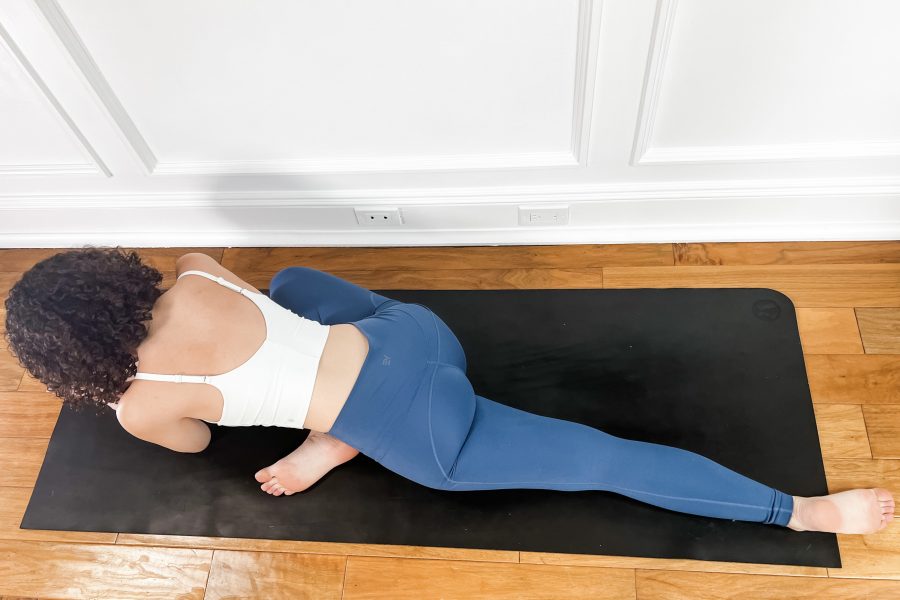
After you’ve done lizard and pigeon along with your slow vinyasas on either side, you can begin to build on that. So, the next time you come to pigeon pose, lean onto the sit bone of the leg that is bent and swing the leg that is long behind you around so you can cross your ankle over the knee that is bent for half lord of the fishes. After you unwind (untwist), you can incorporate the following seated postures:

  • Janu Sirsasana
  • Revolved Janu Sirsasana
  • Baddha Konasana
  • Tarasana
  • Paschimottanasana

Supported bridge for winding down

Come to lie down on your back with your knees bent and the soles of your feet planted on the mat. Lift your hips and send them over to the left while you let your knees fall over to the right. Cactus or “T” your arms out and gaze over your left shoulder. Repeat this on the other side. After you’ve twisted to neutralize everything, you can find a nice supported bridge.

Grab a block if you have one and set it under your seat. Keep your knees bent and feet on the floor. Feel free to lift your legs up into the air if that feels good, but if you’re enjoying being still and supported by the block with your feet rooted, then just remain there. Let your breath come back to its natural rhythm.

Don’t forget the most important pose: Savasana

Give yourself enough time to move through a 5-6 minute Savasana. This is our “peak pose” for today, as we honor a restful, gentle flow. I hope you’ve enjoyed this mini restful yoga flow and if you need any playlist recommendations to go along with these classes, find us on Spotify! ✨


Online Yoga Teacher Training Courses:

200 Hour Online Yoga Teacher Training

200 Hour Online Yoga Teacher Training

300 Hour Online Yoga Teacher Training

300 Hour Online Yoga Teacher Training

500 Hour Online Yoga Teacher Training

500 Hour Online Yoga Teacher Training
New Year's yoga flow image of Patrick Franco with a harmonium writing out his yoga sequence, looking at a laptop

New Year’s Yoga Flow

By Yoga Asana

As we enter a new ✨ era ✨ perhaps so does our yoga practice! Let’s craft a class for the new year ahead with the same, timeless YogaRenew framework we know and love…

Designate a Peak Pose

For our New Year’s Day yoga flow this year, we chose handstand and wheel ~ technically a double peak, but with supporting actions focusing on the arms and legs, we can weave together motions that complement one another. Here’s what we would include in our sequencing for a yoga class with handstand and wheel as the peak poses, we’ll break it down by section:

Puttering

For this class, we’re focusing on shoulder mobility, and straightening the arms and legs. Here are some movements and postures you can include in puttering:

  • Shoulder flossing
  • Gomukhasana arms
  • Crescent lunge
  • High lunge
  • Prasarita Padottanasana (wide legged forward fold)
  • Thread the needle
  • Child’s pose with hands elevated on blocks (shoulder opener)

Sun Salutations – Variations for Handstand + Wheel

You can teach either Surya Namaskar A or B. We typically stick to Surya A for vinyasa yoga classes and in this instance, we’ll focus on the straightening of the front leg and bending of back knee to spring forward to fold over the legs. You also have the option to include a twist here at any point, or add in crescent lunges or any motion you feel would further support the actions of the peak pose.

Standing Poses, Balance & Twists

For your open hip standing poses, warrior II is a classic. You could also incorporate poses like bound extended side angle (for the engagement of the shoulders), triangle, Prasarita, peaceful warrior, etc. Any poses you decide to piece together should have cues that signify and action needed for the peak pose. For example, in Prasarita Padottanasana, the two straight legs.

In the balance and twist section, it might be nice to include revolved triangle (two straight legs), revolved extended side angle, warrior 3 (basically handstand with one leg down), Parsvottanasana, devotional warrior, etc.

Peak Pose: Handstand + Wheel

Be sure to demo the peak pose and then guide them through it so they can first see what it looks like and have clear direction when getting into the poses. You could even offer the option to have them hop into handstand a couple of times from Parsvottanasana to get the feel for it so when it’s time to do the peak pose they feel a little warmed up.

Wind Down Section of Class

It is always wise to include a forward fold at the latter half of class… and don’t forget a twist to even things out! We recommend poses like:

  • Baddha Konasana
  • Tarasana
  • Janu Sirsasana
  • Paschmiottanasana
  • Supine twists
  • Supported bridge
  • Happy baby

Give This New Year’s Yoga Flow a Try!

You can follow our sequencing skeleton from Kate and Patrick’s Vinyasa Sequencing Lab to plug and play your own poses for this class, but these are the basics if you want to teach a class with using handstand and wheel (urdhva danurasana) as your peak poses! Good luck & let us know how it goes.

Online Yoga Teacher Training Courses:

200 Hour Online Yoga Teacher Training

200 Hour Online Yoga Teacher Training

300 Hour Online Yoga Teacher Training

300 Hour Online Yoga Teacher Training

500 Hour Online Yoga Teacher Training

500 Hour Online Yoga Teacher Training
Patrick Franco sitting in a cozy chair, looking down on his reflections from the year in a wood cabin with cool art hanging behind him

Reflections

By Yoga

As we approach the new year, it feels like an important time to be reflecting on this past year. Reflections on the previous year usually include the highlights, the struggles and the difficult things we’ve had to overcome. Reflecting around the holidays is a great way to stay grounded and set yourself up for a flourishing year ahead.

What do reflections look like in the yoga world?

Being an ancient practice, yoga has brought us the simple gift of being with your body and breath and the ability to still the fluctuations of the mind. This practice has taught us the importance of presence and in doing so, we can learn to appreciate the residual effects we notice in our own personal practice. By implementing the practices and sentiments put forth in the Yoga Sutras, compiled by ancient sages, we can learn the subtle art of noticing, and in turn, reflecting.

Create a practice that feels reflective

Whether you’re seated on your mat and tending to a breathing practice or you prefer the physical practice of yoga asana, carve out time to commit to a practice that will help you start to tune out and look inward. For many of us, that means moving our bodies, and for the other lot of us, it means just sitting and breathing to notice the breath. We’ll outline some practices below for you to start to tune inward to focus on your reflections:

Nadi Shodhana Breathing Practice

Alternate nostril breathing is one of the many breathwork techniques studied and practiced in Ayurveda (yoga’s sister science) and yoga. The practice is relatively simple and is meant to relax you.

Here’s how:

    1. Start seated in a comfortable seated posture like Sukhasana (easy seat) with your sit bones higher than your knees. Typically with this practice, we start on the left side (left nostril first).
    2. Use your right hand ring finger to close your left nostril, and your right thumb to block your right nostril.
    3. The index and middle finger can rest on your third eye or close in towards your palm.
    4. Close your right nostril, inhale through your left nostril for five counts.
    5. Close the left nostril with ring finger, and exhale through your right nostril for five counts.
    6. Alternate between the two sides open and closing, and add pauses where you feel comfortable. *You can practice retaining the breath for five counts, and gradually increase.

Sukhasana Meditation Practice

Sukhasana, or easy seat, is a posture that allows you to find stillness. Adding in a guided or silent meditation can seem challenging, but will help with your practice of balancing and quieting the mind to reflect.

How to:

  1. Start by sitting with your left shin crossed in front of your right. You can prop yourself up on a block or blanket(s) if you need some extra support.
  2. Let your knees get heavy towards to the floor.
  3. Rest your arms on your thighs or your knees with your palms facing up (inviting in) or down (grounding).
  4. Sit up nice and tall, stacking your heart over your hips.
  5. Leave your eyes open or close them and start to notice your breath. Before you change anything, just sit with your natural pattern of breathing.
  6. Begin to deepen your breaths as you imagine lengthening through the crown of your head while sitting firmly in your seat.
  7. Continue to breathe until you feel calmer. *You can set a timer for 5 or 10 minutes & gradually increase the time increments as you practice more.

Meditative Journaling Practice

Sometimes writing things down about the year that has passed helps us be grateful for 2 things:

  1. Where we are headed
  2. How far we have come

Journaling can greatly reduce stress and add an extra layer of peace of mind as we approach the holidays and a new year. Try this journaling practice out and if you love it, be sure to check out more of our online workshops through Ether.

How to get started:

  1. Find a journal that really speaks to you. Maybe it’s one you’ve had lying around, or perhaps it’s one you’ve used throughout the year; but if you are purchasing a brand new journal, take the time to find one that either embodies the year you’ve had or the upcoming year you plan to have. *This initial intention goes a long way! You’ll be excited to write in it. 🙂
  2. Find the perfect writing utensil. Sourcing the pen or pencil you write with is equally as intentional as sourcing the journal. If you don’t have access to any good pens or pencils or markers, maybe visit a nearby shop or cafe and see if they’ve any extra or old writing utensils lying around.
  3. Perform a 3 Minute Gratitude + Intention Setting Meditation: Close your eyes and deepen your breath. Sit in a comfortable position and invite in any intentions you have for the new year. Also call upon every single thing you’re grateful for from this past year — it can even (especially) be things that have challenged you or forced you to grow beyond your comfort zone that felt a little painful but nonetheless you grew past.
  4. Start writing! Whatever comes to you ~ let it flow. There is no rhyme or reason to what you write and I don’t care what they say, everyone is a writer.

Yoga Asana Practice for Reflection

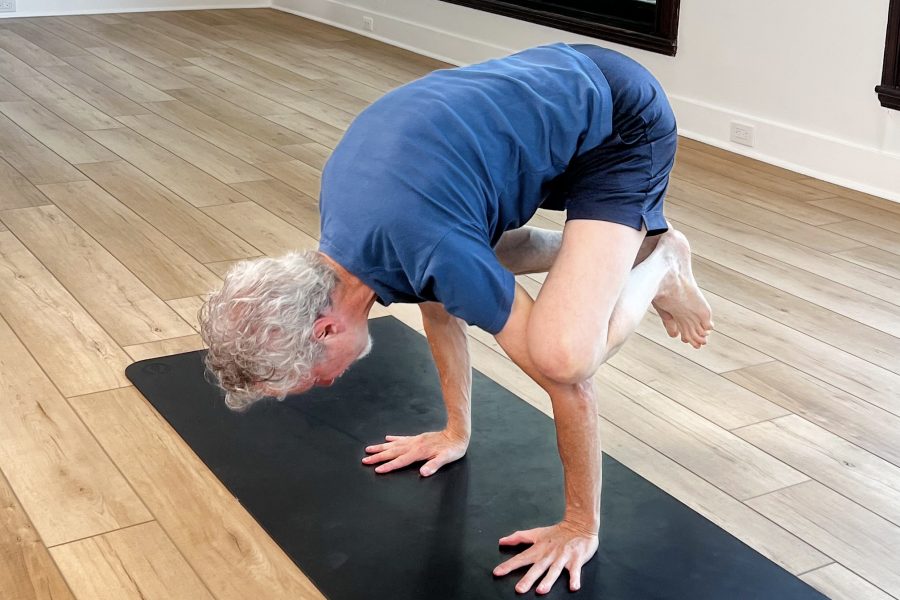
Ahhh, the physical practice! Typically, the most quieting and reflective of the yoga postures to work with are inversions: Headstand, Forearm Stand, Handstand, and Shoulderstand. Any time your head is over your heart, it quiets the mind and creates space for clarity. When we go upside down, we have no other choice but to be fully in the present moment. Let’s create a yoga class teaching towards inversions…

Example of a yoga class for inversions:

Depending on which pose you choose as your peak and what physical actions you are choosing to focus on, you’ll piece together your class around those gestures and movements. For example, in a headstand class, you may want to incorporate the rounding of the shoulder blades (like a cat pose), stretching and strengthening of the shoulders and straight legs. You could choose a million different ways to approach a class centered around an inversion, so let’s just outline the basics.

Puttering: Give yourself enough of a warmup that you feel strong in supporting yourself by whichever part of the body is your foundation (for headstand, it’s your head and arms, handstand is your arms, wrists, and legs, shoulderstand is your shoulders and the back of the body as well as lengthening of the legs, and forearm stand is your forearms and upper back).

Standing Poses: Emphasize poses for the standing part of class that also mimic actions needed to perform the peak pose, for example: for handstand, have them get long and straight by lengthening and extending their arms and legs.

Balance & Twists: Same rules apply as the standing poses — choose poses that reflect the motions you are trying to commit to for the peak pose.

Perform the peak pose for 5-7 breaths. Let yourself be upside down (heart above your head).

Wind Down: Select postures that either go in the same direction as the peak pose to further support or in the opposite direction to relieve from the peak pose. This means, for handstand, maybe a forward fold like Paschimottanasana will feel good after being extended in both directions, but also mimics the action of straight legs and neutral hips.

Savasana — never skip Savasana.

Reflections & how they inform us

Looking back on the previous year can help us recognize some very important things about ourselves. Sometimes, we don’t even notice how truly peaceful we are until we’ve seen how much adversity we’ve come through. Reflecting also includes looking back on all the positives and things we have in our lives that we are grateful for. Even in challenging times, it’s important to remember that it’s all about the dance. 

As we approach this next year, may you find peace in the sole fact that you are able to reflect back on the year before you and honor all the growth, setbacks, pain and joy that the year delivered, knowing you have the tools necessary (even if just from this tiny blog post) to endure most of what life brings to the table.

Online Yoga Teacher Training Courses:

200 Hour Online Yoga Teacher Training

200 Hour Online Yoga Teacher Training

300 Hour Online Yoga Teacher Training

300 Hour Online Yoga Teacher Training

500 Hour Online Yoga Teacher Training

500 Hour Online Yoga Teacher Training
A photo of Patrick Franco and Jordan taking a mindful walk, carrying their rolled up yoga mats

Living in the Present

By Mindfulness

The very first yoga sutra, atha yoganushasanam, translates to, “now, the discipline of yoga,” which reminds us to be in the present moment. The sutra states that the practice of yoga is beginning now, not in five minutes or ten minutes from now, and it didn’t start before we rolled out the mat… it starts in this exact moment. This is an important sentiment to remember not only for the yoga practice, but for our daily lives as well. It can be a gentle reminder to keep us from worrying about the future or stressing and feeling guilt over the past.

How do we keep revisiting the present moment? How do we allow ourselves to quickly pivot our mindset to taking place only in the moment we’re currently in? It’s easy…

How do I become more present?

1. Roll out your yoga mat — Seriously. There’s a reason I opened with the first yoga sutra. Bringing yourself to a physical practice is a great way to get you out of your head and into your body. By practicing yoga, you’ll not only learn how to be in the present moment, but you’ll find a newfound respect for the physical practice (I’m talking about yoga asana when I say yoga).

2. Find something you can see, hear, touch or smell — Sometimes physical sensations allow us to really take in the things around us at that very moment in time. By naming things or putting a conscious thought to things you can see, hear, touch or smell, you’re signaling to your brain that these are real things creating your environment at the time.

3. Remind yourself to be where your body is — Sounds cliché, but I bet if you can subtly remind yourself, in your head, where you are physically, it will position your mind to put focus in the present moment. Sometimes I tell myself, “this is where you need to be in this moment, and this is all you need to be doing.” It kind of circles back to atha yoganushasanam, but without the physical practice of rolling out a mat and moving your body. Instead, use your feet as your anchor point to remind yourself where you are and what you’re doing, and that’s all you need to be present for in this exact moment.

Reap the benefits of being more present

There’s a lot of positive psychology centered around living in the present moment and how this can be a major advantage for stress relief and living an overall healthier lifestyle. Psychology, as we know it, is anything centered around the studies of the human mind. In this article by Calm, a mental health app, they state that being more in the present moment can actually boost your emotional intelligence, help you live a more mindful life and even help greatly reduce stress and anxiety.

Mindfulness is also a great way to practice being in the present moment, as the core of the practice is being rooted in the present. Many mindfulness exercises require the practitioner to be conscious of their daily life, the choices they make, and to pay attention to the seemingly small details in life, taking time to pause and reflect. By enrolling in a mindfulness certification course, you can not only help yourself to live more intentionally, but you have the resources and tools necessary to spread that awareness and teach others.

Another major benefit of being more present is lessening the space for worry and doubt to creep in. When you are preoccupied with the present moment, you can’t stress about what came before or what comes next; there is only the very moment you’re in. Many spiritual paths link being in the present moment with true peace. In Buddhism and Taoism, they say that if you live in the past, you can become depressed and if you think too far into the future, you may cause yourself to become anxious.

“If you are depressed you are living in the past.
If you are anxious you are living in the future.
If you are at peace you are living in the present.”
Lao Tzu

Where can I find tools for living in the present moment?

Find a mindful movement practice — Whether you enroll in a gym, yoga studio, pilates, or just simply find joy in being outside by whatever transportation mode, find a way to incorporate it into your daily life. Being mindful of making the choice to actively move your body will help you be in the present moment.

Download an app — Apps like Calm, Headspace, Ether, and Buddhify allow you to dedicate time to being present through different mental exercises.

Explore meditation practices on YouTube & Spotify — The internet is a vast network of online resources, many of which cater to wellness and more specifically, mindfulness. You can find a plethora of helpful meditation songs and videos to help develop a committed practice to being in the present moment.

Talk to your friends and co-workers — Sometimes the best resources come from word of mouth! If you have friends in the wellness industry, ask around for good recommendations on how to be in the present moment. They may recommend meditations, journaling activities, and other methods of practicing mindfulness throughout your day.

Unlock your fullest potential. Yoga anywhere, any time.

Sign up for Ether — the limitless yoga app.

Become a certified mindfulness coach.

Related Posts:

how to do nothing jenny odell
Mindfulness

8 Recommended Books to Get Your Mind Right

In today’s fast-paced world, mental clarity and emotional resilience are more than just wellness buzzwords—they're…
A photo of Patrick Franco and Jordan taking a mindful walk, carrying their rolled up yoga mats
Mindfulness

Living in the Present

The very first yoga sutra, atha yoganushasanam, translates to, "now, the discipline of yoga," which…
Kate Wall sitting in a meditative pose on the grass in an open park with the NYC city skyline behind her
Mindfulness

How to Become a Mindfulness Coach

Training to become a mindfulness meditation teacher can be a transformative experience, offering a chance…