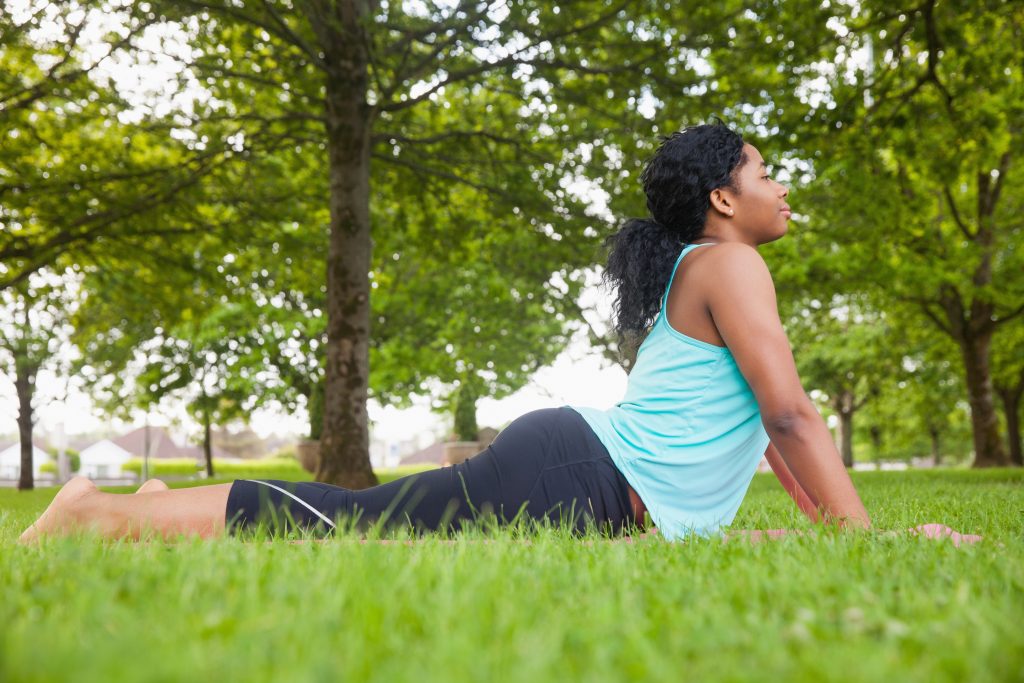
In vinyasa yoga, Cobra Pose is usually considered a basic posture for beginners. Alternately, Upward Facing Dog, an intermediate pose, is regularly taught in a vinyasa sequence. In vinyasa, either of the poses can be used interchangeably during transition, though they are distinctly different. Due to the quickened nature of a vinyasa practice, these poses are usually held only for the length of an inhalation. Because of this, many vinyasa students have not experienced a full range of extension in Cobra Pose, nor have they properly aligned their Upward Facing Dog. However, when practiced regularly and correctly, both Cobra Pose and Upward Facing Dog build spinal strength and flexibility, allowing students of all levels to participate in flow-style vinyasa practices.
What Is Vinyasa Yoga?
 Vinyasa yoga has its roots in Ashtanga yoga; a style of practice developed by K. Pattabhi Jois in the mid-twentieth century, which is considered to be the backbone of modern Western yoga. Ashtanga yoga’s formulated sequence of poses is preformed in a specific order, whereas vinyasa yoga is a freeform practice with limitless variations. Both styles are energetic, dynamic, and steadily paced. The term vinyasa is a linkage of two Sanskrit words: nyasa, meaning “to place”, and vi, “in sacred accord.” To vinyasa, therefore, is to preform poses in accordance to the breath, each transition synchronized with either an inhalation or exhalation.
While a vinyasa style class known for its flowing sequences, its claim to fame is the transition of Chaturanga to Upward Facing Dog to Downward Facing Dog. In the heighted pace of a one-breath-one-pose setting, learning the mechanics of a proper Upward Facing Dog often requires a greater length of time then allotted for in a general vinyasa practice. Due to the highly mobile structure of the hand, elbow, and shoulder, an improperly aligned Upward Facing Dog places the practitioner at a physical disadvantage. Because we often misuse our hands and arms in computer-related activities, it is essential that we execute the vinyasa transition, particularly Upward Facing Dog, with precision and awareness. Because the vinyasa transition can occur with frequency, taking the time to learn proper alignment, and to build the supportive muscles of the spine, is important to prevent injury. To this end, Cobra Pose offers a well-suited alternative to Upward Facing Dog, and prepares the body for the rigors of vinyasa.
Cobra Pose
Cobra Pose is a fundamental posture within a solid asana practice. As a floor pose, it is both accessible to beginners and well suited for daily practitioners. Cobra Pose can be used during a vinyasa sequence as a substitute for Upward Facing Dog without breaking the flow, offering a variation that is gentler on the back, shoulders, neck, and wrists. To practice Cobra Pose, lie down on the floor with the stomach downward. Press the hands flat on the floor on either side of the ribcage, just below armpit level. Curl the toes under, and while keeping the ankles together, pull the heels of the feet back, lifting the knees from the ground. With an inhalation, lift the chest and upper back upwards. With an exhalation, roll the shoulders back and downwards. Keep the entire abdominal sheath on the floor while pressing the chest forwards, creating traction by firmly pressing the palms down and pulling the elbows back and in. When done correctly, Cobra Pose stretches and strengthens the upper back, chest, and shoulders, while also developing the musculature of the upper, middle, and lower back, as well as the upper arms. To fully experience the benefits of this pose, it should be practiced daily to build strength, flexibility, and the habit of good alignment.
Upward Dog Pose
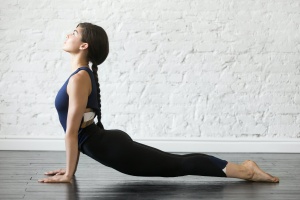 Building from Cobra Pose, Upward Facing Dog strengthens the entire spine, deepens flexibility, and is incredibly rejuvenating. When practiced properly, Upward Facing Dog can elevate spinal stiffness, aches, and pains. To practice Upward Facing Dog, lie on the floor with the stomach downward. Press the hands on the floor on either side of the ribcage, just below armpit level. Push the hands down and straighten the elbows, lifting the body off of the floor, leaving only the tops of the feet and the palms of the hands on the mat. Engage the muscles of the legs; lift the chest forward and up, drawing the shoulders and upper back downward. Look forward, or upward, if it causes no tension. Press the pelvis forward, and the back of the knees upward as much as possible. Because all of the body’s weight rests in the hands and on the tops of the feet, avoid sinking into the joints of the shoulders and lower back by actively lifting forward and up. Engage the muscles of the legs and arms as much as possible, and avoid bending the knees or leaving them on the floor to prevent injury or soreness in the lower back.
Why Building Strength From Cobra Pose To Upward Facing Dog
While it might seem that established practitioners of vinyasa yoga prefer Upward Facing Dog as the gold standard of backbends, Cobra Pose is a viable alternative that builds strength, flexibility, and healthy alignment. Far from being a simplified variation of Upward Facing Dog, Cobra Pose offers tremendous benefits both physically and subjectively, especially with daily practice. When properly preformed, both poses are fundamental components of a healthy asana practice. It is important, therefore, to take the time to learn proper application and alignment of these poses, especially in vinyasa practices where the length of time spent in the pose may only be a breath. When the alignment becomes second nature, and the breath is steady, both Cobra Pose and Upward Facing Dog can be preformed smoothly, and used interchangeably as needed.
 The yin practice sets us up to tap into a
  Our body’s tissues can experience a revival of sorts with a long soak the same way that an old, stiff sponge can. As you hold a yin pose, the slow release that takes you deeper into the pose is the tissues lengthening, hydrating, and becoming more pliable. Many times you even can sense the tissues being stretched, squeezed, twisted, and compressed if you really focus your attention on the physical body. A yin practice has the potential to leave you feeling as though you’ve had a massage.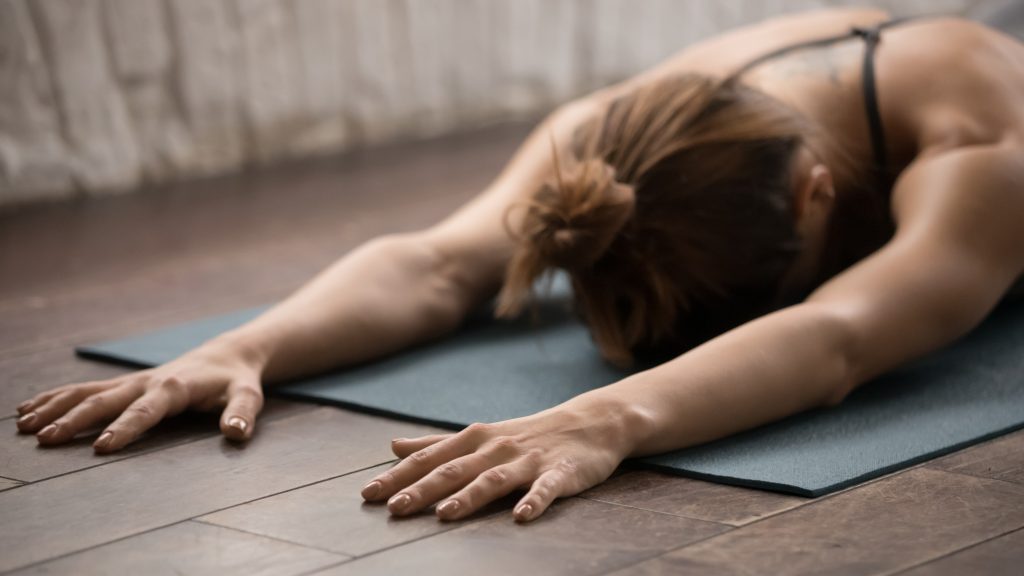
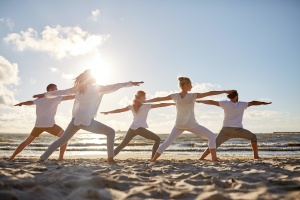
 The ancient Chinese concept of yin and yang relates to the idea that within two opposing forces, there is balance. Certain styles of exercise can be categorized as either yin or yang according to their qualities. Workouts such as running, HIIT, and heat building yoga classes are considered yang because they are active, sweat-inducing, dynamic, and repetitive. The principles of yang relate to masculinity, heat, and movement. Yin is the feminine force and is related to stillness, rest, balance, cooling, and release. Exercises that are based in stretching and relaxation are yin in nature. If yang-style workouts are overused without the balance of yin, there is the potential for the body to become overworked, injured, or fatigued. Bringing yin yoga to your movement routine will help with improved flexibility and relaxation.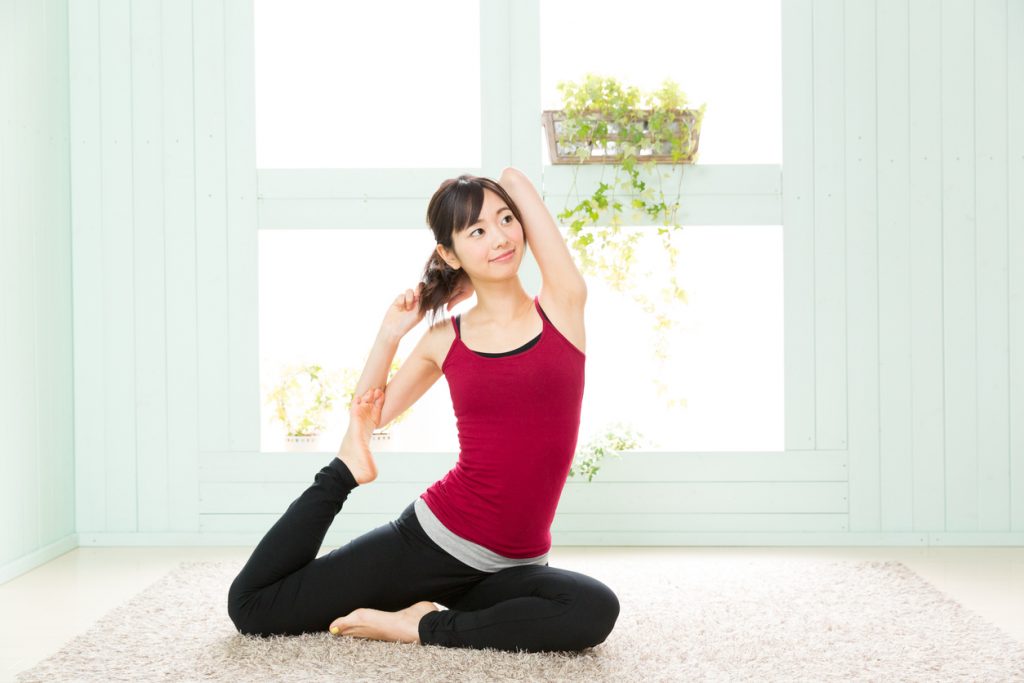
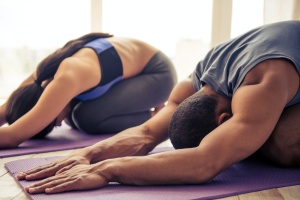 Stress management isn’t a luxury. It’s part of our inherent and very necessary survival skill sets as human beings. We have no choice but to adapt in many situations, including the one we’re in right now. There are countless avenues to alleviating stress and anxiety, and not all of them are healthy. If we don’t take a conscious effort to explore and identify healthy relief that works for us, we’re likely to reach for vices that provide temporary but dangerous and harmful results. Smoking, drinking, or spending hours bingeing on Netflix are all very common “stress relievers” that don’t do us any favors in the long run—or even in the short run.
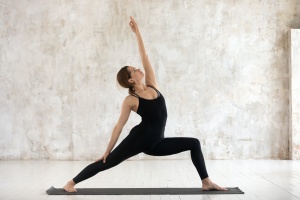 One of the pillars of meditation is concentrating on living in the present. It’s extremely difficult to do, so simply trying not to get flustered is a big part of the practice. My personal meditation practice usually follows my yoga practice or takes place first thing in the morning. I’ve tried out several types of meditation in my life, and I’ve found that candle meditation (staring at the base or tip of a flame in the dark) and mala beads work best for me.