Chaturanga Dandasana is a staple of Vinyasa and many other types of yoga, but a lot of practitioners make little mistakes. And once you start doing something in a not so great way, that tends to stick. Hopefully, youâve had teachers that stop and break down Chaturanga. Itâs not something thatâs easy to âgetâ just like that. Many people who have been practicing for years can benefit from a little tune up from time to time.
What is Chaturanga?
Chaturanga begins in plank pose. However, you can train your body and mind to shift into Chaturanga from plank simply by moving forward about one inch. Your wrists should be directly under your shoulders while in plank, but prep for Chaturanga requires you to be slightly forward.
Itâs probably been drilled into your head that your elbows need to be in when you lower halfway. Make sure you can feel your elbows brush against your ribs.
The biggest issue many people have is their definition of âhalf-way.â This is where a mirror can come in very handy. Some people donât go far enough, and others are making things harder on themselves (and their joints) by just barely hovering above their mat. Many people droop in the middle at this point, which gives your back zero support.
Itâs often helpful to exaggerate your hips when learning (or re-learning) Chaturanga. It might feel like your hips are way up in the air, but if you check int he mirror, theyâre actually right where they should be. And yes, this will require more work from your muscles. Simply holding at the half-way point, properly, is enough for many people.
Even after practicing for several years, I prefer to start out my Chaturangas with a baby cobra. It stretches in a different way than the full Upward Facing Dog. It also helps my body get into the Chaturanga rhythm.
I encourage my students to mix and match baby cobra with Cobra and Upward Facing Dog. Listen to your body. Feel what these different poses can give you. Remember that yoga isnât about getting to the next crazy looking asana, but about exploring your body and getting the full benefits from every breath and pose.
Yoga Breathing Explained
Any woman whoâs given birth can tell you that breath makes a huge difference in pain management. What you might not realize is that the breathing you learn in yoga can help you in many facets of your life. Some people faithfully go to their class of choice and wait impatiently to âget into things.â Theyâre there for the strengthening and flexibility that the asanas offer, and thatâs fine for them. However, these types of practitioners are missing out on a very important half of yoga.
Linking breath with movement is one definition of yoga. Itâs not just âmovement.â If youâre not practicing the breathing half of things, youâre only doing half of yoga.
Yogic breathing has helped me in every complementary facet of my life from my years as an amateur boxer to marathon running and my HIIT training. Itâs a critical training aspect of every sport, whether youâre in an intramural league or a professional. However, itâs also a crucial part of other, less active parts of my life. Recently, I had a fairly large cover up tattoo done on my spine. Notoriously a painful part of the body for ink work, I was 12 years overdue to cover up two tattoos that I got on a whim.
Even as a practicing yogi, I was surprised by how quickly I naturally went to my breathing to manage the pain. It gave me something to focus on. Breathing out the pain helped move me from dealing with the pain, to managing the pain, to finally accepting the pain so much that I managed to drift in and out of sleep during the last two hours in the chair.
This is just one example of how your practice might positively influence other aspects of your life. Itâs often said the biggest challenge is just getting to the mat. But what are you going to use with what youâve learned there?

Think of âverbal cues as a practice of connecting with people through language. Our words will likely fall flat from time to time, but weâll always have the opportunity to try again. If a cue results in confusion or students move in a way we didnât intend, thatâs helpful information. In that situation, try a different approach instead of moving on. Self-correcting in the moment reveals our leadership and care. Our studentsâ responses to our cues are feedback on the cue itself and are not judgements on our value as yoga teachers. Here are some tips for improving our communication skills in class:
When it comes to âverbal cues, less is more. We donât want to muddy our key message with a lot of words and itâs important to give our students time in the poses without us talking so they can turn inward and listen to whatever surfaces. Keep it clear and concise, and allow the combination of breath and asana to work its magic.
Yoga happens to be an activity that actually has all many
âWeâve seen a significant uptick in referrals from psychologists, especially for patients with anxiety,â says Steve Hickman, PsyD, executive director of the University of California San Diego Center for Mindfulness, where health care practitioners â including psychologists â conduct mindfulness research and offer classes for patients. âTherapists and doctors are rethinking their attitudes toward meditative approaches largely because thereâs a persuasive body of evidence showing that [these modalities] can help with stress and mood disorders.â
Whatâs the first thing a yoga or meditation instructor usually asks you to do at the beginning of a class? Usually, itâs to begin focusing on your breath. Breathing techniques, or Pranayama, are a powerful tool to regain
Practice as many cycles as you’d like, I would recommend at least 9 cycles if you can. If you can increase the length of your cycles you are welcome to do so, you may find that your lung capacity and breath control increase with practice. Once you are finished with your cycles take a couple deep rounds of breath regularly. How do you feel?


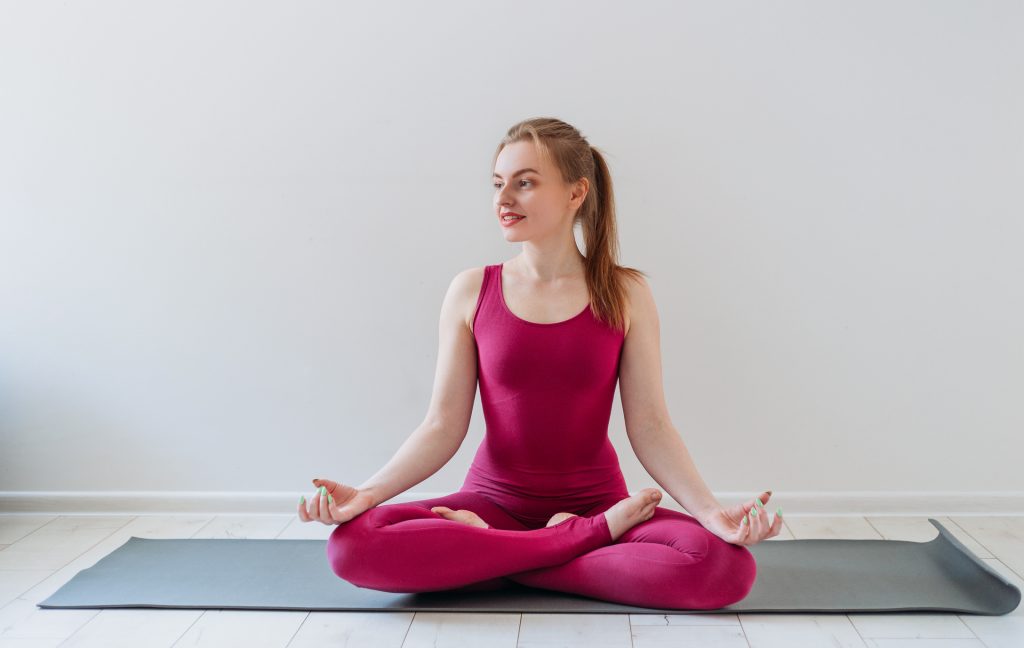
Most commonly today in modern Western society, meditation is the term used to describe the technique of training your mind to be calm, similar to how you go to the gym to train your body to be strong and flexible. Meditation refers to a practice that brings the practitioner into a state of consciousness, connectedness, and profound awareness. Usually attained by sitting still, focusing on breathing, and clearing of erroneous thoughts. It is often described as the journey into stillness, silence, and space. Meditation teaches us to look within ourselves, which ultimately deepens the connection we have to ourselves, and the entirety of life and existence.
Time spent in silence and stillness, connecting to oneâs own inner experience is often pushed further down on the To-Do list in the life of a busy, modern person. As the old Zen saying goes, âYou should sit in meditation for 20 minutes a day, unless youâre too busy; then you should sit for an hour.â While not everyone has a full hour to practice meditation, starting small with a realistic goal is beneficial. A three or five-minute meditation can increase a state of calm and peace amidst a world that never sleeps.
Yoga has been widely recognized as a way to 
This is another foundational pose that lengthens the spine, strengthens the arms and shoulders and stretches the hamstrings. This pose is considered an inversion, helping blood circulate to the brain. This inversion of your blood flow is instantly energizing, and counters symptoms of anxiety and depression.
This backbend and chest opener help open the front line of the body. In bridge pose, the back of the neck, where we naturally hold a lot of tension, is stretched. Holding this pose can relieve that tension and ease symptoms of depression.
Dropping the head below the heart has a calming effect on the mind and body. In a standing forward fold, the body can quickly relax and get a stretch of the entire back line: from the hamstrings all the way up to the back of the neck. The pose may also help ease headaches and chronic fatigue.

After youâve relaxed in Childâs Pose for several minutes, slowly transition to Happy Baby Pose. To do this, walk your fingers toward your torso as you lift your upper body from the mat. Then, untuck your feet from beneath your sit bones and lie flat on your back with your knees bent. Bring your knees into your chest and grip the outsides of your
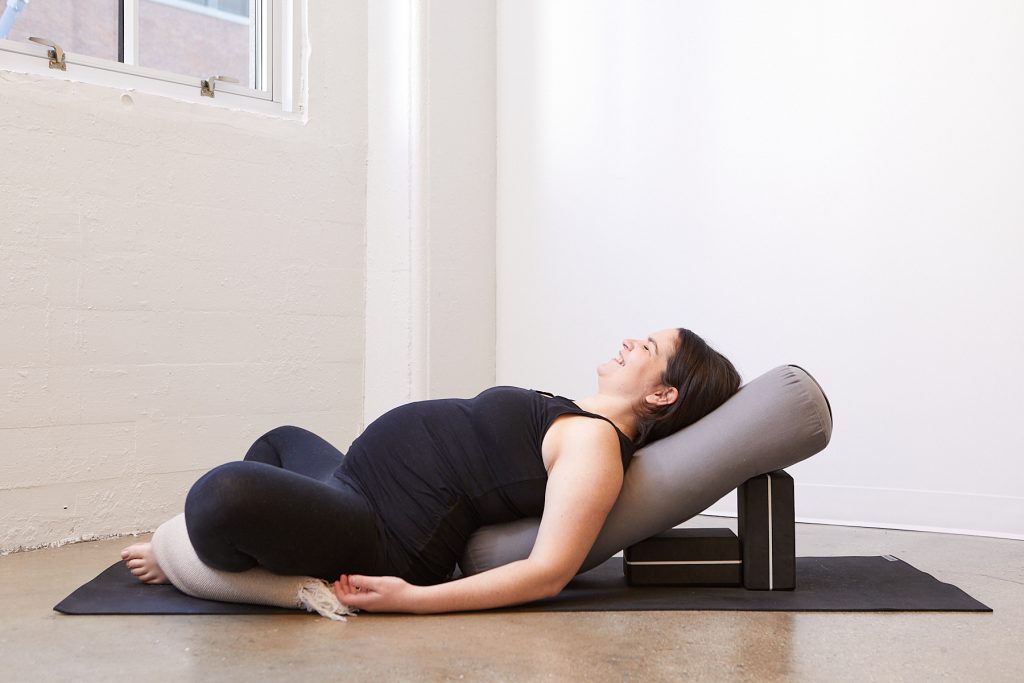
From the previous asana, release your legs onto the mat with your knees still bent and opened outwards to each side. Make sure to position your feet close to your pelvis Bring the soles of your feet to touch. Remain lying down and allow your arms to rest by your side or on your abdomen. Close your eyes and focus on taking deep breaths for up to 5 minutes in this classic, restorative asana. The benefits include stimulation of the abdominal organs, circulation, and heart as well as a gentle stretch of the thighs and knees.
Transitioning from Reclining Bound Angle Pose, position yourself close to a wall and facing the wall, extend your legs up against it. Your back should remain straight and horizontal with your arms resting wherever they are comfortable. In this asana, your sit bones should be either touching the wall or close to it while supporting your legs and your body should be creating a 90 degree angle. Remain in this position for at least 5 minutes as you continue to breathe deeply and steadily. The benefits of this asana include increased circulation, a deep stretch in the lower back and hamstrings, stress relief, and relaxation of the pelvic floor. To exit this pose, slowly bend your knees and shift them to one side as you come to a seated position.
Begin by sitting on the mat with a straight back and your legs extended in front of you. Feel free to sit on a folded blanket or a bolster for additional support. As you inhale, reach your arms up towards the sky and with a deep exhale, fold your body from your hips as you attempt to reach your knees, feet, or even toes. A key thing to remember is that the goal is not to force your fingertips to your toes; instead, focus on bringing your chest to your thighs, nose to your knees, and forehead to your legs during this stretch. With every exhale, allow tension to be released from your body and surrender even further in this asana. Some benefits of
Letâs end this sequence with a mindful asana to eliminate any meaningless thoughts and ground yourself. Keep your legs extended in front of you on the mat with your arms resting by your sides with your palms facing up. Make sure that your back is straight and there is no arch in your lower back as you lie flat on the mat. Close your eyes and feel your body sink as it becomes heavier with every breath. Corpse Pose is a favorite asana for many people due to its restorative nature. Corpse Pose is a pose of total relaxation which requires remaining in a neutral position, often a challenging task. The purpose of corpse pose is to consciously calm the mind which in turn, calms the nervous system and lowers blood pressure resulting in a state of ultimate serenity. The duration of this asana depends on your preference, however 10-20 minutes are recommended.