We are indeed in a unique and transformational time as we witness our world’s response to the Coronavirus. There has been a complete upheaval to daily life, and it has left many of us without regular avenues of stability. This has caused stress and panic for many people, as abrupt uncertainty tends to do. So, it is vital now more than ever to maintain health and wellness on all levels, and to remember that everything in life, including the challenges, is an opportunity for us to develop deeper levels of strength, love, and compassion. Yoga, Reiki, breathing techniques, and other mindfulness practices teach us how to move calmly through the ups and downs of existence with more grace and awareness. Through these holistic pranayama practices we remember how to deactivate fear-based mindsets and activate calm and clarity of mind.
How Yoga Can Help
 What’s the first thing a yoga or meditation instructor usually asks you to do at the beginning of a class? Usually, it’s to begin focusing on your breath. Breathing techniques, or Pranayama, are a powerful tool to regain control of anxious thought patterns. Pranayama has physiological benefits as well, by engaging the parasympathetic nervous system which science tells us can slow down heart rate and increase digestion as the body becomes more relaxed. Typically, when we are stressed, breathing becomes more shallow and rapid, and heart-rate increases. As you can imagine this causes a chain of events physiologically, that can lead to increased anxiety and even ailments such as dizziness or nausea. If we remember to pause, and take a slow breath, we can regain control over our system.
Regulated breathing is an unbelievably powerful tool and meditation technique that has been utilized by yoga practitioners for at least two-thousand years or more. Pranayama is a branch of the 8-Limbed yogic path, or yogic guidelines, and is a key process in the overall practice of yoga. The word “prana” translates roughly to life-force energy, and the word “yama” roughly translates to restraint. Therefore, Pranayama goes beyond the actual breathing techniques themselves, and truly describes the connection of life-force energy within the body. Breathing exercises are practiced to keep the body clear from physical, energetic, and emotional blockages, so that your life force energy becomes healthy and balanced. Let’s take a look at one of my favorite breathing techniques for stress relief, called Nadi Shodhana, or alternate nostril breathing.
Nadi Shodhana Pranayama
The word “nadi” generally translates to channel, and “shodhana” approximately translates to purifying. Therefore, Nadi Shodhana is a potent breathing technique for clearing the inner subtle channels of the body and has been known to have an overall balancing effect.
How To Practice
1. Press your pointer and middle finger between your eyebrows, take one deep cycle of breath.
2. Then press your thumb against your right nostril and inhale through your left nostril for a count of 4-8 seconds, hold at the top of your inhale plug both nostrils, press your left nostril with your ring and pinkie finger to exhale through your right nostril for the same count, pause at the bottom of your exhale.
3. Keep fingers as they are and breathe through the right nostril to repeat the cycle in the other direction.
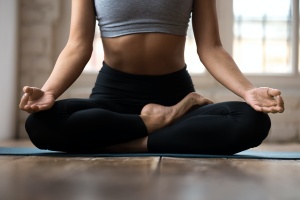 Practice as many cycles as you’d like, I would recommend at least 9 cycles if you can. If you can increase the length of your cycles you are welcome to do so, you may find that your lung capacity and breath control increase with practice. Once you are finished with your cycles take a couple deep rounds of breath regularly. How do you feel?
Simply focusing on slowing down your breath is incredibly beneficial as well. Often referred to as Belly Breathing, as you inhale let your belly extend with a gentle hold at the top of your breath, and keep your shoulders relaxed. As you exhale draw your belly back in towards your spine, pause at the bottom of your breath. Go through as many cycles as you would like, and keep your jaw as relaxed as possible. It can be helpful to place your hands on your lower belly and chest, so you can feel where your breath is going first.
Learn More About Pranayama With YogaRenew
Remember, you have the power to shift your energy and mindset, it takes practice. Take 5 slow, deep breaths right now. Your mind is clear and calm, you are in control. If you want to learn more about mindful practice, contact YogaRenew.
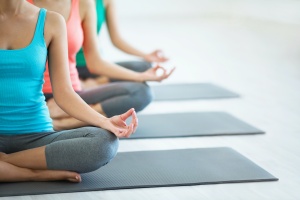
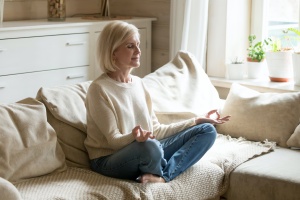
 Most commonly today in modern Western society, meditation is the term used to describe the technique of training your mind to be calm, similar to how you go to the gym to train your body to be strong and flexible. Meditation refers to a practice that brings the practitioner into a state of consciousness, connectedness, and profound awareness. Usually attained by sitting still, focusing on breathing, and clearing of erroneous thoughts. It is often described as the journey into stillness, silence, and space. Meditation teaches us to look within ourselves, which ultimately deepens the connection we have to ourselves, and the entirety of life and existence.
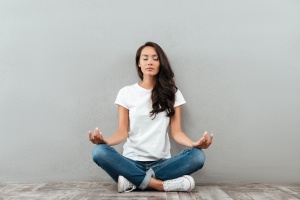 Time spent in silence and stillness, connecting to one’s own inner experience is often pushed further down on the To-Do list in the life of a busy, modern person. As the old Zen saying goes, “You should sit in meditation for 20 minutes a day, unless you’re too busy; then you should sit for an hour.” While not everyone has a full hour to practice meditation, starting small with a realistic goal is beneficial. A three or five-minute meditation can increase a state of calm and peace amidst a world that never sleeps.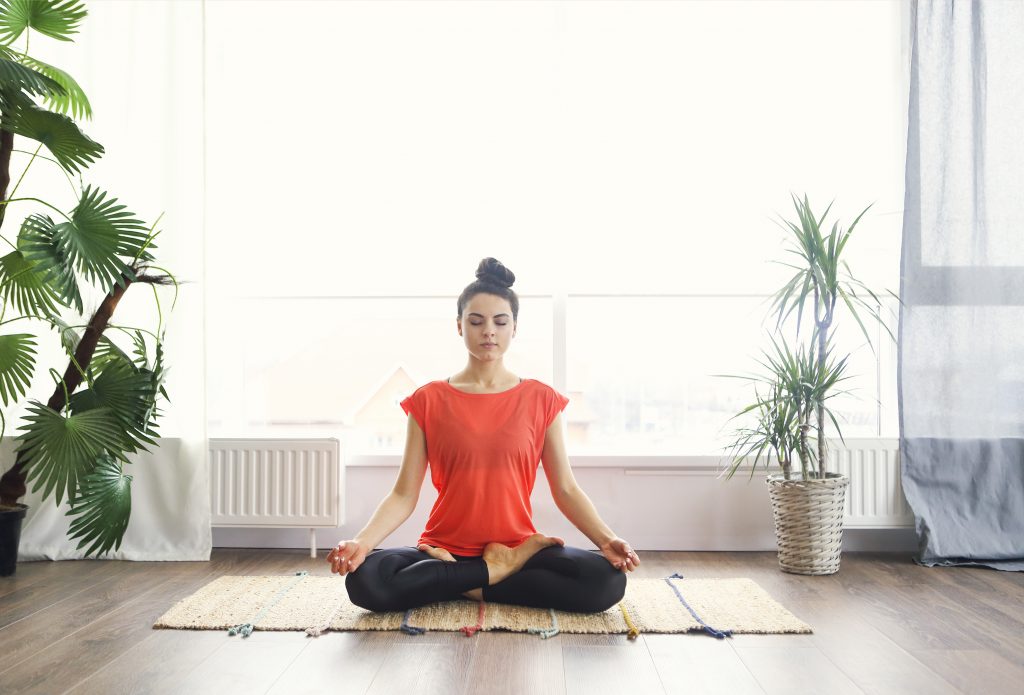
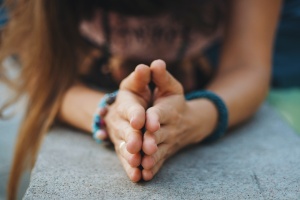 Yoga has been widely recognized as a way to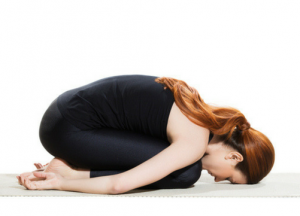
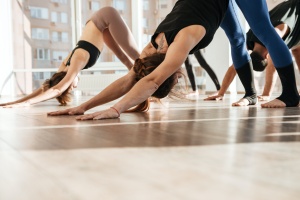
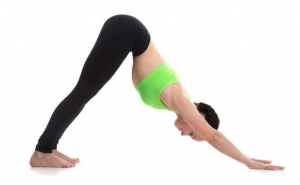 This is another foundational pose that lengthens the spine, strengthens the arms and shoulders and stretches the hamstrings. This pose is considered an inversion, helping blood circulate to the brain. This inversion of your blood flow is instantly energizing, and counters symptoms of anxiety and depression.
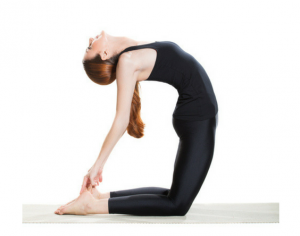 This backbend and chest opener help open the front line of the body. In bridge pose, the back of the neck, where we naturally hold a lot of tension, is stretched. Holding this pose can relieve that tension and ease symptoms of depression.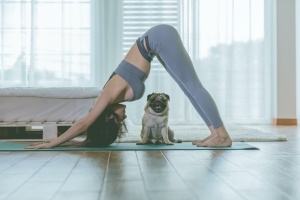
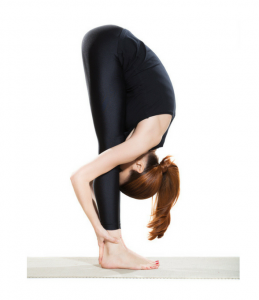 Dropping the head below the heart has a calming effect on the mind and body. In a standing forward fold, the body can quickly relax and get a stretch of the entire back line: from the hamstrings all the way up to the back of the neck. The pose may also help ease headaches and chronic fatigue.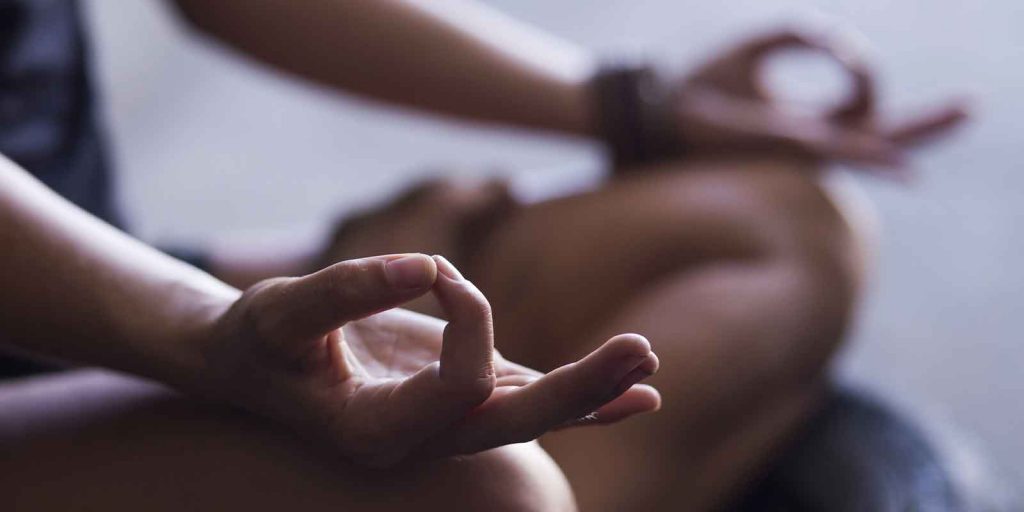
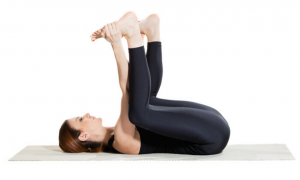 After you’ve relaxed in Child’s Pose for several minutes, slowly transition to Happy Baby Pose. To do this, walk your fingers toward your torso as you lift your upper body from the mat. Then, untuck your feet from beneath your sit bones and lie flat on your back with your knees bent. Bring your knees into your chest and grip the outsides of your
 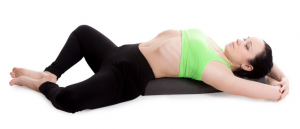 From the previous asana, release your legs onto the mat with your knees still bent and opened outwards to each side. Make sure to position your feet close to your pelvis Bring the soles of your feet to touch. Remain lying down and allow your arms to rest by your side or on your abdomen. Close your eyes and focus on taking deep breaths for up to 5 minutes in this classic, restorative asana. The benefits include stimulation of the abdominal organs, circulation, and heart as well as a gentle stretch of the thighs and knees.
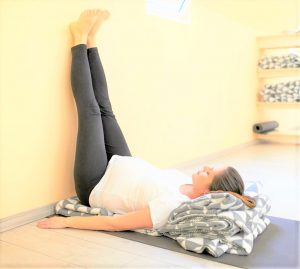 Transitioning from Reclining Bound Angle Pose, position yourself close to a wall and facing the wall, extend your legs up against it. Your back should remain straight and horizontal with your arms resting wherever they are comfortable. In this asana, your sit bones should be either touching the wall or close to it while supporting your legs and your body should be creating a 90 degree angle. Remain in this position for at least 5 minutes as you continue to breathe deeply and steadily. The benefits of this asana include increased circulation, a deep stretch in the lower back and hamstrings, stress relief, and relaxation of the pelvic floor. To exit this pose, slowly bend your knees and shift them to one side as you come to a seated position.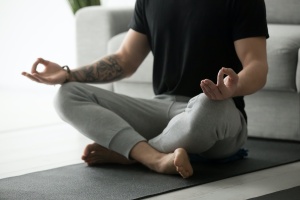
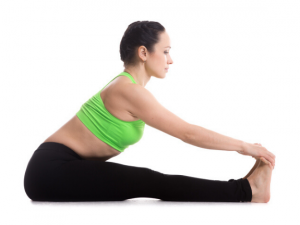 Begin by sitting on the mat with a straight back and your legs extended in front of you. Feel free to sit on a folded blanket or a bolster for additional support. As you inhale, reach your arms up towards the sky and with a deep exhale, fold your body from your hips as you attempt to reach your knees, feet, or even toes. A key thing to remember is that the goal is not to force your fingertips to your toes; instead, focus on bringing your chest to your thighs, nose to your knees, and forehead to your legs during this stretch. With every exhale, allow tension to be released from your body and surrender even further in this asana. Some benefits of
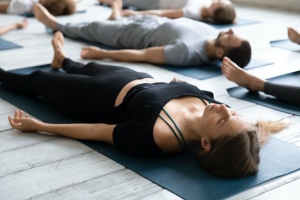
 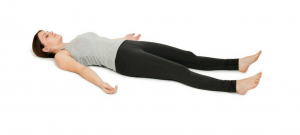 Let’s end this sequence with a mindful asana to eliminate any meaningless thoughts and ground yourself. Keep your legs extended in front of you on the mat with your arms resting by your sides with your palms facing up. Make sure that your back is straight and there is no arch in your lower back as you lie flat on the mat. Close your eyes and feel your body sink as it becomes heavier with every breath. Corpse Pose is a favorite asana for many people due to its restorative nature. Corpse Pose is a pose of total relaxation which requires remaining in a neutral position, often a challenging task. The purpose of corpse pose is to consciously calm the mind which in turn, calms the nervous system and lowers blood pressure resulting in a state of ultimate serenity. The duration of this asana depends on your preference, however 10-20 minutes are recommended.
 Savasana integrates asana and
  Creating a calming environment during the cool down portion of your class will subconsciously prepare your students for savasana. Dim the lights if possible, or turn them off completely. Slowly lower the volume of your regular music until it is mute prior to beginning your breath exercises. Similarly, begin to soften your instructional voice and slow your cadence as you bring your students into their final postures. I find that using the same words to guide my students to the floor, class after class, signals a state of relaxation, with each instruction slower and quieter than the last. Encourage your students to lie down quietly with minimal movement. Instruct them, practice after practice, to relax, to be still, and to let go. Finally, play a rhythmic selection of music especially reserved for savasana, ideally, without words that the mind can grab ahold of.
 This calls to attention the
  Tight hips or preexisting yoga injuries can cause knee pain or discomfort around the knee. The common instructions to maintain proper alignment in poses that involve bending the knees are to track the kneecaps over the second middle toe, but that is something that can vary from person to person, depending on their circumstances and goals of their practice.
 Sh!t happens: traffic, family issues, deadlines at work, a missed morning alarm clock… While the reasons may vary, tardiness is an occurrence that you can prepare for. Studio protocol varies. Some studios lock the door 15 minutes after class has begun. Some, like group exercise classes at a health club, have an open door policy. Once a late student has entered the asana room, it is the responsibility of the teacher to include them into the practice as smoothly as possible.
 Some attention seeking behaviors present themselves easily. There is the student who talks during class, either to you, or to other students. To respond to this student encourages on-going dialogue. To allow for conversation among your students during class is a distraction to others. In response, you can offer the direction of “