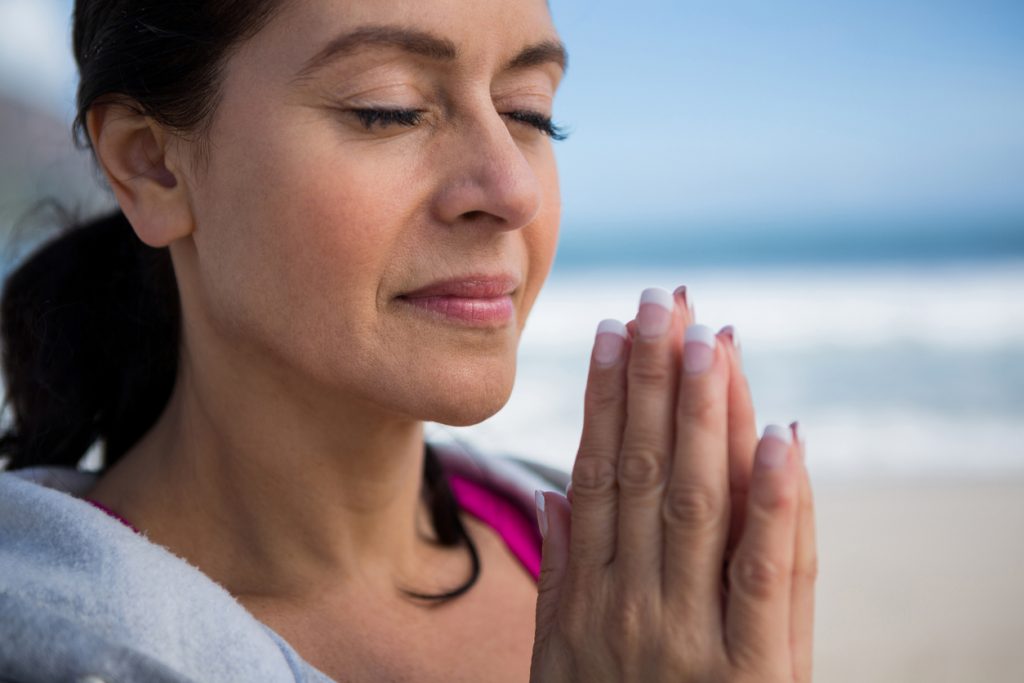
It can be easy to become uncentered due to things that occur in our daily lives. When we feel uncentered, we feel as though we’re being spread too thin in many different directions. Our minds can become crowded with thoughts and we can feel anxious or stressed in our bodies.
When left unchecked, prolonged stress can lead to diseases, lowered immunity, tiredness, fatigue, and burnout. Long term stress can also lead to depression, anxiety, and social or communication issues. Another important point to keep in mind is that how we react to stress determines how stressed we actually feel, as well as our outlook on life. For example, two people could be in the exact same stressful situation, but if one has learned to reframe that situation in a positive light—or learned how to react less to it—that person will have a completely different experience than the other.
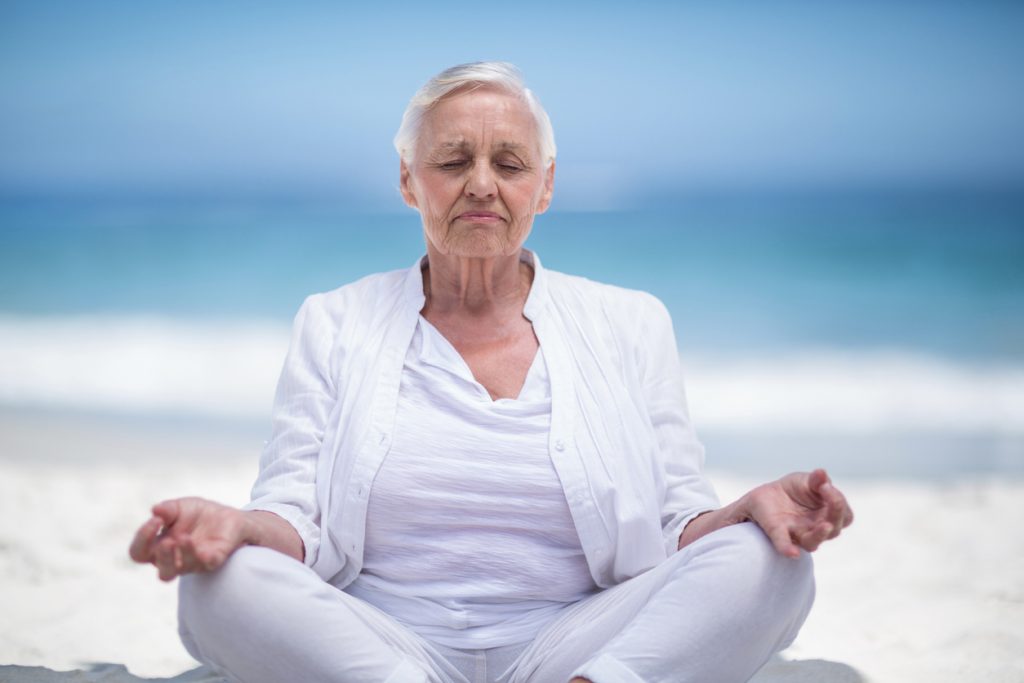
Regular yoga, pranayama, and meditation practice can help us to combat stress and help us with how we respond to stressful situations. By quieting the mind and allowing ourselves to be more deeply aware of the present moment, we can start to become more mindful of our emotions, our thoughts, and how we react to stressful situations. It’s important to take time each day to sit in stillness for a few moments to rediscover the place of centeredness in ourselves. As we practice sitting with this place of centering, we often find that we can access our centeredness more easily in times of chaos or stress. By strengthening our connection to it, we can allow this space of being centered to guide us in every moment. Some other ways we can return to our centers are taking walks daily, being in nature, eating healthy, journaling, yoga, breathwork, or meditation
5 Simple Centering Practices
By practicing calming the mind and building awareness of ourselves and the world around us, we gain dominion over our thoughts and our emotions.
Here are a few simple practices you can do today to help you feel more grounded in times of stress.
1. Centering Breath Practice
The simplest way to center in any moment of our lives is through our breath. The best part of this practice is that is easy and we can do it anytime we begin to feel stressed. To practice this centering breath practice, find a pace of breathing that feels good to you. Then, as you inhale, say the words I’m breathing in either out loud or internally. As you exhale, say the words I’m breathing out either out loud or internally. Repeat this up to a minute or longer. If you find that your mind wanders away, just gently bring your awareness back to this centering breath practice.
2. Sitting Grounding Practice
Grounding and feeling rooted helps us get in touch with feelings of stability and support. To practice, begin in a comfortable seated pose, with eyes either closed or open. Begin to center your mind with your breath; breathing deeply. Bring awareness to your sit bones and your connection with the earth beneath you. Observe how firm and supportive it is as you connect to it. Take several breaths in and out as you feel this connection deepening and begin to feel support and stability.
3. Counting Breath Practice
Focusing on our breath and breath practices can be a powerful way in which we can turn away from fear and move towards peace. To do this practice, begin in a comfortable seated position. Start off easily with a slow three-count inhale in and a slow three-count exhale out. Then, take a deep breath in for a count of three and hold for a second. After the hold, exhale slowly for a count of three. You can do this for up to a minute, and even extend the count for up to five seconds (five seconds inhaling and five seconds exhaling out, slowly).
4. Standing Grounding Meditation
In times of stress, this simple grounding meditation can allow us to come back to the present moment. To practice, begin standing tall in Mountain (Tadasana) with your legs hip distance apart. Bring awareness to your feet rooting down into the Earth and feel supportive energy rising up from the Earth into your bodies. Engage your core and your leg muscles and feel this energy rising up all the way to the crown of your head. Bring your hands to prayer position at your chest, take several deep breaths, and take a quiet moment to express gratitude and respect to our home, Earth.
5. Calming Peace Prayer Practice
Compassion has a powerful effect on our minds and how we feel. Practicing compassion can take us from feelings of fear to feelings of love and understanding. To practice, begin in Easy pose or a comfortable seated position with your spine upright. Bring your hands to Namaste or Anjali mudra at your heart center. Allow your heart center to open and fill with love and light. Repeat the following peace prayer mantra, either out loud or internally. Imagine that you are directing this mantra to the entire world:
Lokah samastah sukhino bhavantu
This ancient Sanskrit mantra translates to, “may all beings everywhere be happy and free.” Repeat this up to ten times and feel your heart radiating with love and peace for all beings in the world.
 Savasana integrates asana and
  Creating a calming environment during the cool down portion of your class will subconsciously prepare your students for savasana. Dim the lights if possible, or turn them off completely. Slowly lower the volume of your regular music until it is mute prior to beginning your breath exercises. Similarly, begin to soften your instructional voice and slow your cadence as you bring your students into their final postures. I find that using the same words to guide my students to the floor, class after class, signals a state of relaxation, with each instruction slower and quieter than the last. Encourage your students to lie down quietly with minimal movement. Instruct them, practice after practice, to relax, to be still, and to let go. Finally, play a rhythmic selection of music especially reserved for savasana, ideally, without words that the mind can grab ahold of.
 This calls to attention the
 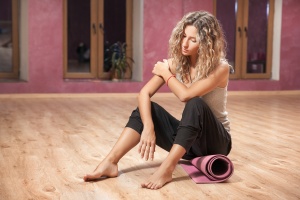 Tight hips or preexisting yoga injuries can cause knee pain or discomfort around the knee. The common instructions to maintain proper alignment in poses that involve bending the knees are to track the kneecaps over the second middle toe, but that is something that can vary from person to person, depending on their circumstances and goals of their practice.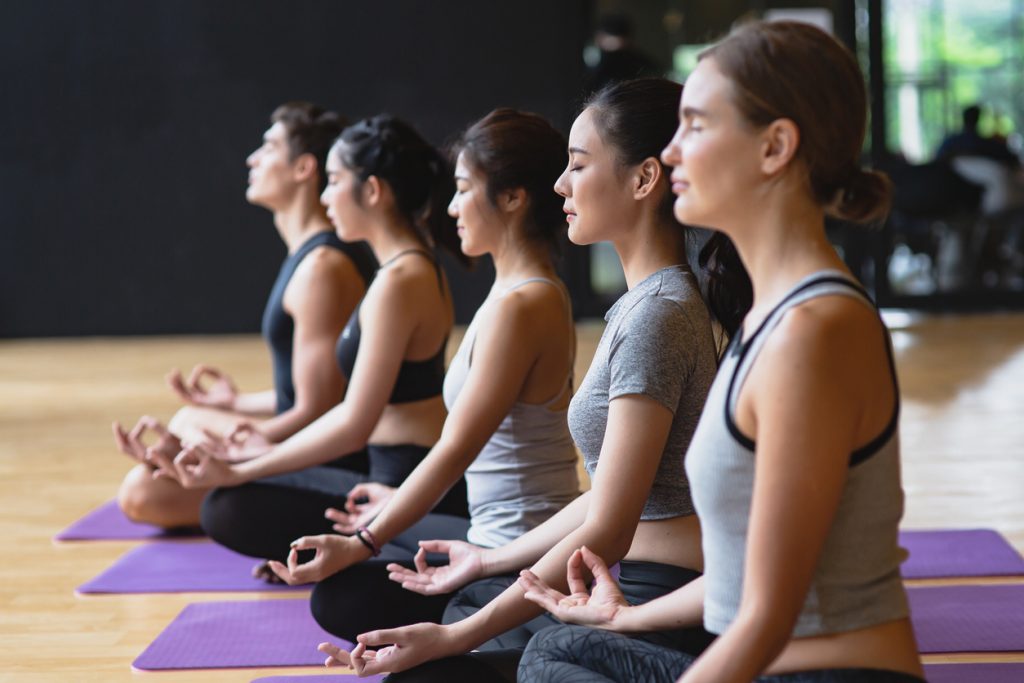
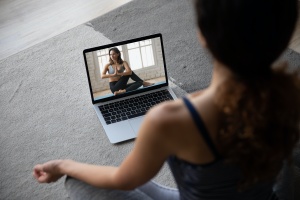 Sh!t happens: traffic, family issues, deadlines at work, a missed morning alarm clock… While the reasons may vary, tardiness is an occurrence that you can prepare for. Studio protocol varies. Some studios lock the door 15 minutes after class has begun. Some, like group exercise classes at a health club, have an open door policy. Once a late student has entered the asana room, it is the responsibility of the teacher to include them into the practice as smoothly as possible.
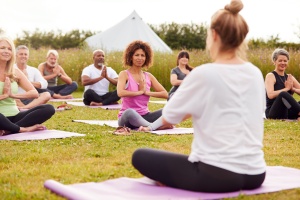 Some attention seeking behaviors present themselves easily. There is the student who talks during class, either to you, or to other students. To respond to this student encourages on-going dialogue. To allow for conversation among your students during class is a distraction to others. In response, you can offer the direction of “
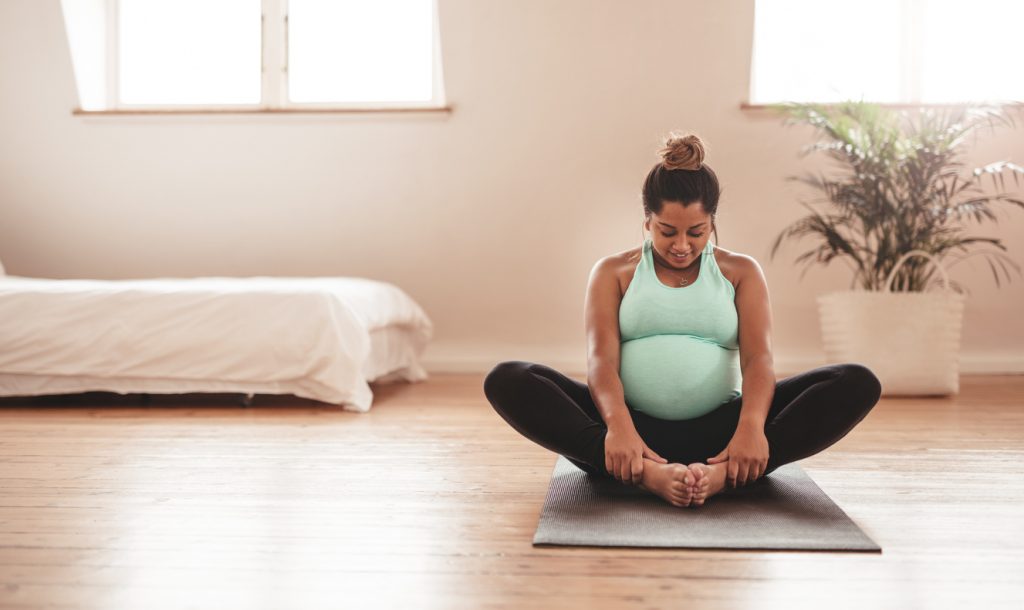
 Apana vayu is the subtle downward movement of energy within the body, and the key to maintaining a pregnancy to full term. Certain therapies, exercises, and herbs may disturb apana vayu. Therefore, the intent of this article is Ayurveda practices insight, rather than a treatment protocol. Due to the complexities of pregnancy, it is wise to leave treatments in the hands of experienced Ayurvedic practitioners.
 In her Ayurvedic essays, Terra Richardson of Cambridge University explains that a baby is physically conscious of his or her gestational development through the mother’s sense organs. Ancient Ayurveda acknowledges the development of the fetus’s sense organs through ceremonial rites preformed during different stages of pregnancy. According to Richardson, a modern-day pregnant woman can feed her baby’s senses by increasing the quality of her sensory input. She should “see beautiful and loving things, listen to loving and melodious sounds, touch pleasing things, and be touched in loving ways, taste wholesome tastes, and smell fragrant odors.” In other words, by surrounding herself in a beautiful, supportive, and loving environment, a mother’s womb becomes an equally safe, nourishing, and peaceful space for her baby’s consciousness to develop in.
 Outside of renouncing our Western lives for a medical school-length period of time with the masters of yore, how can we both learn Ayurvedic principles and inculcate them within our lives? Take an online quiz to determine our dosha (body constitution)? Self diagnose and treat perceived imbalances with herbs from our local health food store? Invest hundreds, maybe thousands of dollars on Ayurvedic treatments from a certified practitioner, only to find that such remedies are subtle, and require months, if not years of implementation to soothe our ailments?
 The basis of
 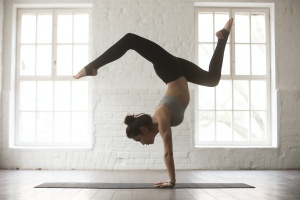 My daily practice begins with classical Surya Namaskar, which is repetitive cycle of twelve poses that both
  Now, close your eyes. Keeping the whole body engaged, breathe. Take full ujjayi breaths and scan the body once more, beginning at the big toes, and all the way up again, engaging the whole body with awareness and breath. Keeping the body engaged, relax the neck, jaw, face, brow, and scalp. Sense the duality of the engaged, firm, tight, tense, activated body, paired with breath awareness and a purposeful softening of the face. The practice of Tadasana provides an introspective experience aligned with the true purpose of yoga. Physically, the yogi is activated and engaged in the manifest world. Internally, the yogi is calm, focused, and relaxed. In this way, Tadasana embodies the essence of a yogi.