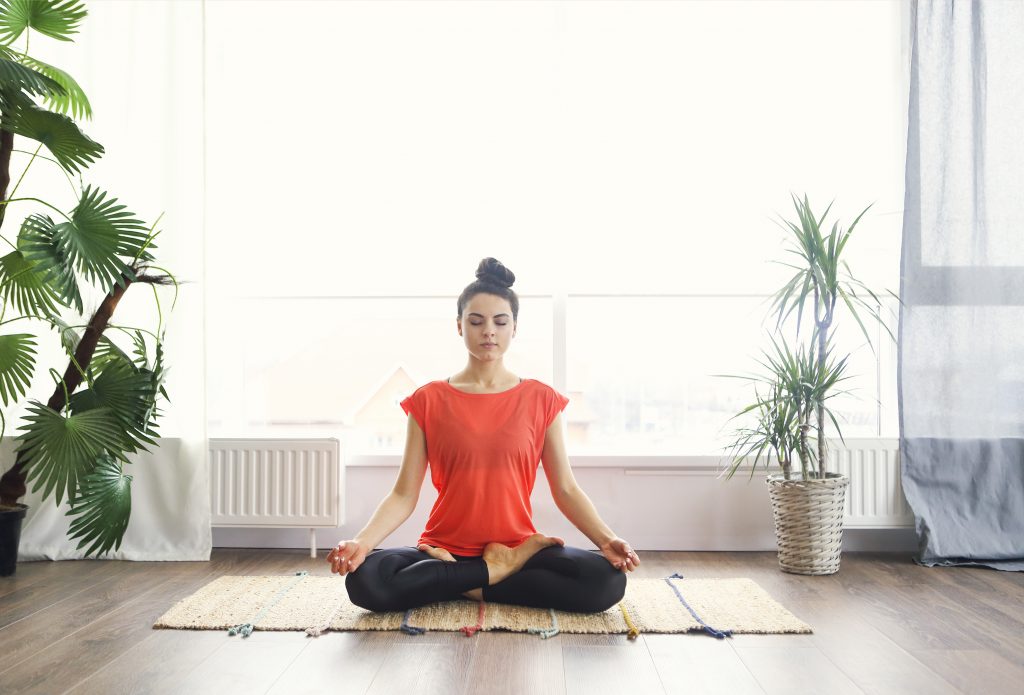
It’s not unusual for someone who suffers from anxiety to also suffer from depression, and vice versa. According to the Anxiety and Depression Association of America, major depressive disorder is the leading cause of disability in the United States for ages 15 to 44, affecting 6.7% of American adults 18 and older. On the other hand, Generalized Anxiety Disorder (GAD) affects 3.1% of the US population and often co-occurs with major depression.
 Yoga has been widely recognized as a way to manage symptoms of anxiety and depression, reportedly helping some practitioners adopt a more positive attitude toward life. Practicing yoga and moving the body has many physical benefits and there are also various benefits that yoga can have when it comes to mental health.
According to a Harvard University publication, yoga has been proven helpful in reducing anxiety and depression by helping regulate a person’s stress response system. With the ability to lower blood pressure and improve the quality of the breath, certain yoga poses in particular may help provide you with the means to cope with and alleviate anxiety and depression.
Here are some fundamental poses that help regulate the stress response system:
1. Child Pose
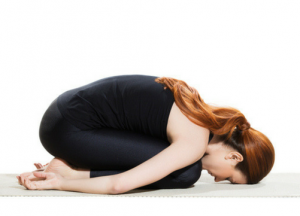
This basic posture helps relieve tension in the hips and lower back. By resting the forehead down on the ground or on a prop, the parasympathetic nervous system is stimulated, producing a relaxation response.
Find a child’s pose by starting in a table top position, on all fours. Bring your big toes together and your knees apart. Sit the hips back on the heels and rest the torso in between the knees and thighs. Reach your arms out in front of you and take 5-10 deep breaths. With each breath, try to expand the ribcage in every direction, sending the breath to your sides and to your back as well as the belly and the chest.
2. Downward Facing Dog
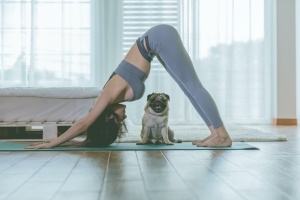
This is another foundational pose that lengthens the spine, strengthens the arms and shoulders and stretches the hamstrings. This pose is considered an inversion, helping blood circulate to the brain. This inversion of your blood flow is instantly energizing, and counters symptoms of anxiety and depression.
Start on the hands and knees. Tuck your toes under and lift the hips back and up, so your body is making an upside down ‘V’ shape. The feet should be hips-width distance apart but don’t worry if your heels don’t touch the floor. You can even bend your knees if you have tight hamstrings. Suck the belly in, firmly press the floor away and relax the neck and shoulders away from the ears. To warm up, peddle out the feet and bend one knee at a time. Then hold steady for 5 deep breaths.
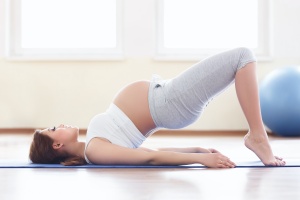
3. Bridge Pose
This backbend and chest opener help open the front line of the body. In bridge pose, the back of the neck, where we naturally hold a lot of tension, is stretched. Holding this pose can relieve that tension and ease symptoms of depression.
Start laying on your back. Bend the knees and place the feet flat on the ground hips-width apart. Reach your hands toward your heels. On an inhale, press into your feet and lift the hips up off the ground. Strengthen the thighs and tuck your shoulders underneath to help you press up higher. The hands can interlace behind your back, reach for the heels, or press into the ground. Hold for five breaths.
4. Standing Forward Fold
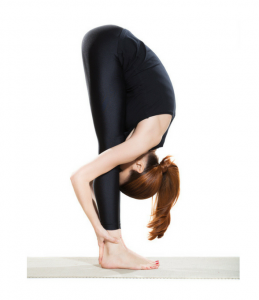 Dropping the head below the heart has a calming effect on the mind and body. In a standing forward fold, the body can quickly relax and get a stretch of the entire back line: from the hamstrings all the way up to the back of the neck. The pose may also help ease headaches and chronic fatigue.
Start standing with your feet hips-width apart and your hands on your hips. Bend your knees, hinge at the hips, and fold forward. Drop your hands onto the floor or grab opposite elbows and let your head and neck hang heavy. You can sway the torso from side to side, and try to stay inverted for about one minute.
In Summary Of Ways That Yoga Can Help
Research suggests that the practice of yoga modulates the body’s stress response and can be helpful for both anxiety and depression. The scientific study of yoga indicates that mental and physical health are not only closely related, but are essentially two sides of the same coin. In addition, the holistic approach and low-risk involved in practicing yoga makes it an appealing option to manage anxiety and depression.
 Begin by sitting on the mat with a straight back and your legs extended in front of you. Feel free to sit on a folded blanket or a bolster for additional support. As you inhale, reach your arms up towards the sky and with a deep exhale, fold your body from your hips as you attempt to reach your knees, feet, or even toes. A key thing to remember is that the goal is not to force your fingertips to your toes; instead, focus on bringing your chest to your thighs, nose to your knees, and forehead to your legs during this stretch. With every exhale, allow tension to be released from your body and surrender even further in this asana. Some benefits of
 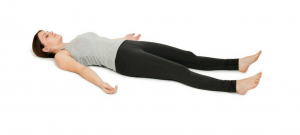 Let’s end this sequence with a mindful asana to eliminate any meaningless thoughts and ground yourself. Keep your legs extended in front of you on the mat with your arms resting by your sides with your palms facing up. Make sure that your back is straight and there is no arch in your lower back as you lie flat on the mat. Close your eyes and feel your body sink as it becomes heavier with every breath. Corpse Pose is a favorite asana for many people due to its restorative nature. Corpse Pose is a pose of total relaxation which requires remaining in a neutral position, often a challenging task. The purpose of corpse pose is to consciously calm the mind which in turn, calms the nervous system and lowers blood pressure resulting in a state of ultimate serenity. The duration of this asana depends on your preference, however 10-20 minutes are recommended.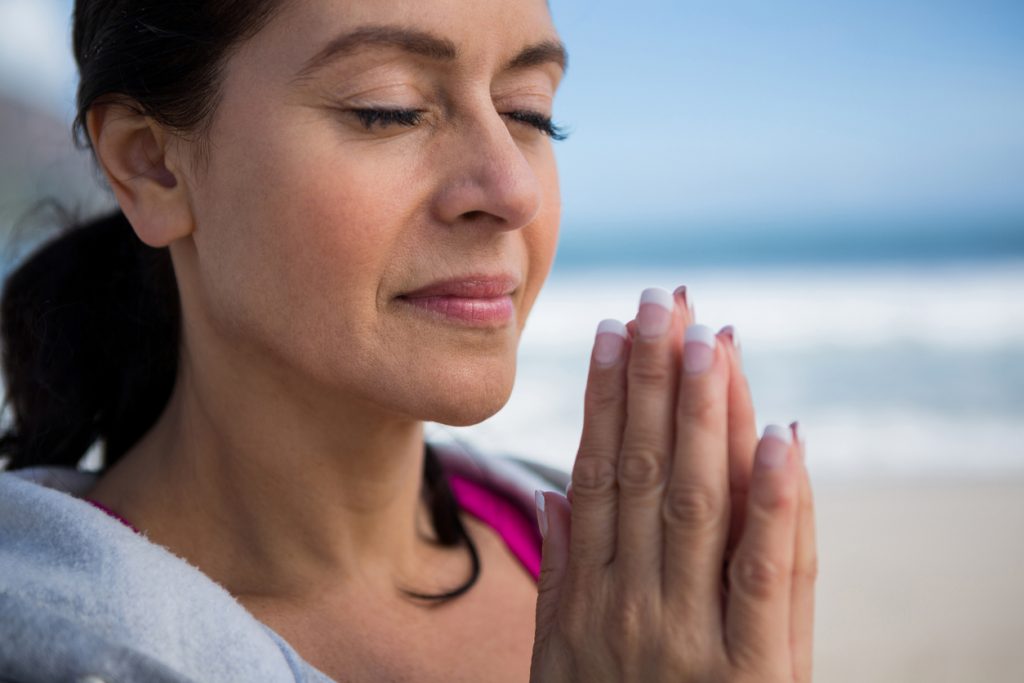
 Savasana integrates asana and
  Creating a calming environment during the cool down portion of your class will subconsciously prepare your students for savasana. Dim the lights if possible, or turn them off completely. Slowly lower the volume of your regular music until it is mute prior to beginning your breath exercises. Similarly, begin to soften your instructional voice and slow your cadence as you bring your students into their final postures. I find that using the same words to guide my students to the floor, class after class, signals a state of relaxation, with each instruction slower and quieter than the last. Encourage your students to lie down quietly with minimal movement. Instruct them, practice after practice, to relax, to be still, and to let go. Finally, play a rhythmic selection of music especially reserved for savasana, ideally, without words that the mind can grab ahold of.
 This calls to attention the
  Tight hips or preexisting yoga injuries can cause knee pain or discomfort around the knee. The common instructions to maintain proper alignment in poses that involve bending the knees are to track the kneecaps over the second middle toe, but that is something that can vary from person to person, depending on their circumstances and goals of their practice.
 Sh!t happens: traffic, family issues, deadlines at work, a missed morning alarm clock… While the reasons may vary, tardiness is an occurrence that you can prepare for. Studio protocol varies. Some studios lock the door 15 minutes after class has begun. Some, like group exercise classes at a health club, have an open door policy. Once a late student has entered the asana room, it is the responsibility of the teacher to include them into the practice as smoothly as possible.
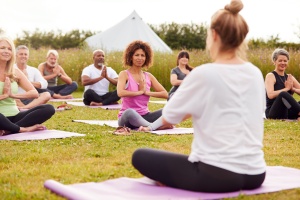 Some attention seeking behaviors present themselves easily. There is the student who talks during class, either to you, or to other students. To respond to this student encourages on-going dialogue. To allow for conversation among your students during class is a distraction to others. In response, you can offer the direction of “
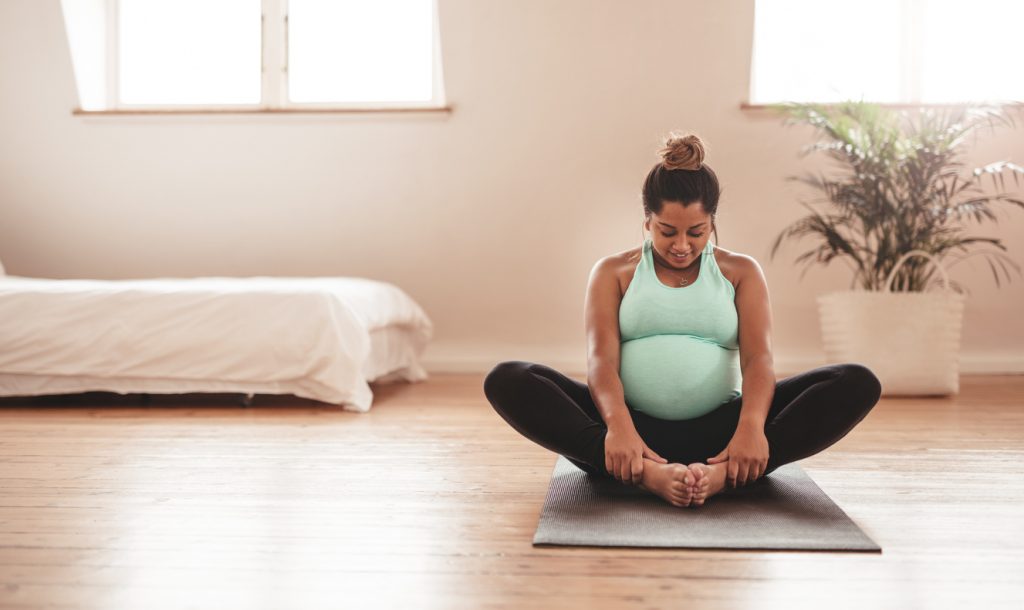
 Apana vayu is the subtle downward movement of energy within the body, and the key to maintaining a pregnancy to full term. Certain therapies, exercises, and herbs may disturb apana vayu. Therefore, the intent of this article is Ayurveda practices insight, rather than a treatment protocol. Due to the complexities of pregnancy, it is wise to leave treatments in the hands of experienced Ayurvedic practitioners.
 In her Ayurvedic essays, Terra Richardson of Cambridge University explains that a baby is physically conscious of his or her gestational development through the mother’s sense organs. Ancient Ayurveda acknowledges the development of the fetus’s sense organs through ceremonial rites preformed during different stages of pregnancy. According to Richardson, a modern-day pregnant woman can feed her baby’s senses by increasing the quality of her sensory input. She should “see beautiful and loving things, listen to loving and melodious sounds, touch pleasing things, and be touched in loving ways, taste wholesome tastes, and smell fragrant odors.” In other words, by surrounding herself in a beautiful, supportive, and loving environment, a mother’s womb becomes an equally safe, nourishing, and peaceful space for her baby’s consciousness to develop in.
 Outside of renouncing our Western lives for a medical school-length period of time with the masters of yore, how can we both learn Ayurvedic principles and inculcate them within our lives? Take an online quiz to determine our dosha (body constitution)? Self diagnose and treat perceived imbalances with herbs from our local health food store? Invest hundreds, maybe thousands of dollars on Ayurvedic treatments from a certified practitioner, only to find that such remedies are subtle, and require months, if not years of implementation to soothe our ailments?
 The basis of