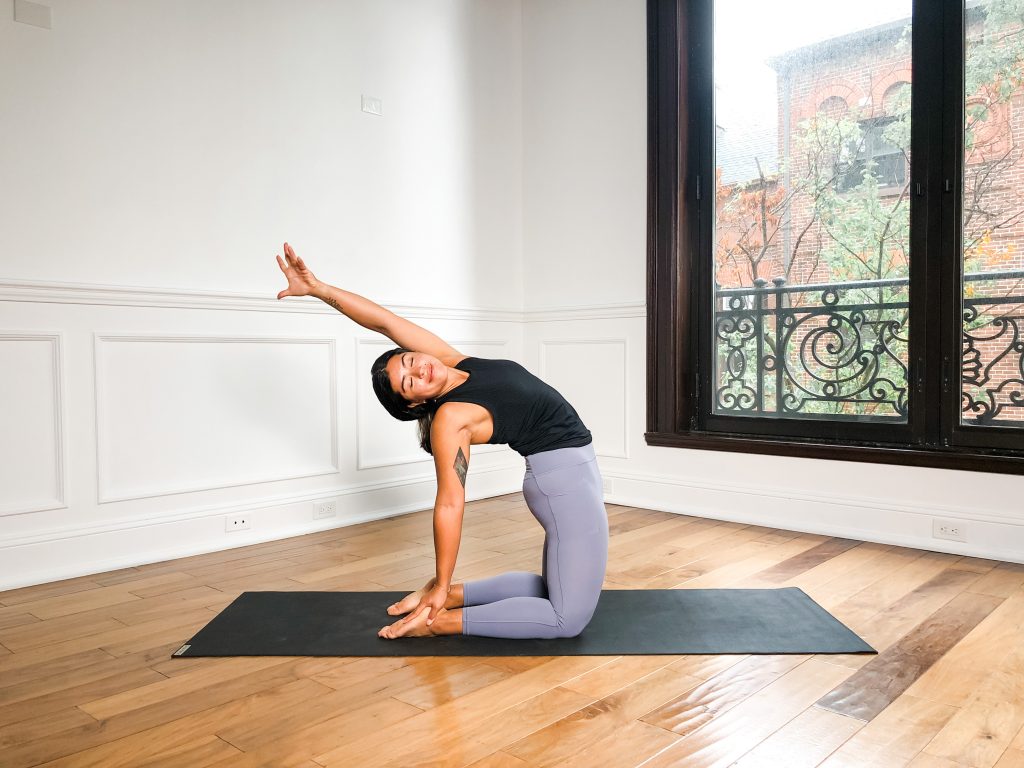
When I was in my early twenties I was plagued with the questions of what I wish to do for the rest of my life. This wracked me with overwhelm and anxiety as I wanted a career that was fulfilling in all aspects of my life – physically, mentally, emotionally, and spiritually. I may have not had this exact vocabulary at the time, but essentially I wanted to have a career that I truly loved.
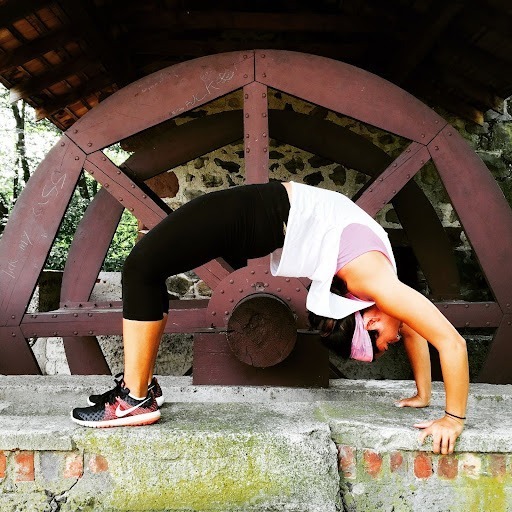
One of my first yoga photos in 2015. This was pre-teacher training and only a couple months after college graduation. Much questioning going on.
Explore Your Curiosities and Notice Your Intuition
Rewind a couple of years to college where the question of “what do I want to do with my life” really took root. At first I considered majors like communications or journalism, but I quickly realized I was interested in Exercise Science. Initially I opted to work towards Physical Therapy school, which was a common pathway for students within the major, but at the last minute I decided to pursue a career in Fitness and Wellness. I didn’t really know what that meant but I knew I had a curiosity for teaching, training, and fitness programming. Teaching wise, I was specifically interested in group fitness and yoga. By this point, I had years of experience in my own body within both modalities.
What followed graduation was doubt and uncertainty. What felt like a freeing decision while I was in school, turned into overwhelm when I was out of school and living at home. I saw a bunch of my friends move onto full-time salaried positions or further schooling which led to a clear career pathway. I felt lost and like I was getting left behind. I tried going to job interviews in various fields, but nothing felt right. I felt stuck between my hearts’ longing to teach [and to become a fitness/yoga professional] and the financial pressures/societal standards of life. I was constantly stuck worrying about the future, which led to high amounts of stress and anxiety.
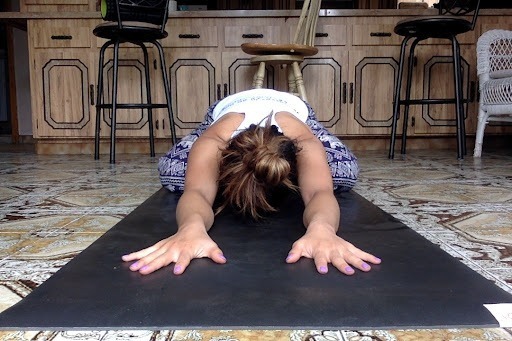
This is a MacBook photo taken during the time I was in my 200 Hour Yoga Teacher Training (2016). I took many photos and videos during this time. And I practiced…a lot.
Take Any Step Forward (Action, Action, Action!)
As I explored other job opportunities and repeatedly either got rejected or turned them down, I decided to take any step forward that I could as it came to building a career in fitness, wellness, and yoga. I completed a Group Fitness Instructor certification, a 200 Hour Yoga Teacher Training, and applied to and got accepted into a Master’s Degree program for Exercise Physiology. By this point, I had decided to commit myself to this path and still had no idea what lay ahead.
I started teaching yoga in 2017 and it started by subbing classes here and there. I was probably subbing anywhere from 1-2 classes a week, and after doing this for a couple of months I was offered a class on Saturday morning at 9AM, which is a prime time spot. After this class, other offerings for classes started coming in. My confidence was building. I was making mistakes, but I was also learning and growing. I was teaching steadily for 2 years, completed my Master’s Degree, and even decided to begin a 300 Hour Advanced Yoga Teacher Certification to improve my teaching skills. At this point, you would think I was all in. I mean, I was on my way to making a full on career in the field I had so desired.
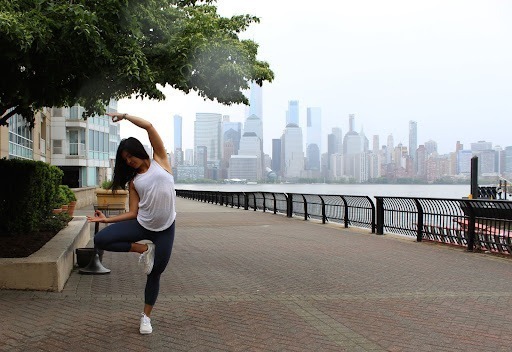
This was taken in 2019 during an event called Headstands for Hunger. I had been teaching for about 2 years and was starting to gain traction in the yoga community.
Commit to Yourself
Yet, I kept doubting myself. I kept thinking that I would never make enough money to support myself by doing what I loved. I looked into potential other roles and even considered going back to school for physical therapy despite my dreams of leading teacher trainings, developing programs to further others’ teaching skills, and hosting retreats.
During this time I had also been working part-time at a college within the Physical Education Department. I had been working 12-20 hours per week teaching and running the campus fitness center. A full-time teaching position had opened up and I was slated for the role. An opportunity literally fell into my lap, and yet I still continued to question if this was the right path for me.
After much back and forth in my head between applying to PT school or taking the teaching job, I remember making the firm decision to take the teaching position. I considered my strengths and my skills and at this point something switched in me. I told myself “why not go all out? Why not fully commit myself to this career path that I love and that I have been working so hard towards?”
And so that is what I’ve done.
This photo was taken during the Bhakti immersion during my 300 Hour Yoga Teacher Training (2020). This weekend was a defining weekend in trusting that I was on the right path.
This photo was taken during the Bhakti immersion during my 300 Hour Yoga Teacher Training (2020). This weekend was a defining weekend in trusting that I was on the right path.
Keep Making the Conscious Choice
I have made the very conscious choice of stepping into my dreams. And let me tell you, it doesn’t always feel like a dream. There have been moments where I was doubting myself, moments where other people were doubting me or questioning my choices, extended time periods of hustling, and plenty of times where I lost sight of myself. And overall, I can with certainty say that I am beyond grateful for sticking with myself. While there are tough moments, I can say that I am in a place of joy, content, and deep gratitude for what I do and where I am. One time, someone asked me “what would you say is your biggest accomplishment?” And I said, “making a career out of something I absolutely love.” And as I answered, I felt it within every fiber of my being.
You must make the conscious choice, not once, but every single day to build and shift your yoga career towards that of your dreams. On a micro-level, I tend to my own asana practice, meditation practice, and write in my journal pretty much every day. On a macro level, I see a life coach every other week, participate and complete trainings and workshops, and take on opportunities such as leading teacher trainings and retreats. This level of commitment has shifted my career in ways I could never have predicted.
What I have learned and what I always share with others is that you have much more power than you believe. You have the ability to shift your life and your career in ways you cannot even fathom. This does require you to take action, reflect, and repeat. You might have to take some risks, choose to trust yourself, make mistakes, and course correct. And at the end of the day, if you don’t choose this path…it is okay, but in my experience the pros have far outweighed the cons. So why not go for it?
This was taken in 2021. This was right around the time I was attempting to launch my first yoga retreat. That retreat didn’t end up happening. My first retreat was done in 2023 with a co-teacher and was a major success.
Journal Prompts for Focusing on your Yoga Career
These are some helpful journaling prompts for you to begin to shift your yoga career (or really any career you’re trying to focus on):
- What are you curious about and what do you wish to explore? If you’re reading this blog post and got this far, I am assuming you are interested in exploring shifting your yoga career. What is it about this that excites you? Where do your curiosities lie within the practice and the sharing of it? Why is this important to you?
- What are you currently committing to in your life? This is anything that you put energy and effort towards. Relationships, children, your current job, projects, hobbies are all examples of commitments. Some commitments must stay a priority, such as your children. Is there something else you would like to commit yourself to? Do you want to commit yourself to building/shifting your yoga career? Is there something you’d like to commit less to in order to make space for something new?
- What doubts come up for you when you think about committing yourself to a career in yoga (or fitness, wellness, etc.)? What is the dialogue in your head? Does it have to do with finances, other peoples’ perceptions, confidence, self-esteem, logistical matters? Write down whatever comes to mind.
- What if everything were to go right? What would your dream career look like, or if you’re already teaching what would it look like for you to commit to it more fully? How would you feel and what would you be doing? You can even include what you want to make financially, where you want to live, and what other things you’re doing in your life. Paint the picture for yourself in as much detail as possible.
- What are some micro-level and macro-level things you can do within your life that will contribute to shifting your yoga career? Think about activities, events, and practices that you can do to help you step into you, be present, expand your perspective/skill set, and open up possibilities.
*You can use these prompts to shift anything in your life! It doesn’t have to be a yoga career. It could be a different career path or anything else that you would like to shift in order to live your most aligned life.